When you ask a flight simmer what Europe’s hardest airliner approach is, you will hear the same names repeated: London City’s steep glideslope, Madeira’s visual (and windy) approach, or the mountainous descent and circling into Innsbruck. All of these are worth flying, but none of them are as specific as the approach to Calvi Sainte-Catherine in northwest Corsica. The French civil aviation authority (DGAC) even released a publication with the sole purpose of drawing pilots’ attention to the threats of the airport.
At Calvi (LFKC), runway 36 has no instrument approach of its own. There is no ILS, no RNP, no VOR, no NDB, and not even a published chart that takes you to the threshold of the runway. You fly a localizer approach, which has no vertical guidance, to the opposite runway, abandon it at a missed approach point 4 NM out, and then fly a hand-flown visual circuit inside a valley walled by mountains peaking at well over 7,000 ft.
“You Do You”
“You do you” is a bold statement in aviation, but also an interpretation of what French AIP charts tell us when they say that operators who wish to fly to the airport’s runway 36 must send the French authority files containing their general instructions for using the airport. In other words, put bluntly, each airline has to make up its own procedure, send it to the French authority, which can audit it.
Every captain must complete a site reconnaissance or training in an approved simulator before flying there, using the instructions detailed in the document sent to the French authority by the airline. In MSFS, you get to try it without the paperwork, and the sim is unforgiving in exactly the right ways.
A runway between the mountains with illusions
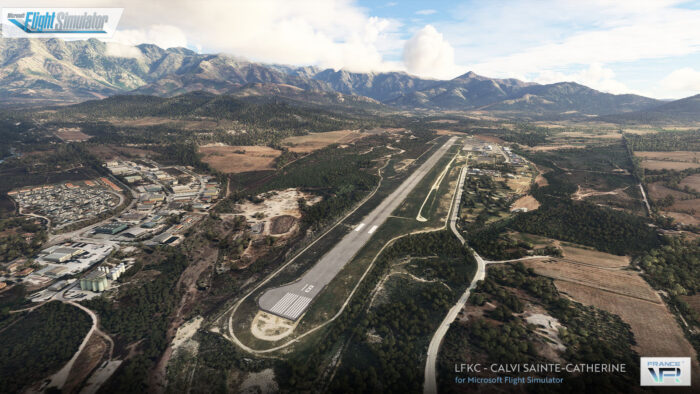
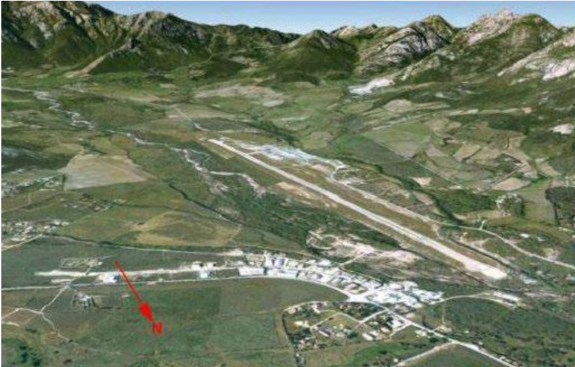
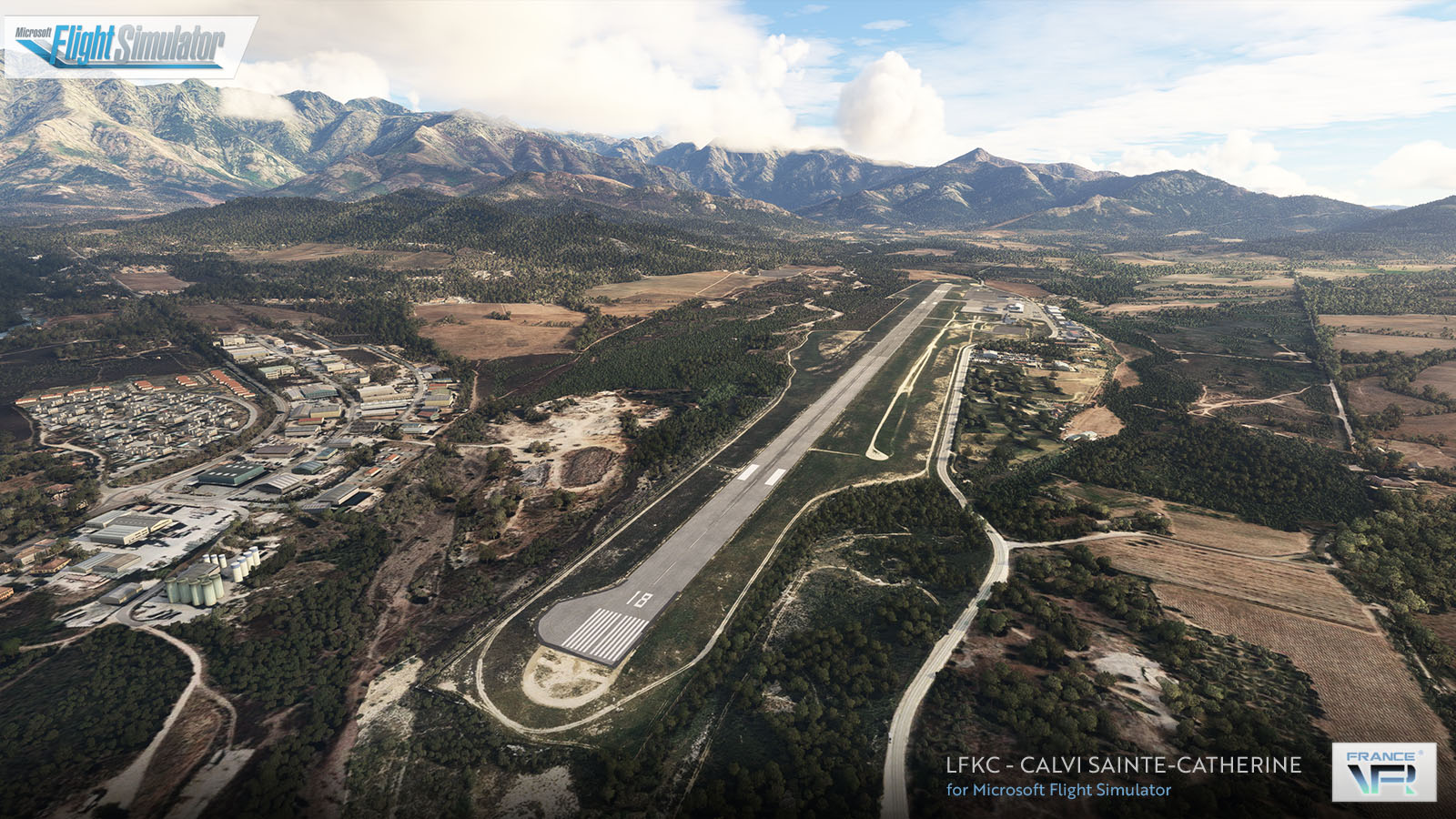
Calvi’s single runway sits about 2 NM inland, at the entry to a steep valley that opens north onto the sea. Ridges rise to over 2,000 ft within 3 NM to the west, and Monte Cinto (8,878 ft) dominates the skyline to the south. The only open side is the north, which is why instrument arrivals come in from the sea, and departures leave towards it. In some scenarios, however, for example, when there are strong winds from the north, arrival from the sea is not possible, and pilots need to be able to handle the circling approach we will primarily discuss today.
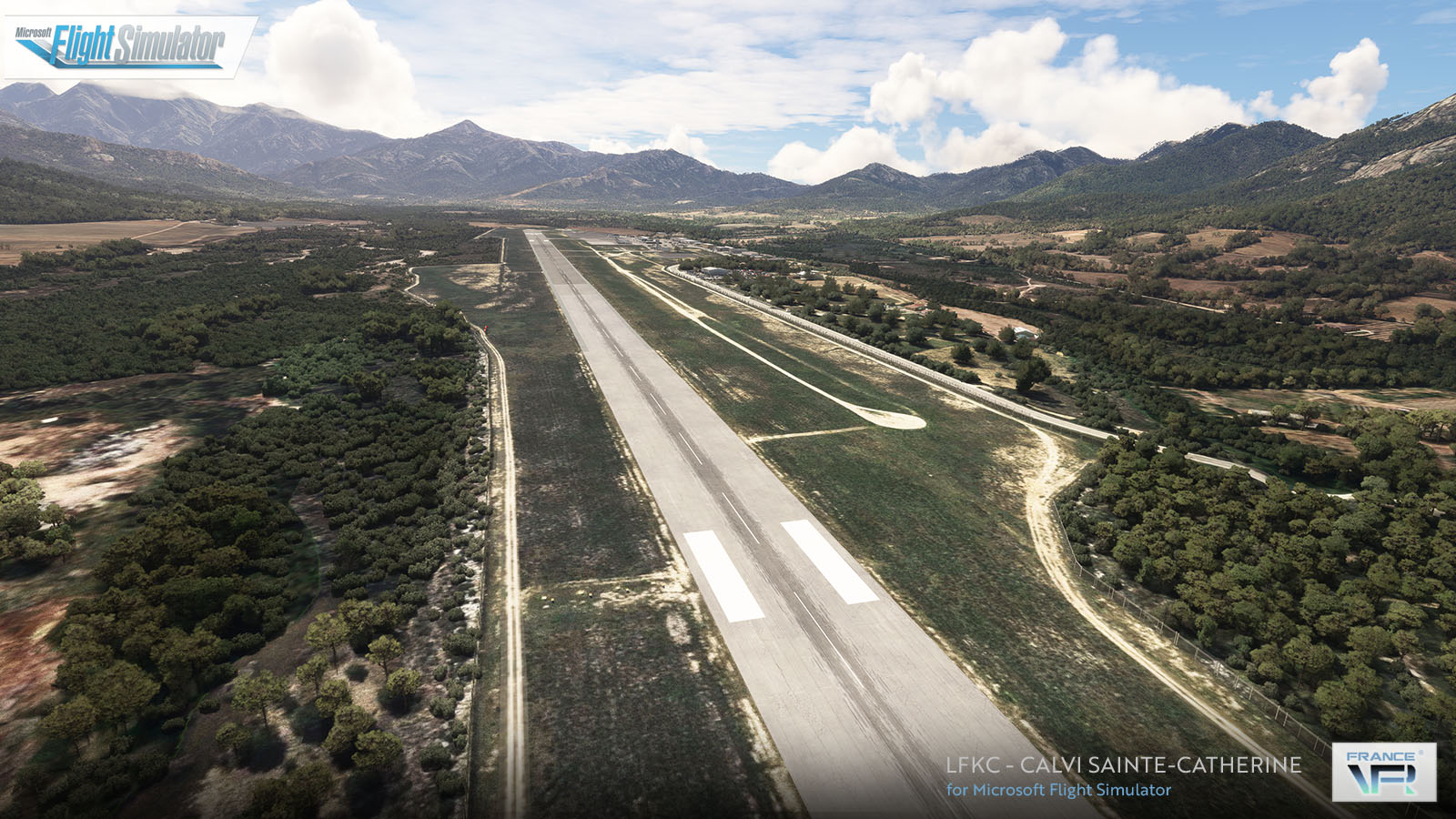
If the terrain itself on approach would not pose a problem to the pilots, the runway from the 36 direction also has a 2% downslope, which is equal to a 145 ft difference between the runway thresholds. This can cause an illusion of incorrect altitude on the approach and consequently a long landing. This phenomenon is often discussed in all sorts of pilot training.
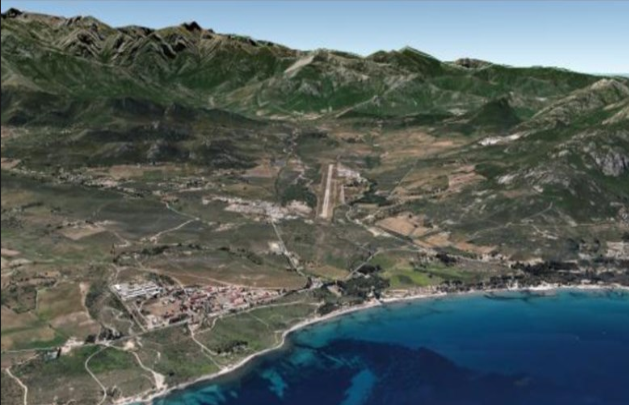
If even that would not be enough of a challenge, the PAPI lights are calibrated for a 3.5-degree glideslope instead of the standard 3 degrees, and are only usable within 4 km of the threshold, as otherwise no obstacle clearance is guaranteed.
And finally, for those who still see this as an easy approach, the threshold of runway 36 is displaced, and thus the total landing distance available is set at 2110 meters instead of the otherwise available 2310 meters of runway 18. For contrast, the runway at Madeira’s Funchal airport is about 300 meters longer when it comes to the available landing distance.
A few local rules complete the picture: no night landings, no low-visibility operations, and the runway is closed to all traffic when it is wet and the crosswind reaches 20 kt. Runway 18 is the preferred landing direction, and runway 36 the preferred take-off direction up to the aircraft’s tailwind limit.
The weather
As mentioned in the document by the French authority (DGAC), strong westerly winds can severely impact the base leg distance by shortening it and cause strong turbulence, downdrafts and vertical windshear on the whole approach due to the nearby mountain ridge. This can be especially noticeable on the downwind, base leg, and final leg of the approach. Since we are in a tight valley, there is no space to navigate around these occurrences and mitigate the challenging situations.
The approach procedure
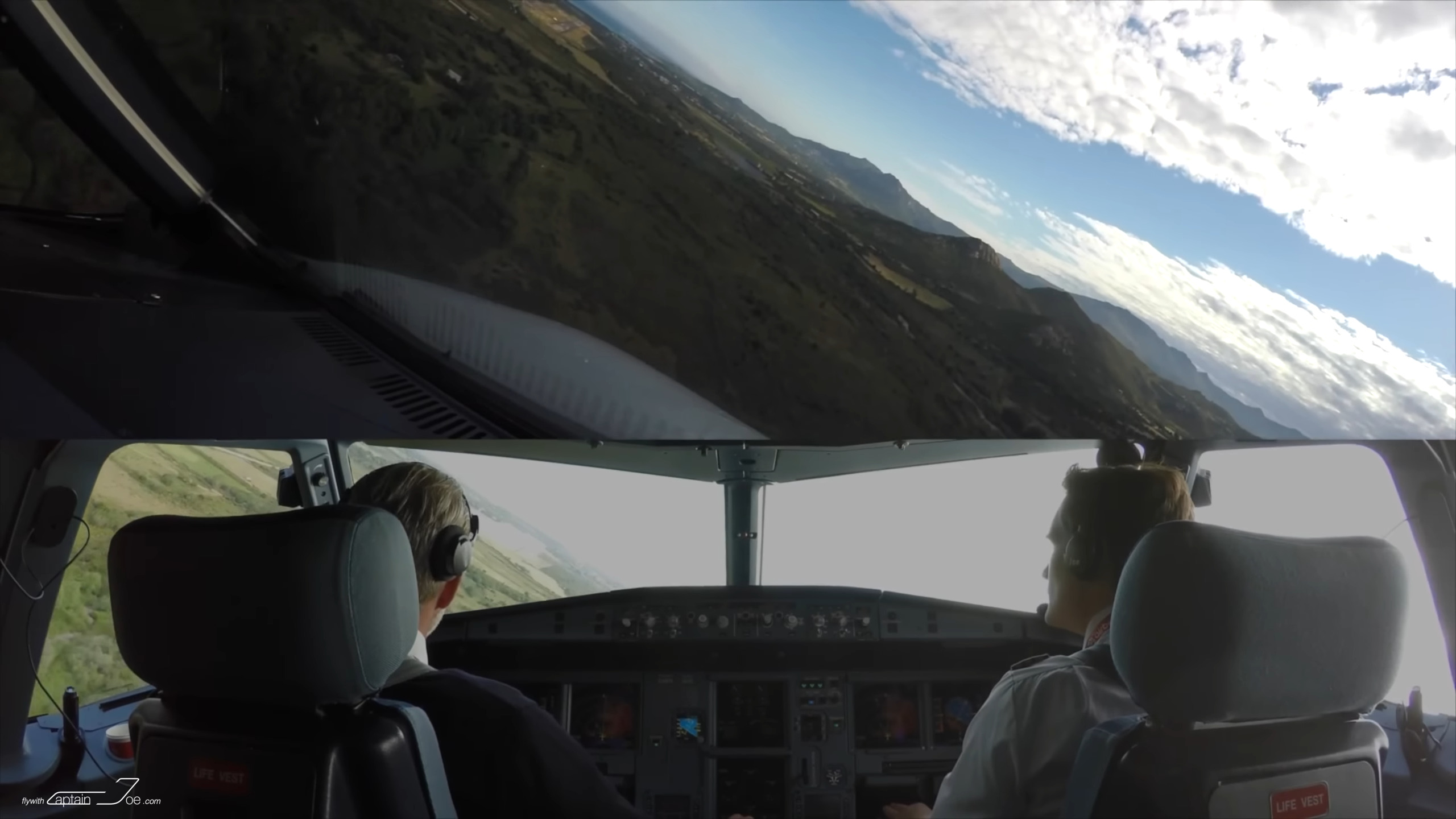
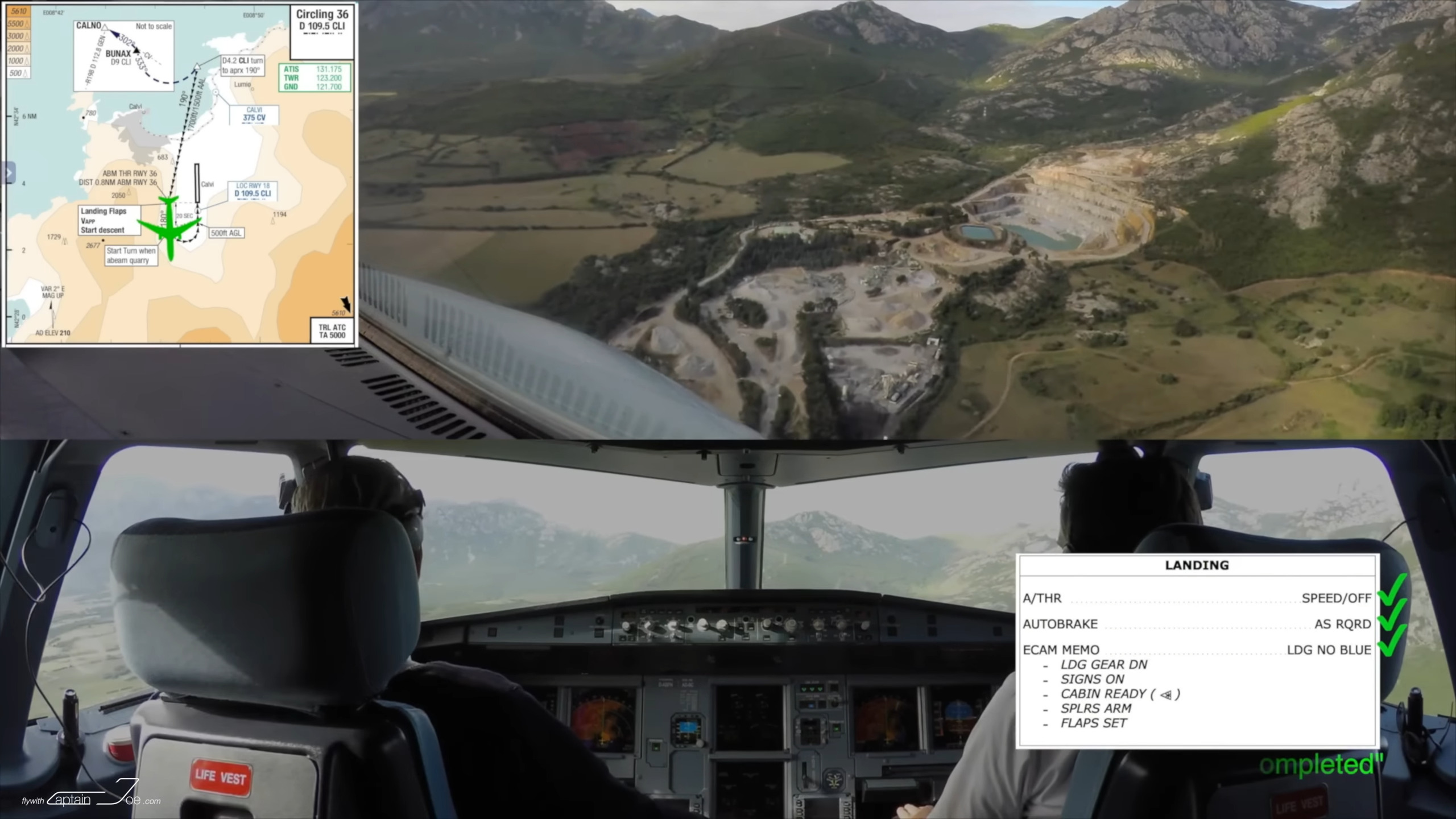
Runway 36 is flown as a circle-to-land off the runway 18 localizer: an instrument descent from the north, then a visual circuit flown entirely west of the runway. The AIP publishes the circling minima but no track, so everything after the missed approach point is yours to fly. To add to the stress, the missed approach point is farther than usual from the airport due to the terrain altitude reaching over 8,000 ft south of the airport.
You start the approach often with a hold. This is because only one aircraft is allowed between the final approach fix (FAF) and the runway, which caps the runway 36 capacity at around 4 arrivals per hour. This is because the missed approach path converges with the arrival track. Keep this in mind when you are flying in with your friend.
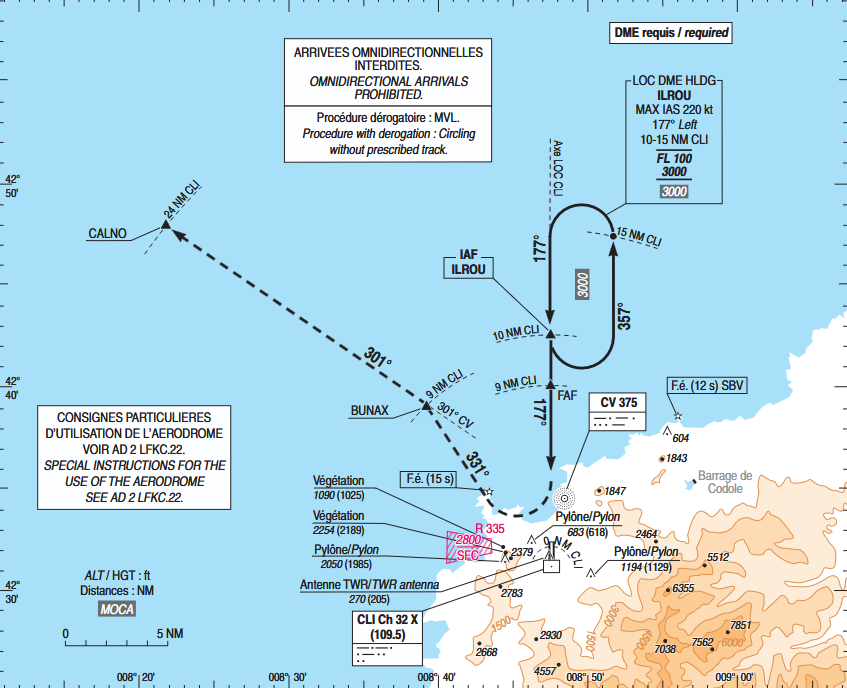
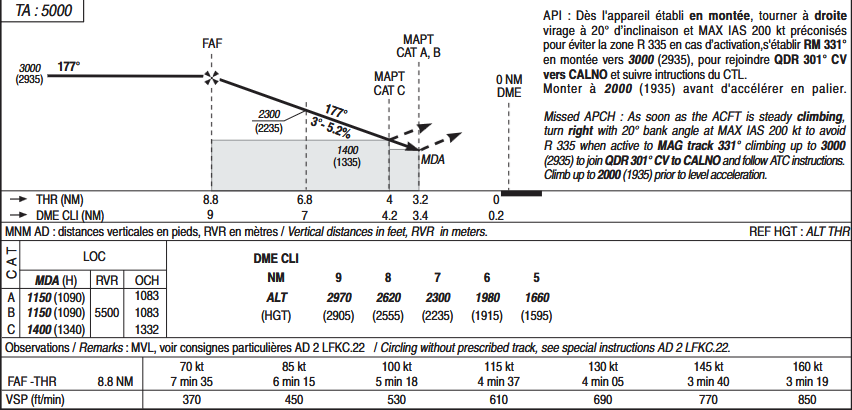
The minimum descent altitude is set to 1,700 ft and 4.2 NM from the CLI localizer. The localizer has no vertical guidance, so the vertical path is all on you. No runway in sight at the missed approach point means a go-around on the published LOC missed approach. When the runway is in sight, break slightly right to set up a downwind on the west side. The circling area is west only; circling east is prohibited because of the terrain there.
You fly south, parallel to the runway, with the mountains to your right and below the ridge line. Near the end of the downwind is the Marsolinu pass, where westerly winds produce downdrafts and turbulence. The local quarry is often used as a reference point for the turn.
The ridge west of the runway squeezes the base leg. With a westerly wind, you get pushed through the centreline, so the turn to final starts earlier than you would normally be comfortable with.
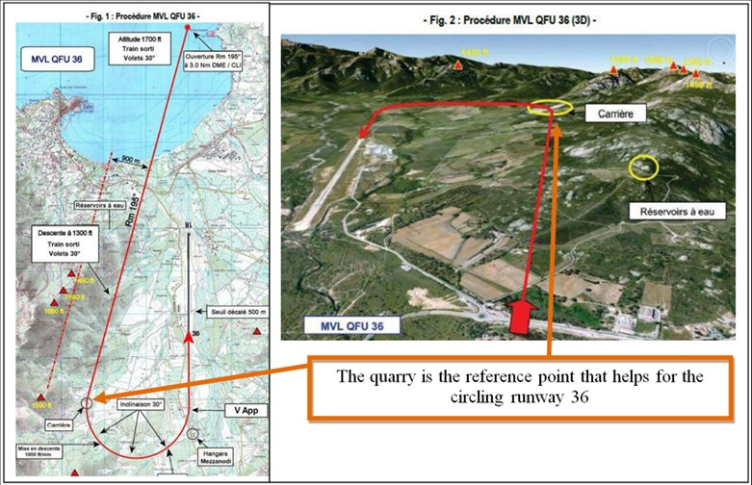
On the final, pick up the 3.5° PAPI only within 4 km (2.1 NM). It sits 3° west of the centreline, is calibrated for an A320’s threshold height, and is not safe for obstacle clearance further out. Aim at the displaced threshold, keep the speed tight on the downslope, and expect a firm stop and a backtrack since the airport terminal is set towards the runway 36 threshold and there is no taxiway from there.
Going around after the missed approach point is the worst place to be. The published LOC missed approach no longer protects you, so the AIP gives a separate balked-landing path: continue over the runway and, at its end, intercept the 302° bearing from the CV NDB towards CALNO, climbing to 3,000 ft. That path crosses the inbound localizer track, which is why only one aircraft at a time is cleared for the approach.
Flying it in MSFS
The A320 is the right aircraft for this: the A320 family and the Boeing 737 are the largest jets Calvi sees. Air Corsica flies A320s there, and the runway 36 PAPI is set for its threshold height, according to the charts. This comes very well in combination with the recent Fenix A320 v3 major update.
Set time to day since real Calvi Airport has no night landings. For a first attempt, set a northerly wind of 10 to 15 kt, a cloud base above 2,500 ft and visibility of at least 8 km, which are the published circling minima. Once that goes well, add a westerly component of 20 kt or more at around 3,000 ft. That brings out the mechanical turbulence over the ridges and the drift on base, which make this approach what it is.
To add to the immersion, FranceVFR, a French developer, has created custom scenery for the airport, which is available through Orbx or their website for just around 10€.
Finally, you can check out an amazing video from CaptainJoe, a real-world pilot, demonstrating the approach in real life.
Another great video demonstrating the approach in the real world is from Robby TheEyeinTheCloud:
This article is not meant to be used in real-world aviation scenarios. It is for flight simulation purposes only.
Feel free to join our Discord server to share your feedback on the article, screenshots from your flights or just chat with the rest of the team and the community. Click here to join the server.