Navigraph has published a new preview of the BlueBird Simulations 757 beta for MSFS 2020 and MSFS 2024, drawing on technical specialist Jason Sokoloff’s experience flying full sectors. His September 3 report examines flight planning, systems and sound after several weeks of testing, with at least six real-world 757 pilots also contributing feedback to the development team.
Systems Behind the Cockpit Switches
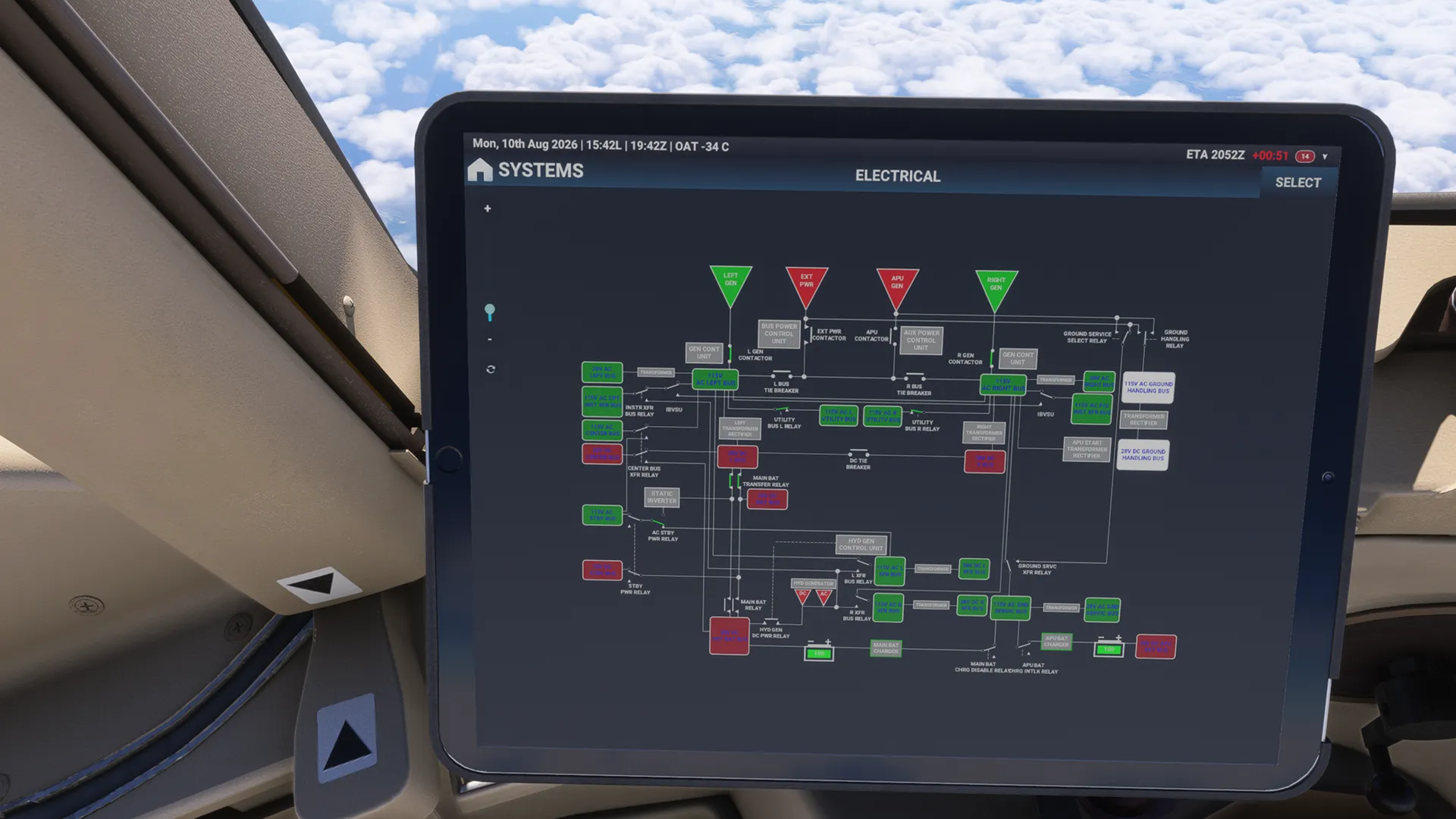
BlueBird’s development overview explains that the studio uses custom C++ and WebAssembly code to implement behaviour beyond the simulator’s native systems. Type-rated pilots help check system operation and handling. The electrical architecture alone spans more than 20 buses, with failures affecting the equipment they supply. That gives some context to the interconnected systems described in the developer’s more detailed specifications.
Its July feature breakdown makes an important distinction: more than 500 circuit breakers are mapped, with over 200 intended to function at launch. The electrical simulation also covers power transfers and relay behaviour, so operating a breaker affects the relevant circuit and connected equipment. The remaining mapped breakers are planned for subsequent updates.
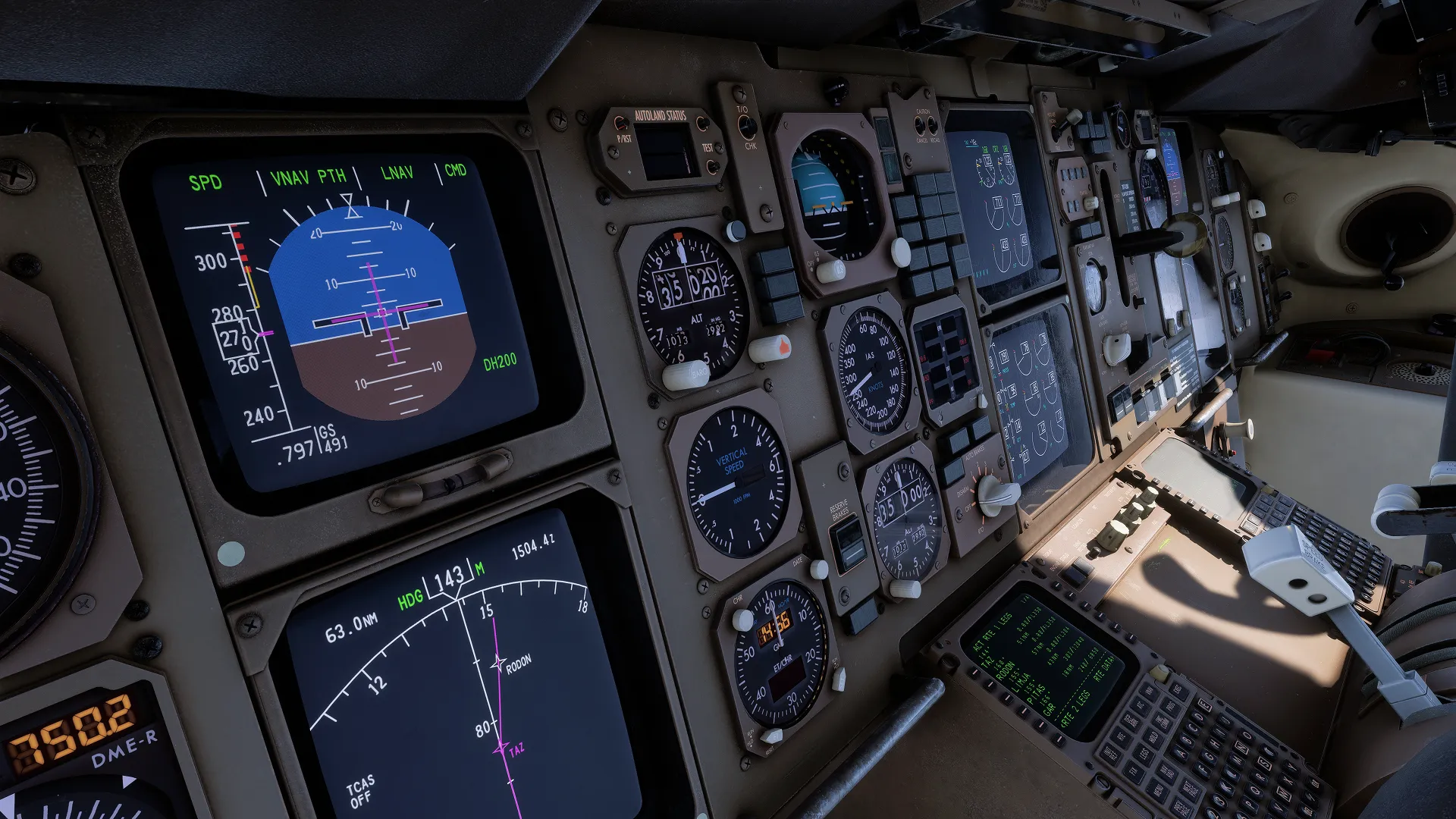
The product specifications extend that approach to the left, centre and right hydraulic systems, including ram air turbine deployment and reduced actuator performance during failures. Bleed-air demand is linked to thrust within the pneumatic simulation. On the instrument panel, the CRT displays reproduce phosphor glow, scan lines and adjustable brightness, retaining the visual character of the 757’s flight deck alongside its simulated systems.
SimBrief, Navigraph and Ground Operations
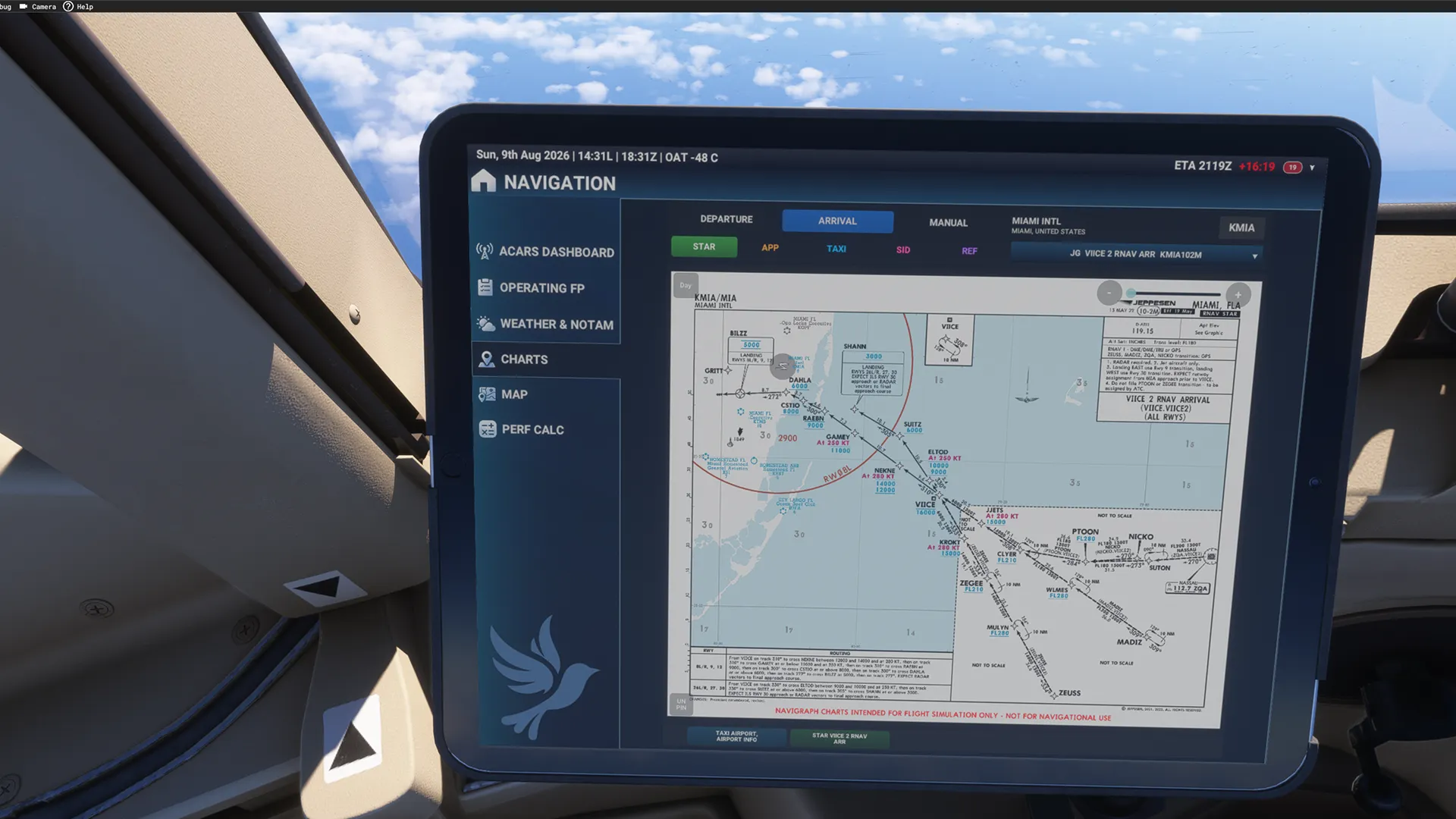
Sokoloff describes an EFB combining Navigraph charts, navigation data, aircraft states, maintenance pages, weight and balance, and ground services. He also identifies a practical limitation in the beta: updating the AIRAC cycle through the tablet requires a flight reset. His recommendation is to perform the update between flights, avoiding an interruption after departure. This is a detail to account for when preparing the aircraft for a sector.
BlueBird’s Pegasus FMC imports SimBrief routes and supports LNAV and VNAV, holds and missed approaches. The developer also lists performance uplinks, Hoppie ACARS for departure clearances and air-to-air messages, and MobiFlight communication for external hardware. Ground operations are connected to flight preparation too: the GND CALL function uses the SimBrief plan and the EFB’s boarding state to manage ground power. These functions are described in the studio’s feature breakdown.
Cabin Interaction and Engine Sound
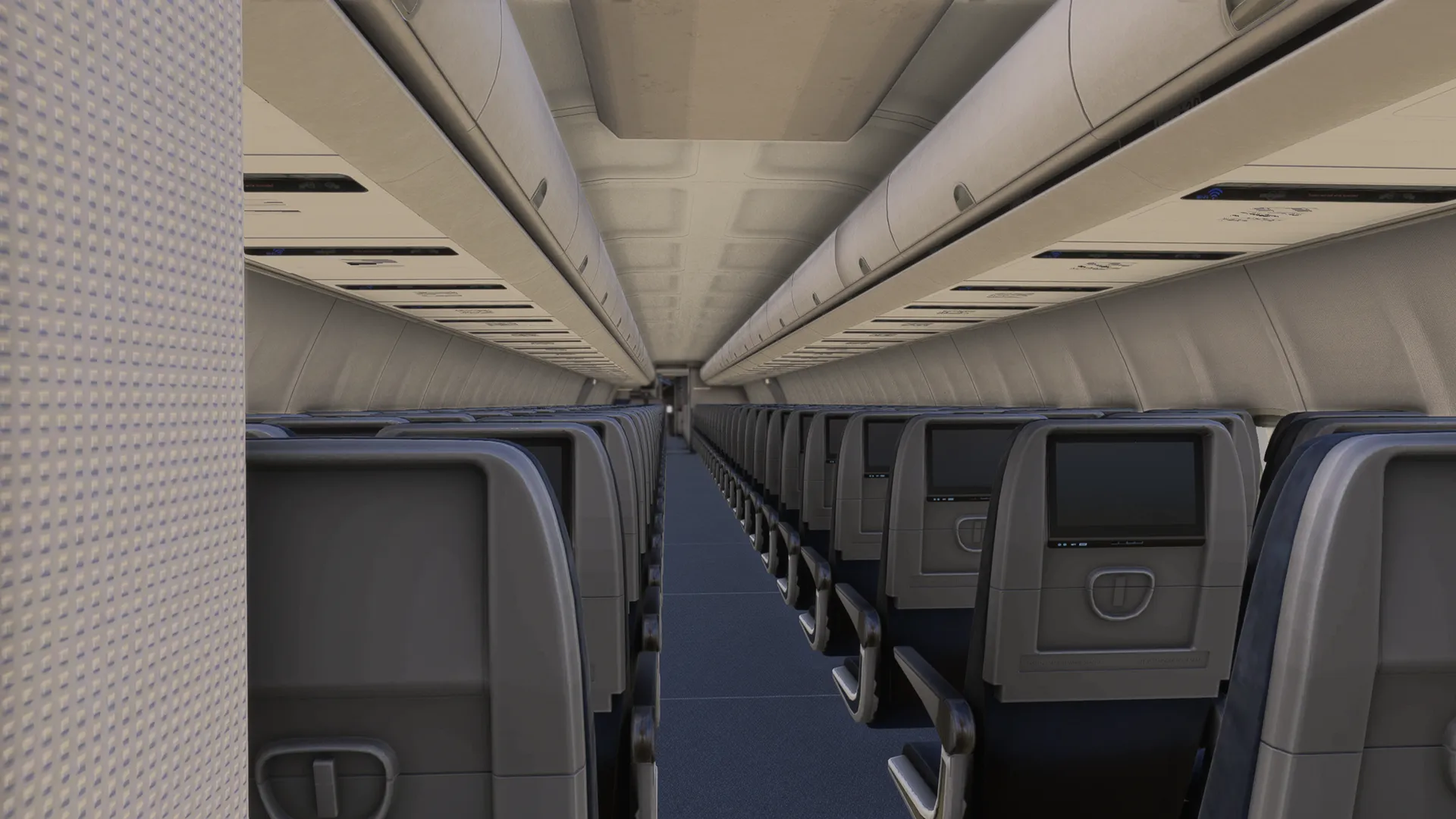
The cabin has operational functions of its own. BlueBird describes a three-zone flight attendant intercom, with calls about temperature and seatbelt signs, plus reactions to cabin-altitude warnings or oxygen deployment. Passenger numbers, open doors, weather and pack settings also influence cabin temperature. These interactions connect the passenger compartment to the crew’s management of temperature, pressurisation and passenger signs.
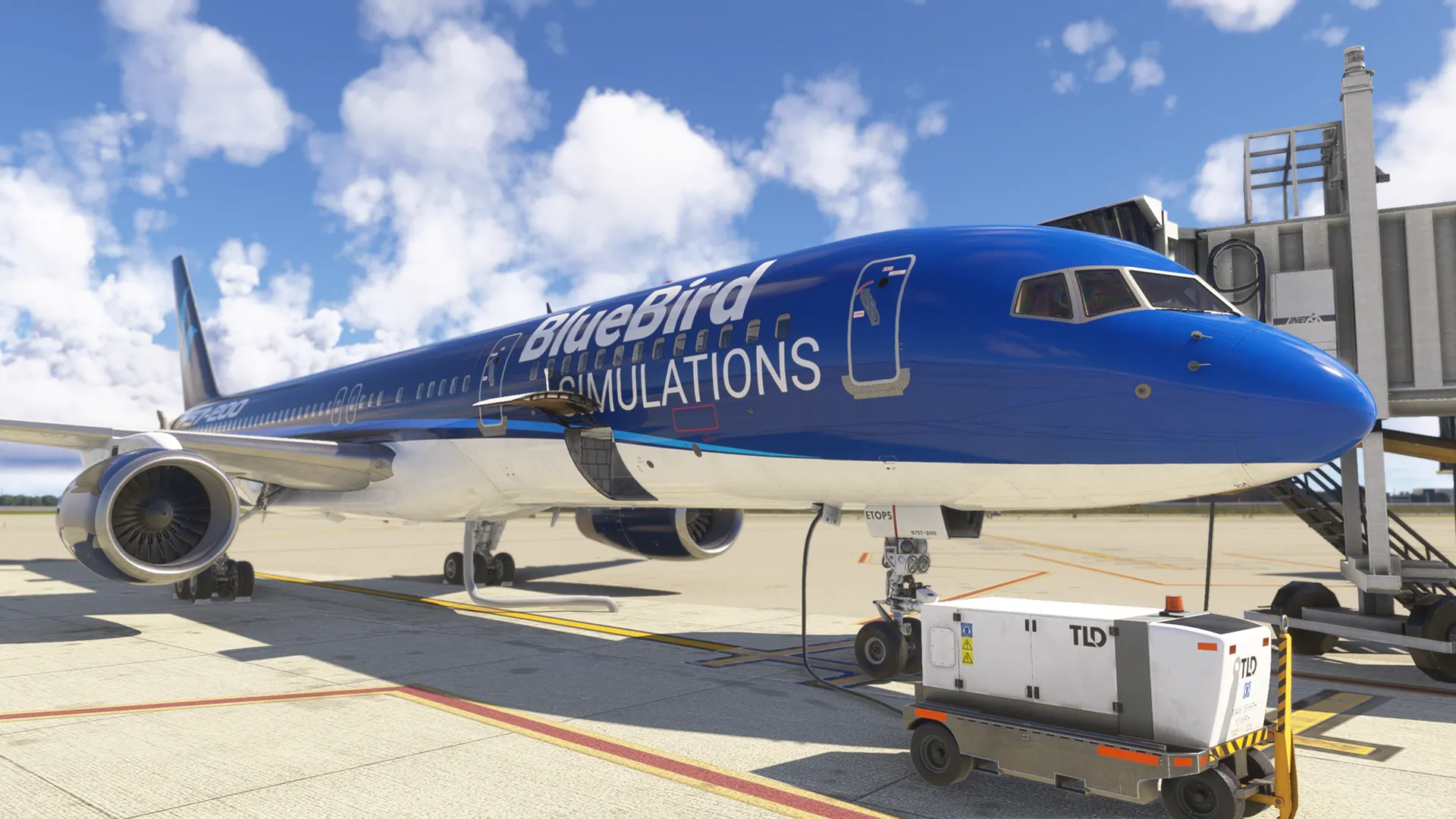
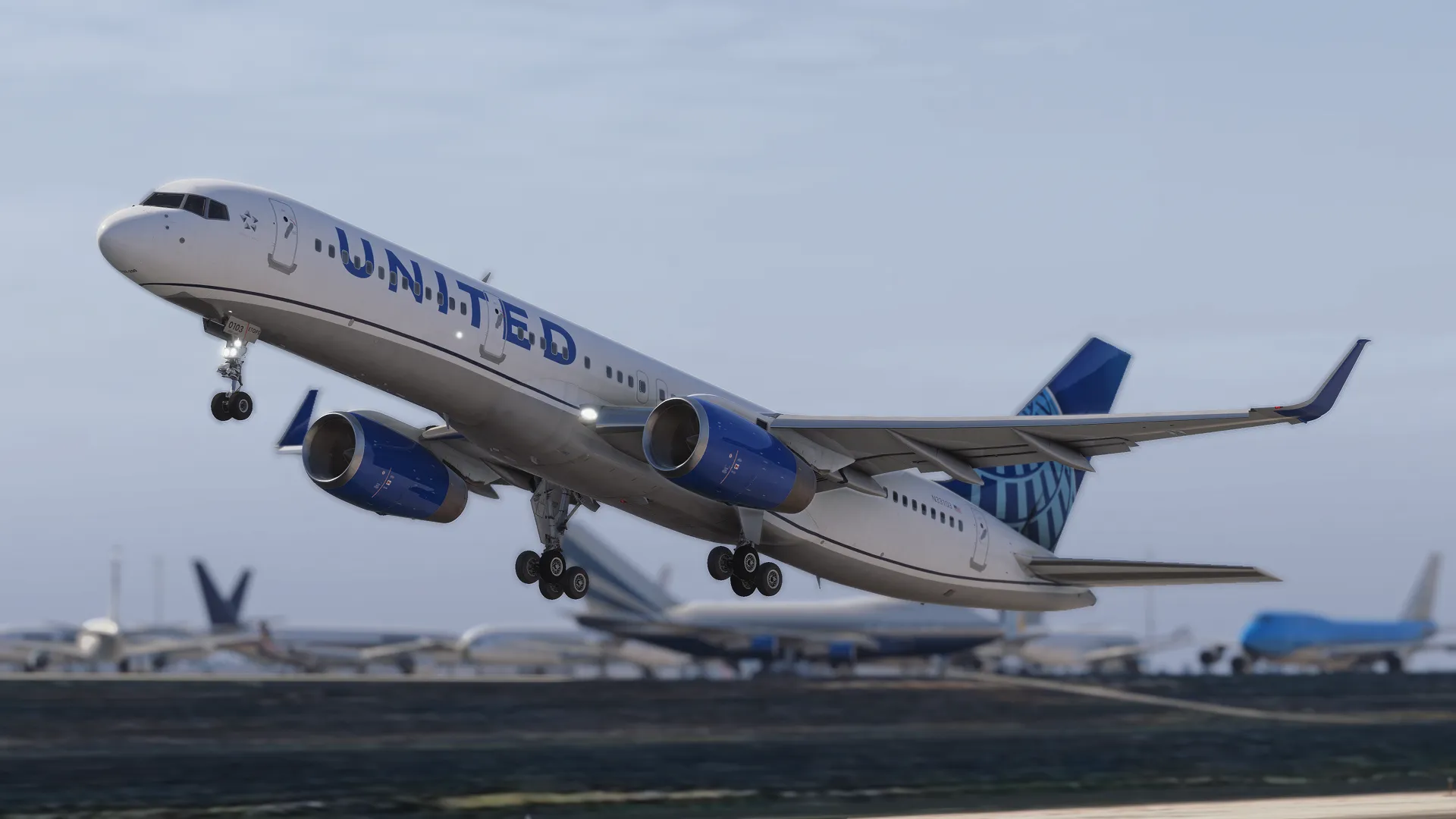
Audio comes from Boris Audio Works, with more than 450 cockpit samples and further recordings for the cabin and exterior. Navigraph’s report discusses this sound work alongside its flying impressions, while its takeoff and sound video provides an accompanying preview. BlueBird says the Rolls-Royce RB211 and Pratt & Whitney PW2000 are modelled with separate performance characteristics, exhaust gas temperature profiles and sounds. Its Wwise audio system also changes the sound according to the listener’s position. Outside, physically based materials show surface weathering, and the wings flex in response to turbulence, G-loads and fuel weight. The engine and visual details are listed on the official product page.
Price and Release Status
The planned $80 package includes the 757-200 and 757-300 with both engine options. BlueBird’s product page is still marked “Coming Soon”, and Navigraph’s report does not announce a release date. The screenshots and impressions relate to a beta build, with features subject to change before launch. They provide an advance look at the aircraft as testing continues.
Feel free to join our Discord server to share your feedback on the article, screenshots from your flights or just chat with the rest of the team and the community. Click here to join the server.