Laminar Research has released the public beta for SDK update for X-Plane 12 as version 12.4.4. This release comes packed with a wide range of improvements, expanding the simulator’s capabilities and potential for third-party developers and flight simmers alike.
Though version 12.4.4 is ostensibly more developer- and technology-focused, many of its improvements will be broadly felt and seen by X-Plane users across a wide range of situations, from enhanced weather and weather radar to graphics, performance, and scenery.
SDK — The Headline
The centerpiece of the public beta are several major additions to X-Plane’s software development kit, aimed at providing third-party developers more powerful and flexible tools. The update introduces a new Panel Graphics API for creating custom graphics and instruments, allowing developers to draw graphics directly inside X-Plane. The API supports shapes, paths, gradients, text, images, and clipping and utilizes the simulator’s native graphics pipeline, rather than developers having to rely on external tools.

Further, native support for ImGui and the Chromium Embedded Framework (CEF) is introduced, facilitating easier creation of plugin interfaces, config windows, or flight planning tools, etc. With CEF, developers can now build interfaces with HTML, CSS, and JavaScript directly within X-Plane, opening up doors for feature-rich EFBs and sophisticated plugin interfaces. Rounding things off in the SDK department, XLua 2.0 has now almost complete parity with the X-Plane SDK, making considerably more sophisticated aircraft systems and interfaces possible using Lua alone, while keeping existing XLua scripts compatible.
Graphics and Performance
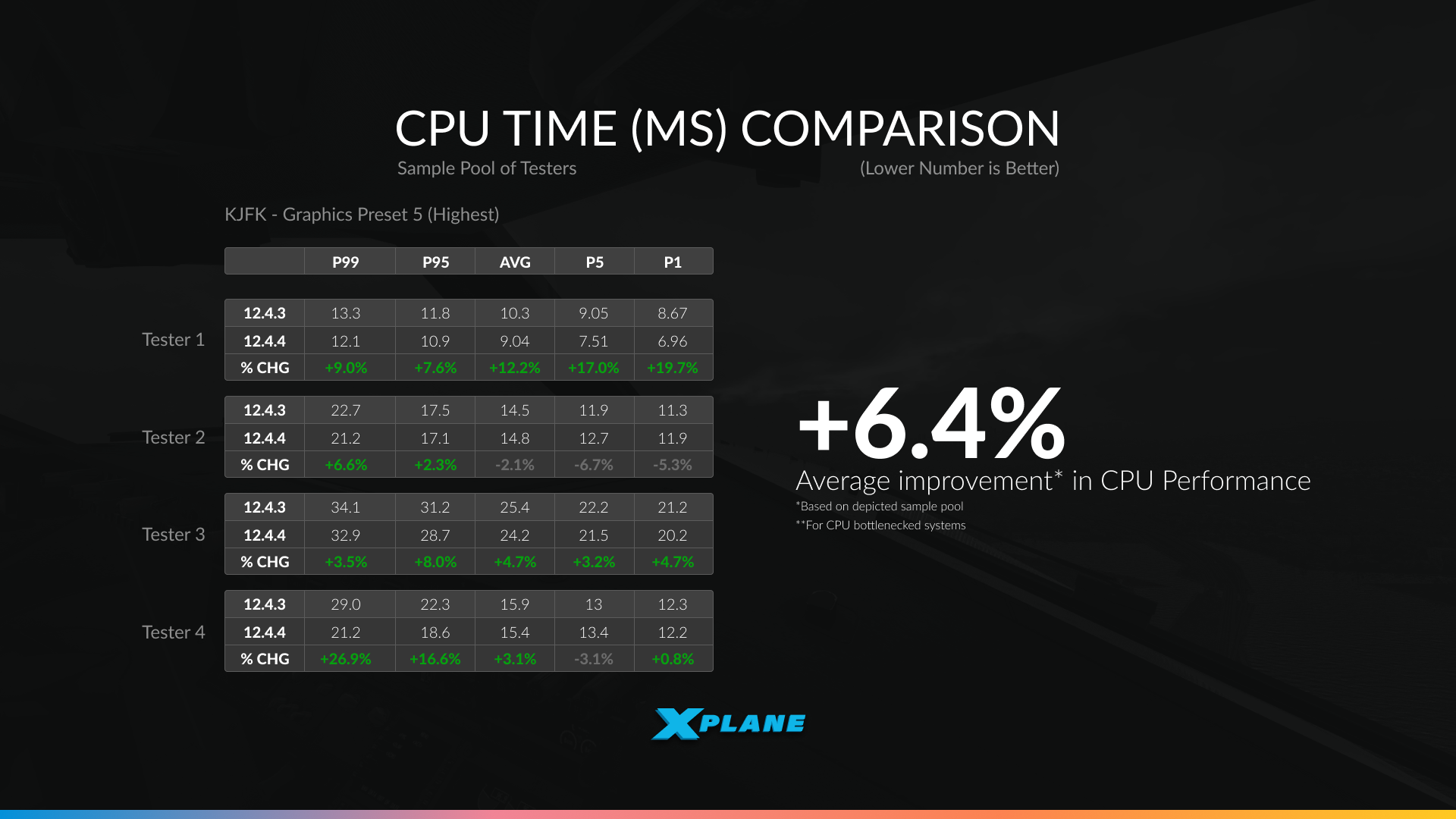
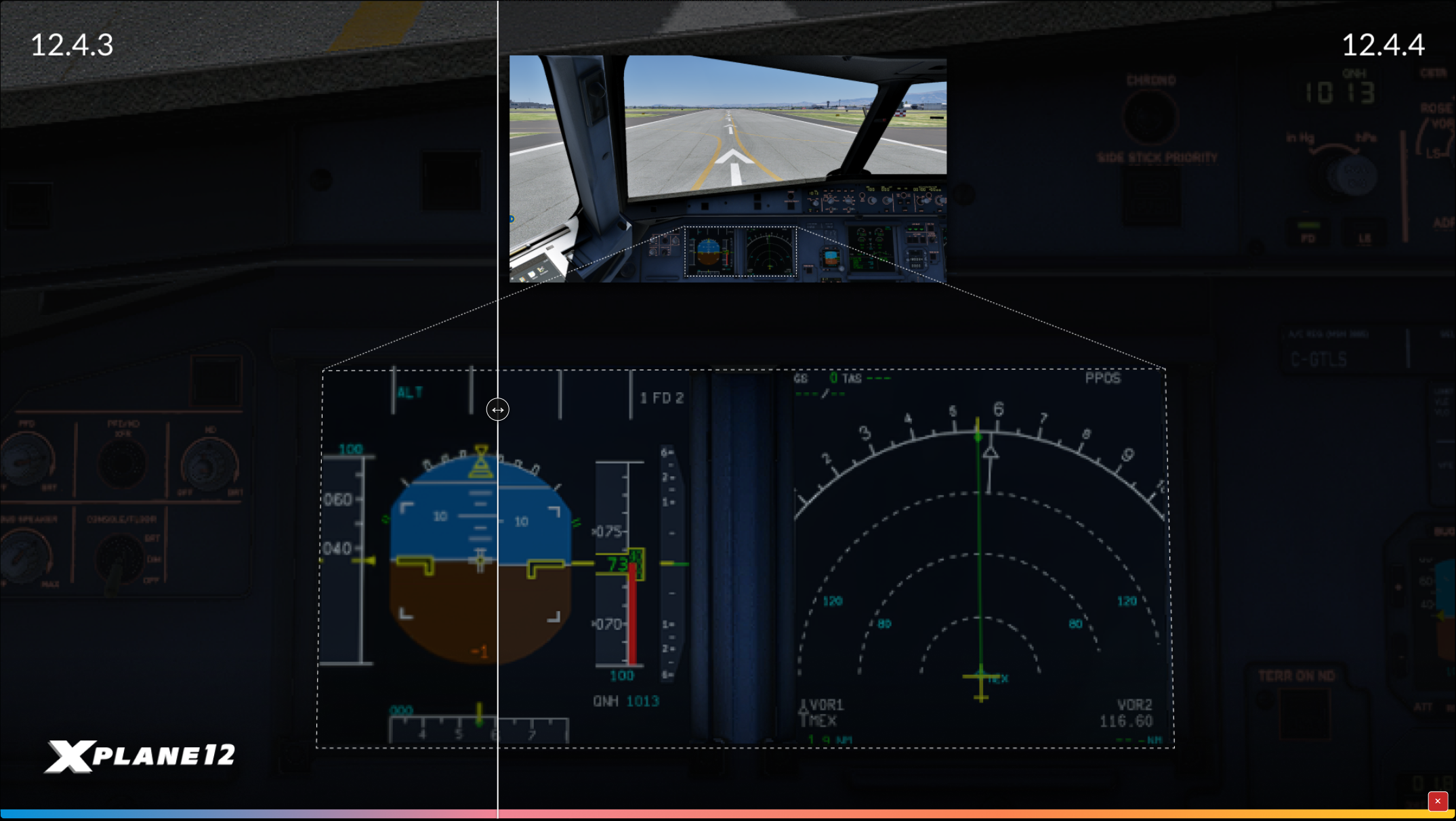
Laminar Research has steadily been moving X-Plane forward in keeping up with the demands of modern flight simulation with ever more complex aircraft and systems, and this update continues this trend with numerous improvements and advancements in graphics and performance. For starters, the developer reports an average 6.4% CPU across tested CPU-limited systems, resulting from a range of underlying engine and rendering optimizations. Beta 12.4.4 now features an on-disk texture cache, which should reduce repeated texture processing and load times. When it comes to the more noticeable tweaks, users should notice sharper cockpit instruments/panels, fixing one of X-Plane’s longer standing drawbacks.
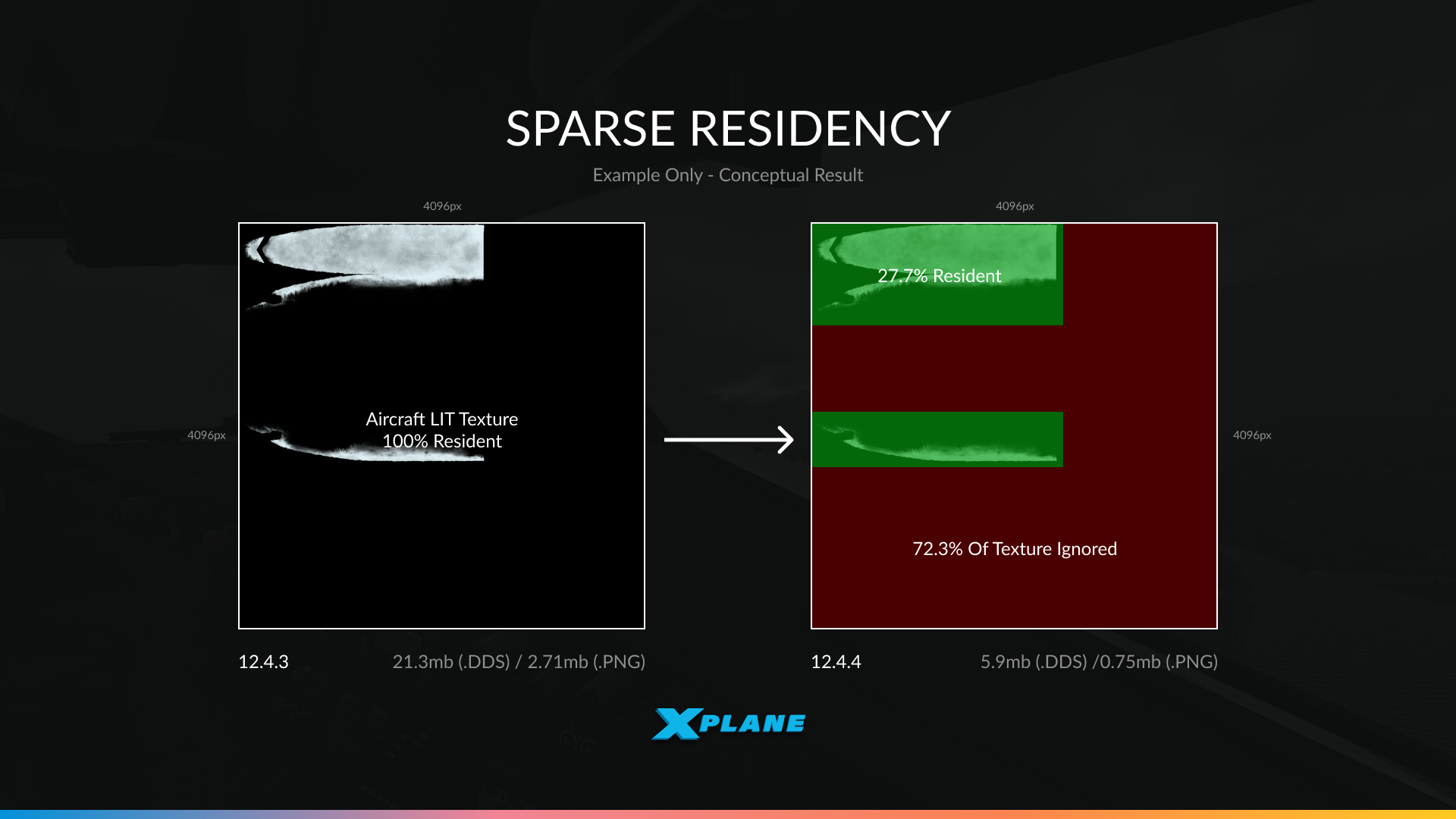
Bringing the graphics changes together, the beta introduces a new tiled lighting system, designed to improve GPU performance when rendering larger numbers of lights, especially at night and at large airports. This is achieved by separating extra lights to be processed separately from the faster tiled system. This system is coupled with another solution towards lowering VRAM usage at night: Sparse Residency. Put simply, with sparse residency, textures that contain (light) information are divided into tiles, and tiles that contain nothing but opaque black are not backed by physical memory. According to Laminar Research, these benefits scale particularly at dense scenery like cities and large airports.
Just in Time For Cold Weather Ops: Persistent and Regional Snow
Arguably the biggest simulator-side update is X-Plane’s weather, especially how the simulator handles snow. As long time X-Plane users may remember, you previously had to look to third-party add-ons if you wanted realistic snow that was not effectively tied to the immediate area around the aircraft. This issue has now been addressed, as snow coverage is now regional and persistent, allowing different areas to have different snow coverage and depth. Laminar states that this feature works with ortho imagery but requires live or historical weather to function.
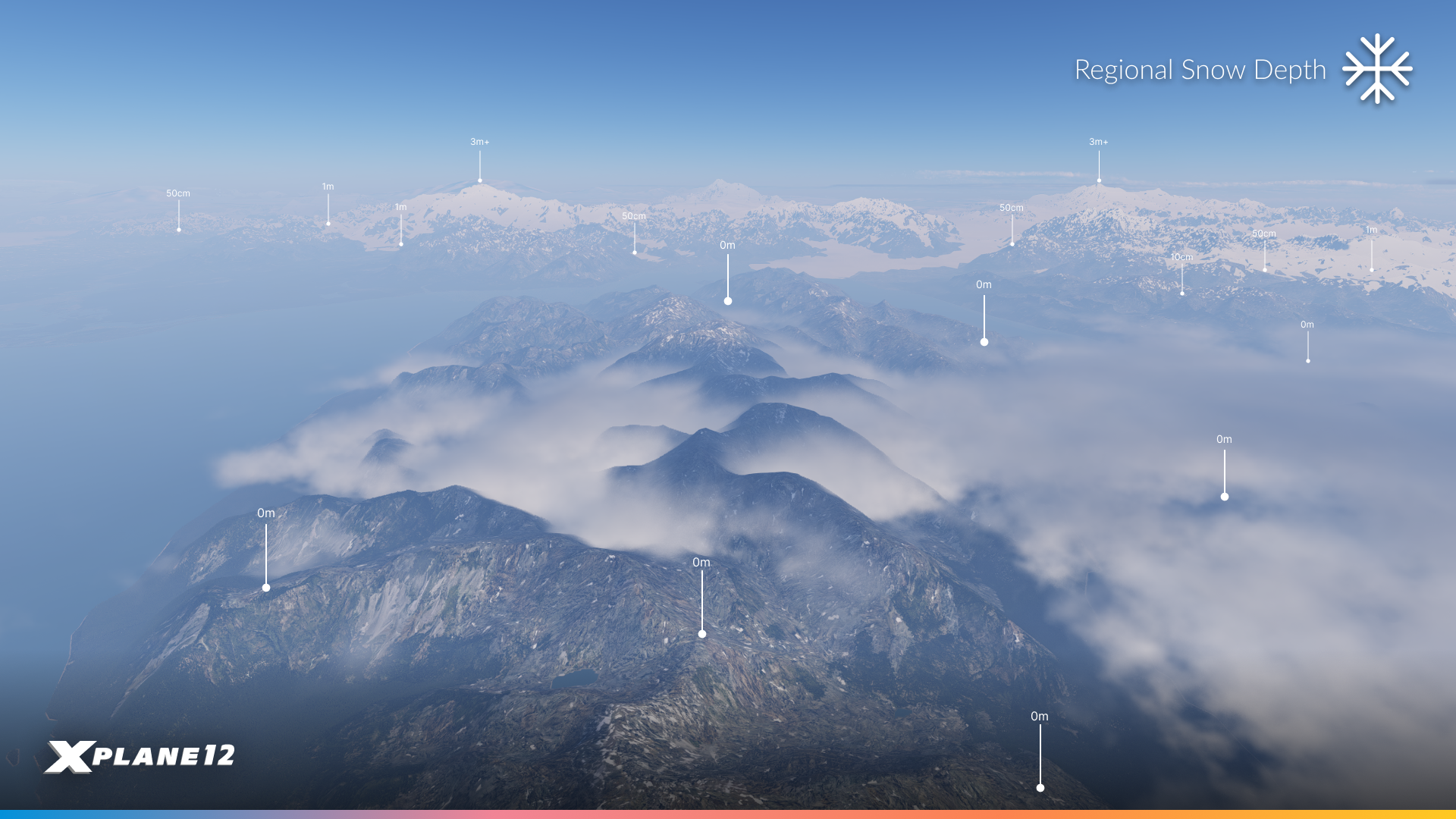
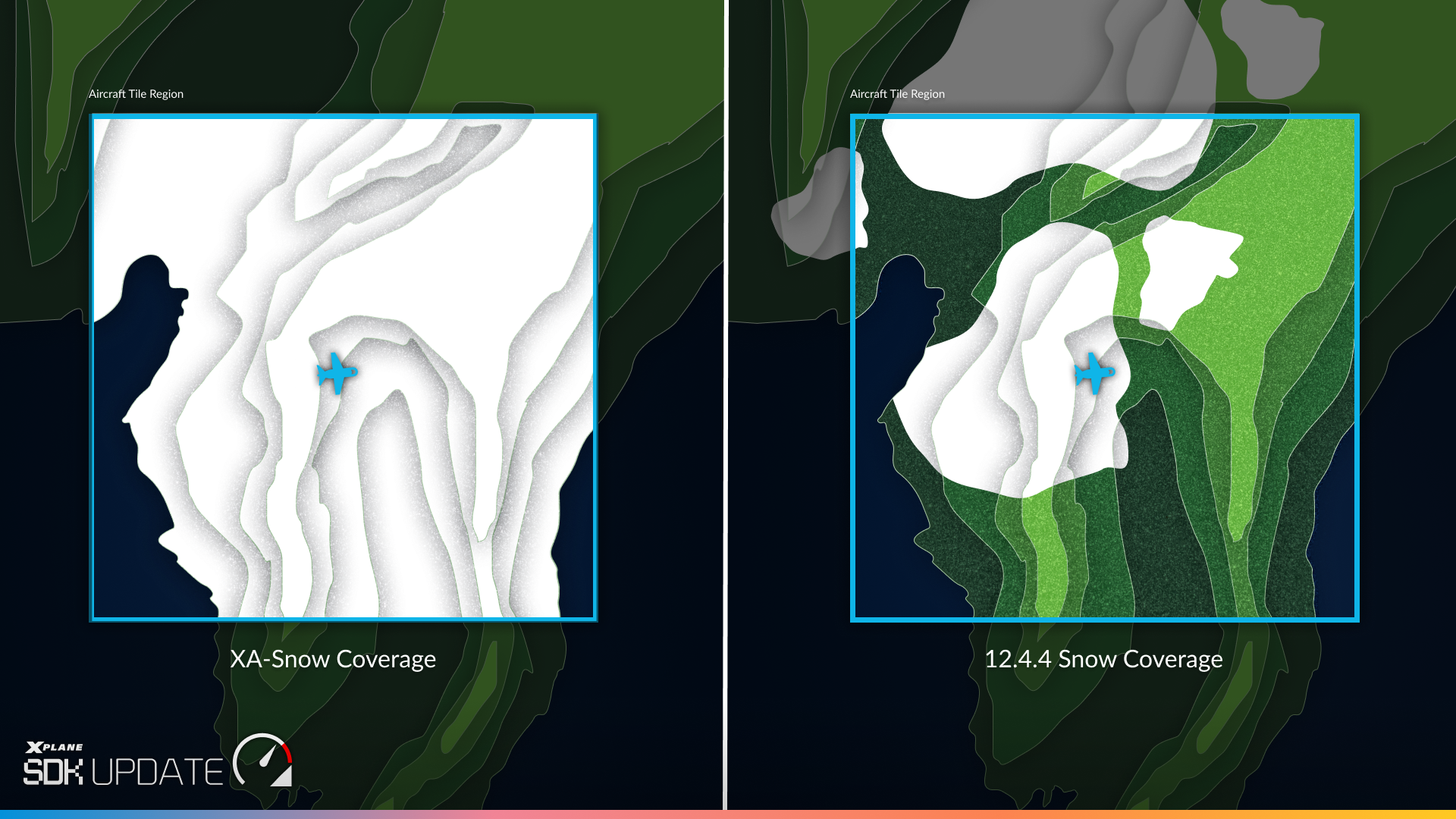
The changes in the weather do not end with snow, however. A number of underlying weather calculations have been improved, including better placement of thunderstorms and improved precipitation, more realistic temperature behavior at higher altitudes and improved cruise-level fluctuations. Furthermore, the common “lines between clouds” eyesore has been fixed, as has high-altitude cloud striping. Finally, visibility now uses a physically derived altitude band, keeping fog and mist from extending unrealistically high off the ground.
Shapes and Colors: Red Cells Ahead
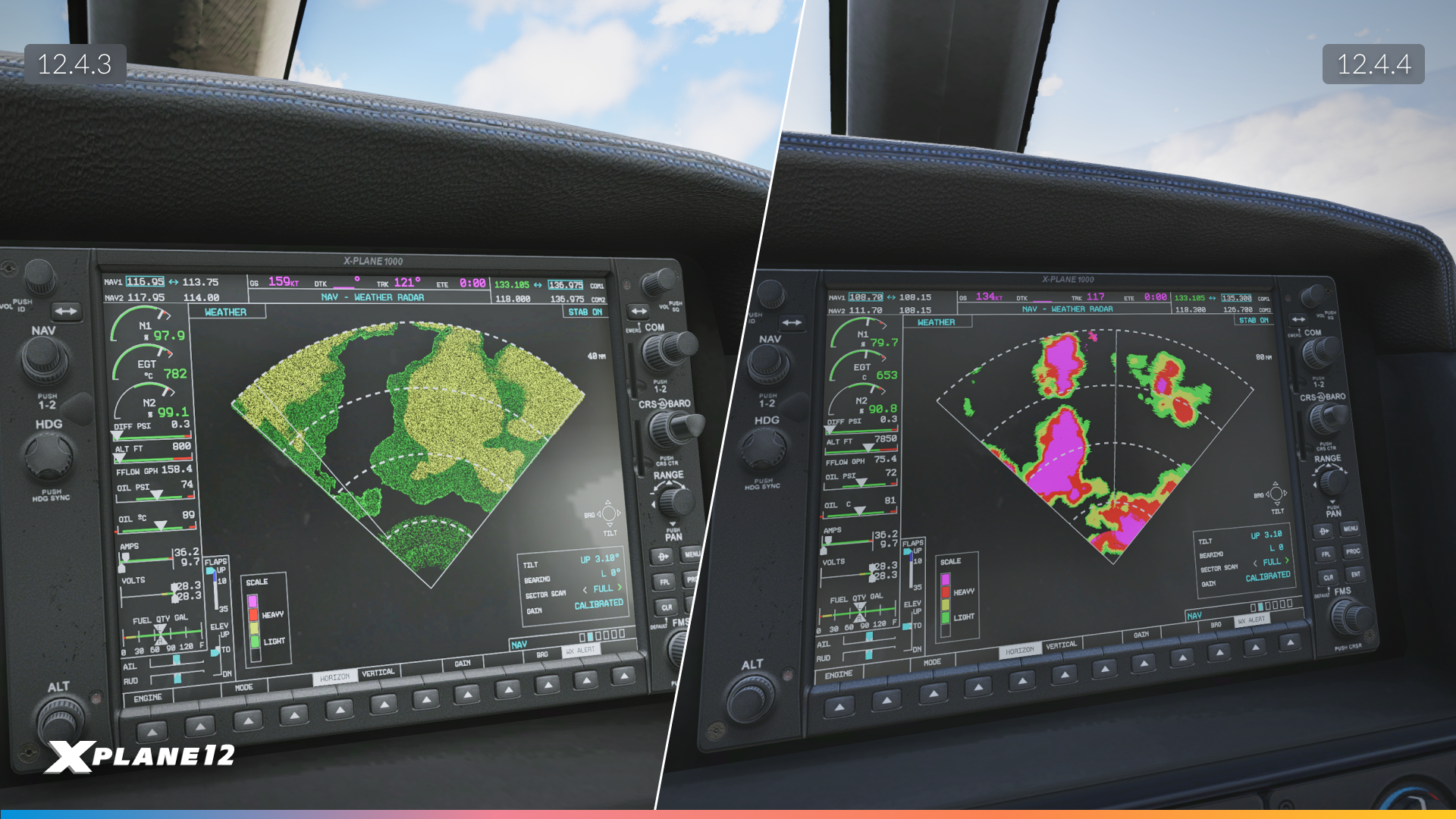
One of the most visible improvements version 12.4.4 brings is a significant and highly anticipated overhaul to X-Plane’s weather and weather radar systems. The default WX-radar scale now displays a range of green/yellow/red/magenta, a more realistic depiction of typical modern systems. In order to render radar returns correctly, Laminar Research has revised the return calibration, allowing severe weather to show up more appropriately as red/magenta cells.
Bits and Bobs, Scenery and Aircraft
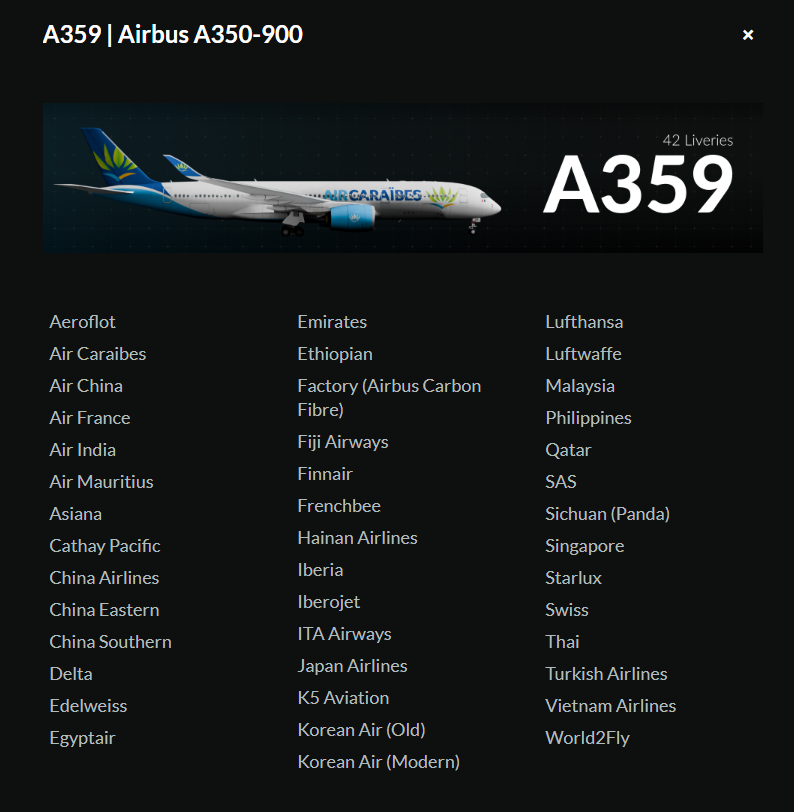
To round things off, the release contains a generous amount of new and updated static aircraft, as well as the addition of Farnborough Airport (EGLF) as an enhanced airport. In keeping with the times, 78 new static liveries and six new aircraft are introduced, most prominently the Airbus A359 and A35K, sporting 54 liveries between them. Also included are the Eurofighter Typhoon, The C-130J Super Hercules, and the Gulfstream 650, among others.
Final Notes
While the developer stresses the current update is an unstable version, the open beta is likely to be a must for a large portion of the X-Plane community. The upgraded weather radar in particular is a feature that has been highly anticipated and coupled with the powerful new weather simulation, represents a big step in keeping X-Plane at an up-to-date level of expected realism and immersion.
While flight simmers will enjoy these features, we eagerly await to see what third party developers choose to create with the new tools given, and what new features to implement. Laminar Research has ensured that none of the new features break existing aircraft, so developers should be able to take their time in implementing new features properly
Laminar Research has once again shown their dedication to keep X-Plane a modern and up-to-date system, with this update laying the groundwork for continued development to both the simulator and its wider ecosystem. You can read the extensive release notes on the X-Plane website.
Feel free to join our Discord server to share your feedback on the article, screenshots from your flights or just chat with the rest of the team and the community. Click here to join the server.