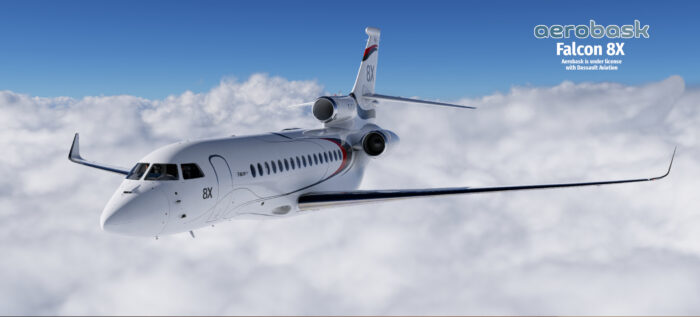
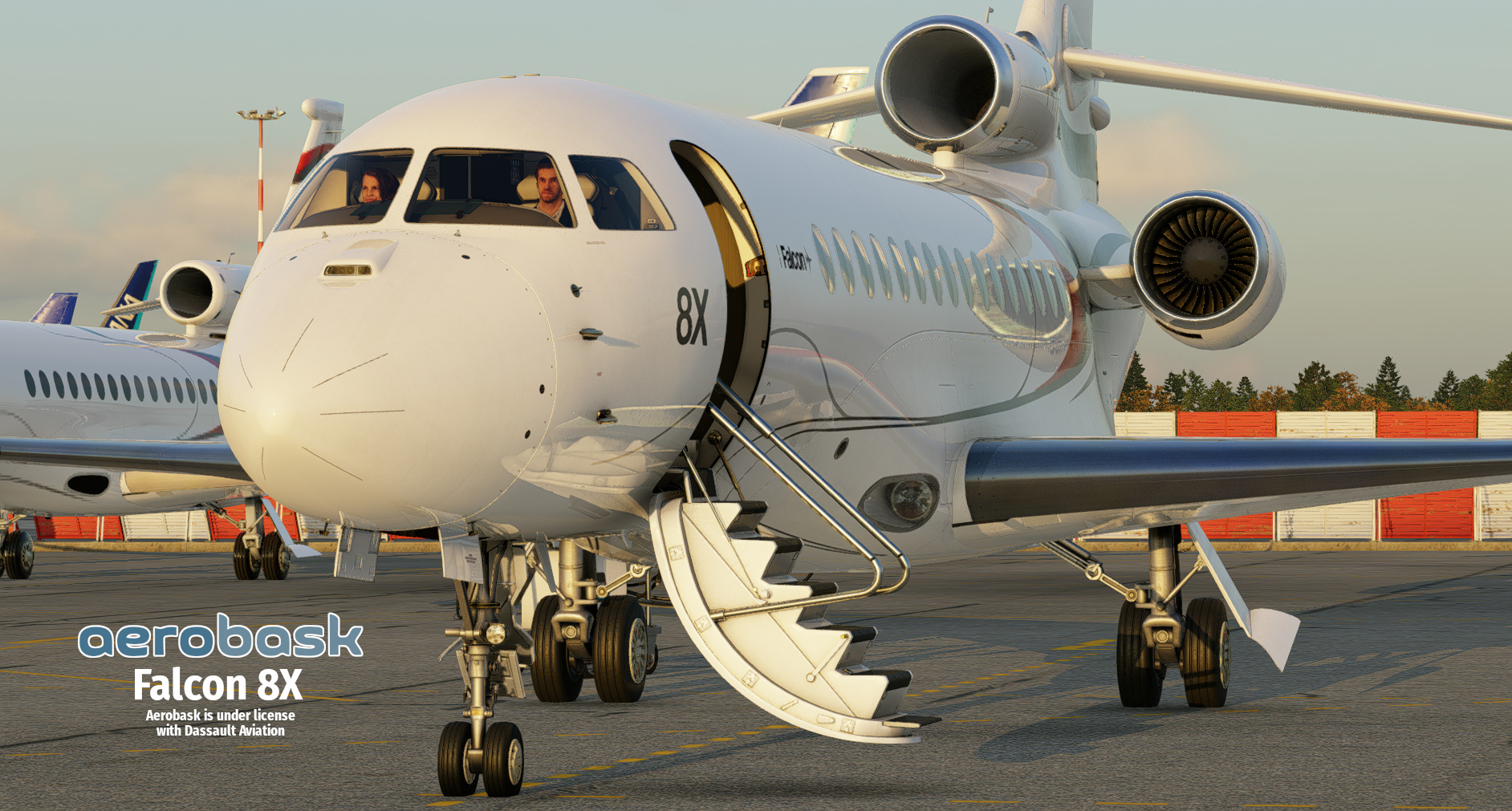
Aerobask expects to open the limited beta of its Falcon 8X for X-Plane 12 within the next few days, bringing the Dassault business jet close to its first public release. In the latest development update, the team narrowed its earlier target of releasing before the end of October. Access will initially be restricted to a batch of paid keys, allowing the developer to gather feedback before a wider launch.
Developer Lionel clarified that the first allocation is likely to fall in the mid-three-digit range, although the number has not been finalised. The purpose is to assess how the aircraft behaves in customers’ hands before opening sales more broadly. As of October 18, 2026, the announcement does not include a price or an exact launch date. The interval between the initial beta and the general release also remains unconfirmed.
The current schedule follows an October 6 update in which Lionel said the beta’s feature set had been frozen and additional pilots had joined private testing. The project was first announced in March 2019, originally for X-Plane 11. FSNews subsequently covered its EASy avionics previews in 2023, while the version now approaching public testing is being developed for X-Plane 12. That places the coming beta more than seven years after the initial announcement.
Custom EASy avionics and flight controls
The flight model combines aerodynamic work by X-Aerodynamics with Aerobask’s own fly-by-wire implementation, supported by input from a Dassault pilot and instructor. Custom autopilot and autothrottle systems are also part of the package. The aircraft is being developed under an official Dassault Aviation licence, with access to the manufacturer’s aircraft data. In a recent forum reply, Lionel confirmed that the real-world pilot involved in testing has the final say on readiness for release.
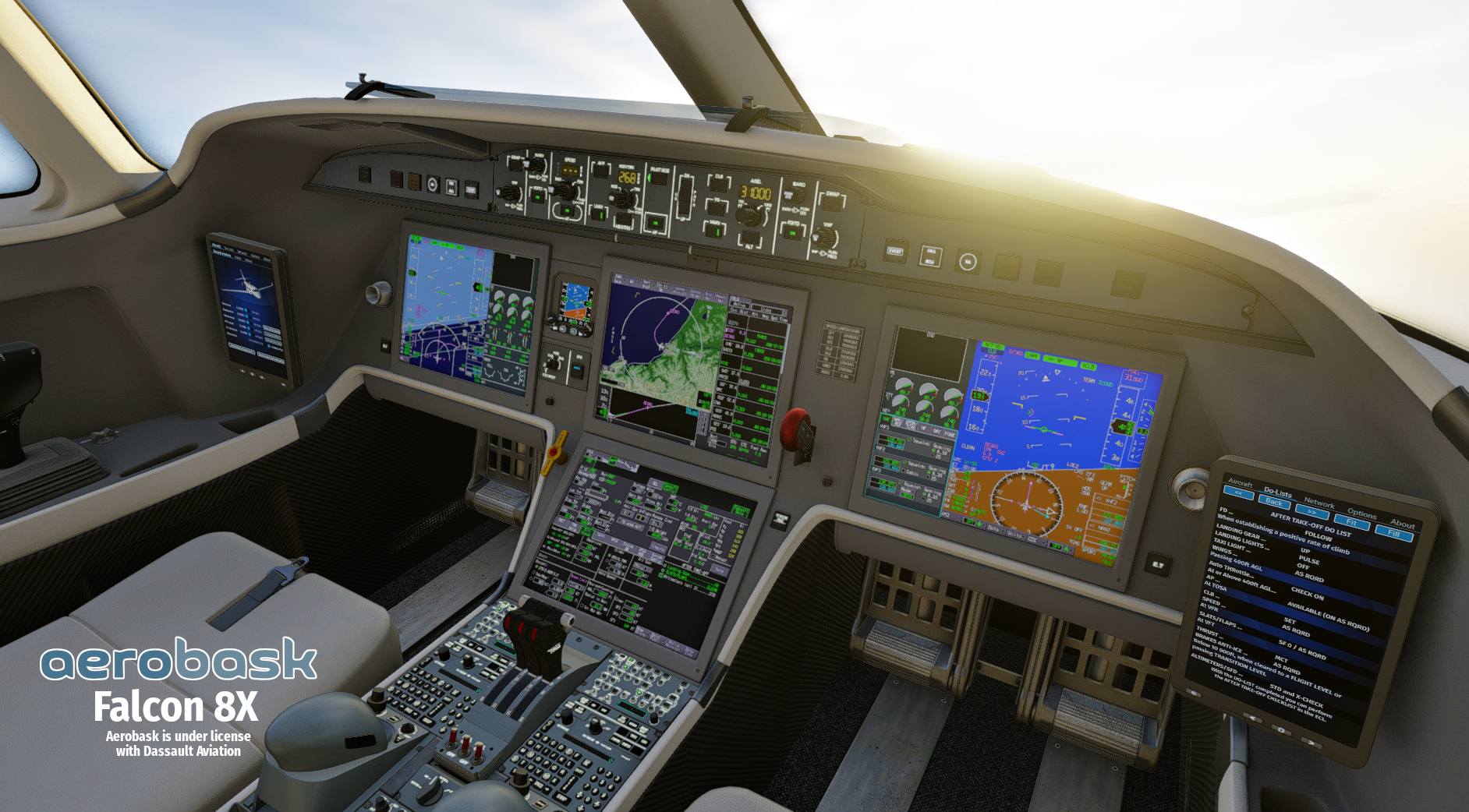
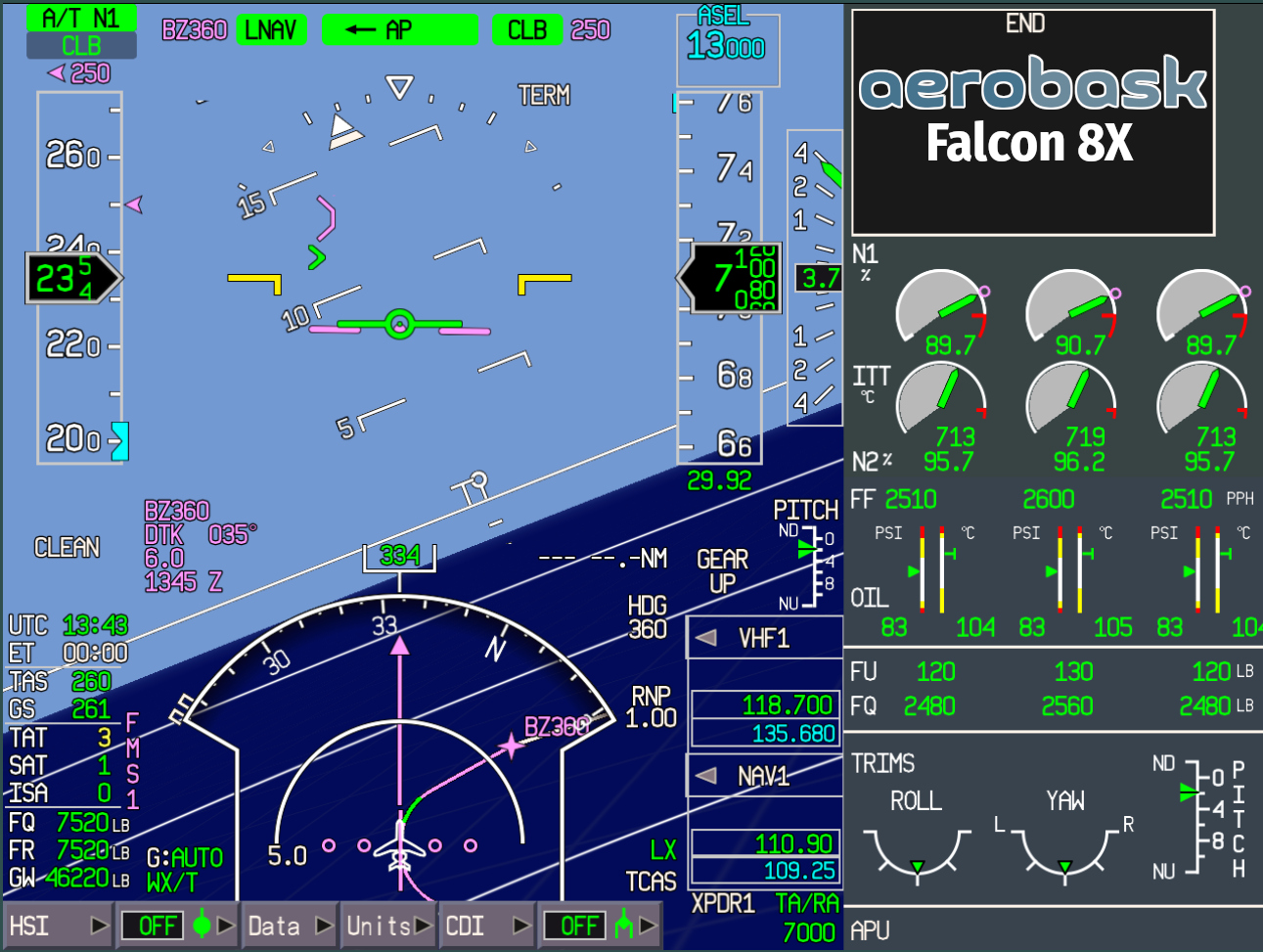
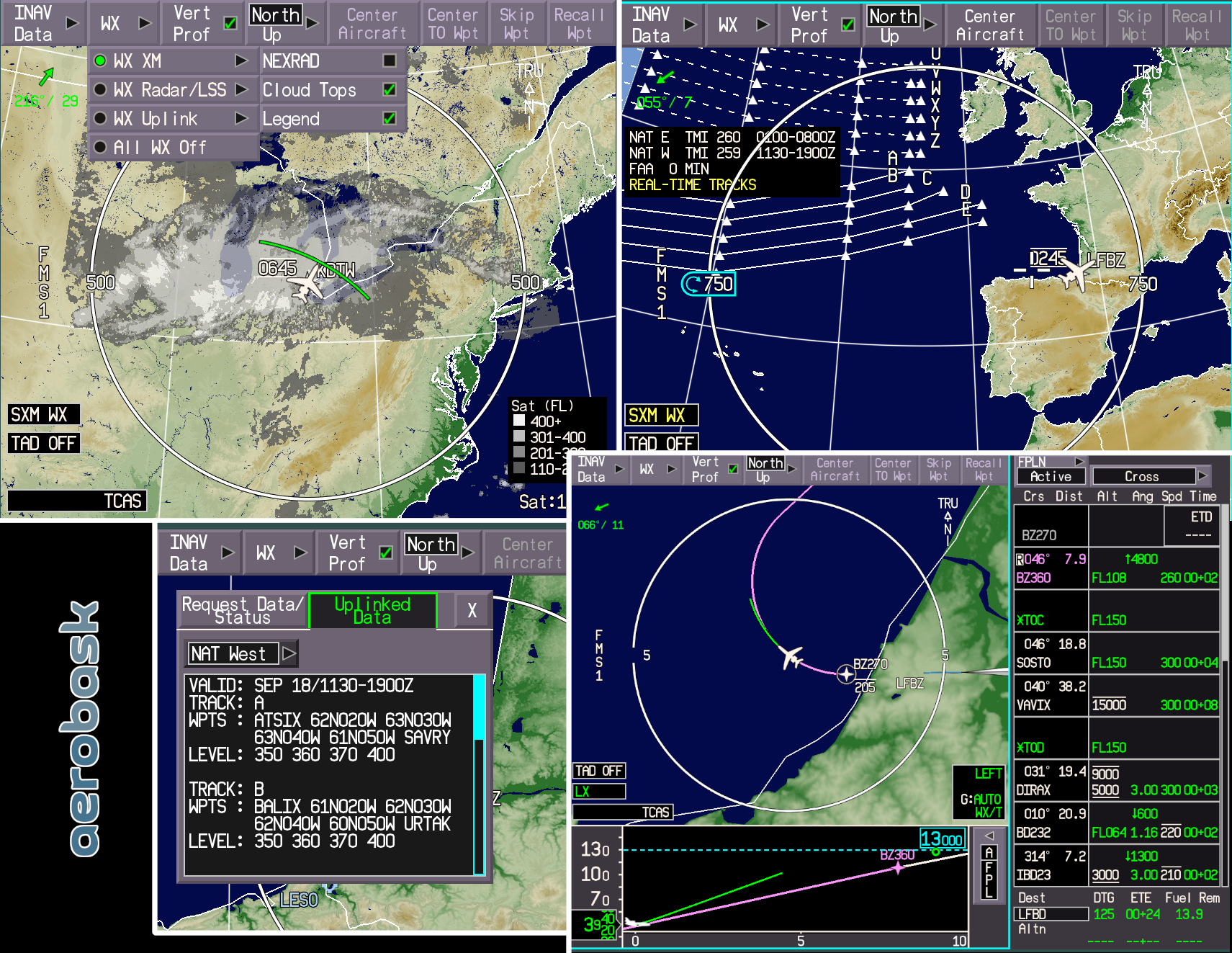
The EASy flight deck brings together the main instruments, engine indications and navigation displays. In his systems overview, Lionel identified custom flight management, weather radar, terrain-warning functions and North Atlantic route information among its capabilities. Screenshots show how that information is arranged across the displays, including weather overlays, oceanic tracks and a vertical route profile. The navigation pages provide an early look at the tools available for managing a long oceanic sector.
The current product specification lists SimBrief import, Navigraph charts and an FMS covering departures, arrivals, approaches and holding patterns. Electronic checklists accompany LNAV and VNAV guidance built around EASy logic. Departure clearance messaging over Hoppie and oceanic clearance functions are also advertised for the beta. These datalink tools are distinct from the full FANS 1/A CPDLC implementation reserved for subsequent versions, which will depend on network support.
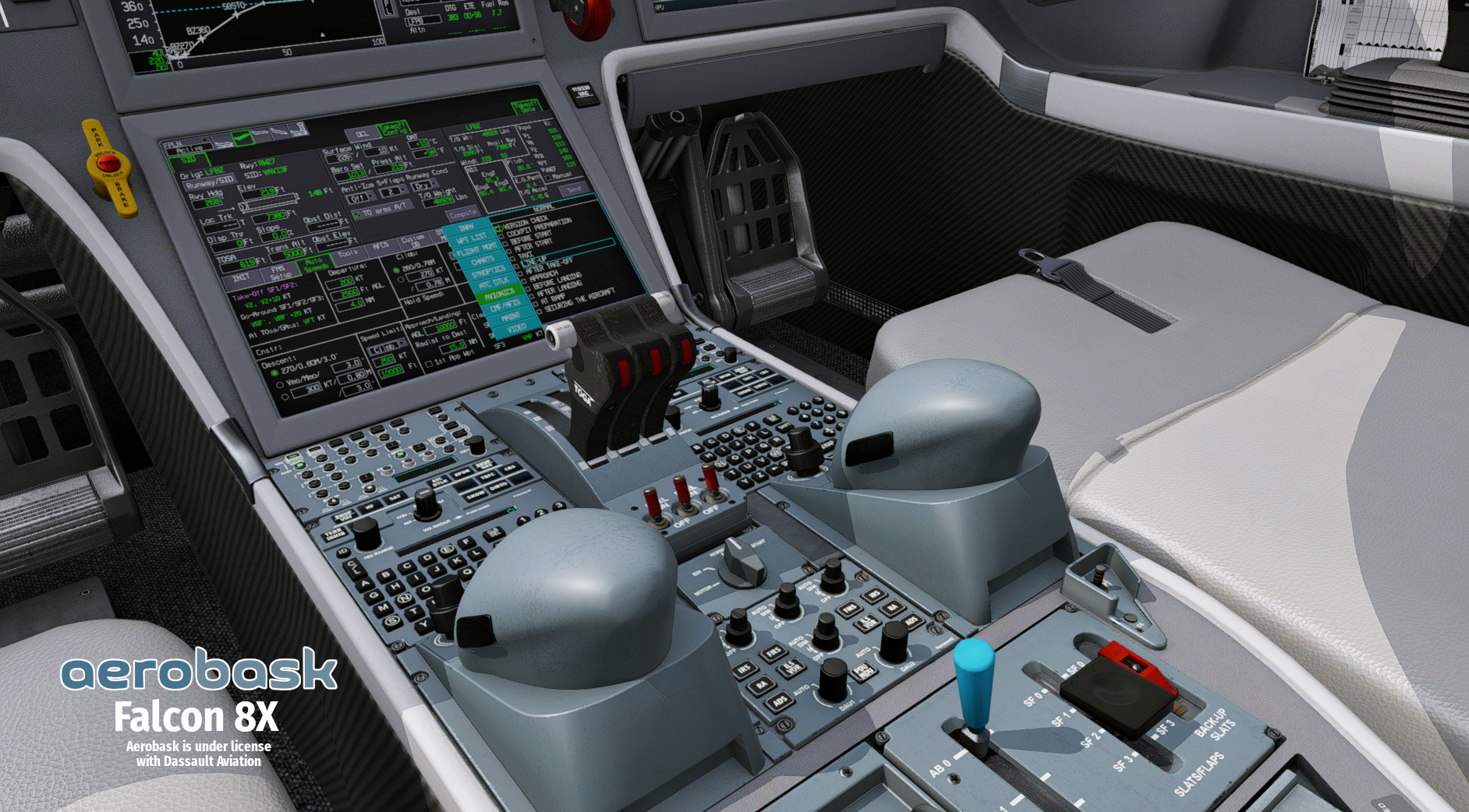
The dual head-up display presents synthetic terrain, obstacles and runways, with Aerobask describing it as FalconEye-style. Lionel previously confirmed that both HUDs are developed independently of X-Plane’s default implementation, describing a synthetic-vision solution within the simulator’s limits. The distinction matters when reading the specification: the name identifies the inspiration for the simulated display, while Aerobask’s own feature list sets out the functions being offered to customers.
Cabin modelling and sound
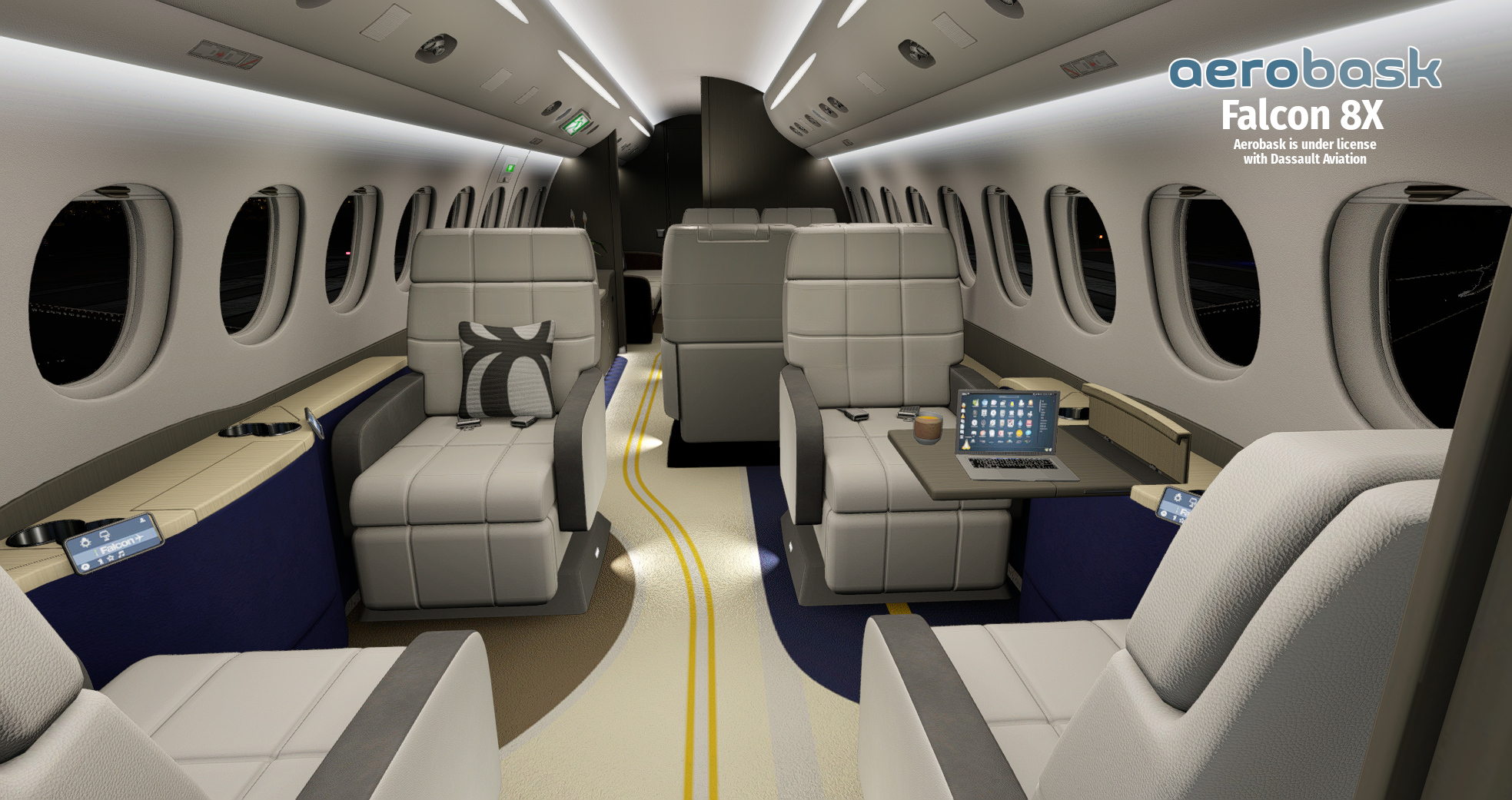
The cabin includes operating doors, animated seats and tables, and a choice of interior finishes. Ten 4K liveries and a white repaint base are included, along with wing flex and weather effects on the glazing. Daniela Rodríguez Careri provides the FMOD sound environment, using recordings from a real Falcon. The supplied screenshots show cream leather upholstery, side tables and a galley, carrying the cabin detail beyond the seating itself.
What remains outside the initial beta
Normal flights, from startup to shutdown, are the target for the opening beta. Aerobask has assigned custom failures, the emergency pedestal panel and the ram air turbine to later updates. Secondary flight plans and custom waypoints are also on the roadmap, alongside further systems refinements. That leaves several additions in development after the first customer build, beyond the initial round of bug fixes.
VR users should also take note before considering a purchase. Lionel has said that VR interaction depends on right-click and mouse-wheel emulation being available, and that work on support makes little sense until both requirements are met. Aerobask currently warns that the aircraft is not supported in VR. No date has been given for that to change, leaving the first beta without a confirmed path to operation using a headset.
An ultra long range trijet
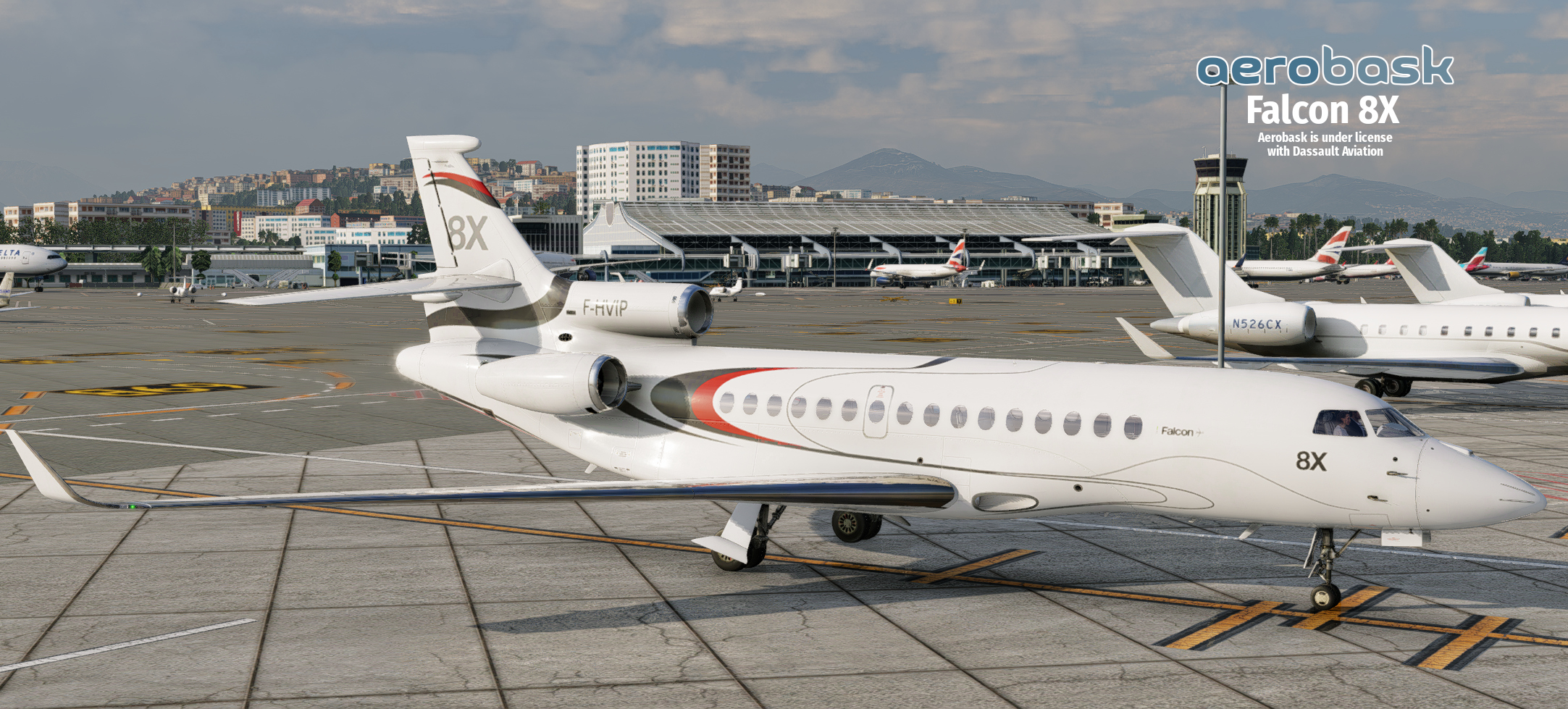
The real Falcon 8X is powered by three Pratt & Whitney Canada PW307D engines and has a published range of 6,450 nautical miles with eight passengers and NBAA IFR reserves. Dassault lists a maximum operating Mach number of 0.90 and a certified ceiling of 51,000 feet. Those figures explain the type’s appeal for long-distance business flying, while its short-field capability also gives it a role beyond large international airports.
For anyone preparing to join the beta, Aerobask has linked a video tutorial from its product page, and a second French-language walkthrough has since appeared in the development discussion. The team has confirmed that the pilot presenting that material is directly involved in testing the aircraft. With a bespoke flight deck to learn, those demonstrations provide a useful starting point for understanding the controls and procedures before the first customer flights.
Feel free to join our Discord server to share your feedback on the article, screenshots from your flights or just chat with the rest of the team and the community. Click here to join the server.