Synaptic Simulations has provided a substantial new development update on its upcoming Airbus A220, revealing significant advancements across aircraft systems, avionics, navigation functionality, visuals, and sound development for both Microsoft Flight Simulator 2020 and Microsoft Flight Simulator 2024.
The update follows the team’s April development report and June livestream presentation, during which Synaptic outlined the roadmap leading toward release. Since then, development has continued at a rapid pace, with the team focusing on refining existing functionality while simultaneously introducing new features and deeper system simulation.
According to Synaptic, extensive testing and continuous iteration have allowed developers to identify and resolve issues on a daily basis, helping the aircraft move steadily toward a more polished and feature-complete state.

Systems Continue to Mature
Much of the recent development effort has focused on aircraft systems, which remain one of the core pillars of the project.
Following the roadmap presented during the June livestream, Synaptic plans to publish a series of dedicated deep-dive updates covering electrical systems, display logic, flight data architecture, and flight control behaviour in the coming months. In preparation for those presentations, the team has continued refining the aircraft’s underlying systems simulation.
One of the most notable areas of progress is the electrical system. Synaptic reports that the Airbus A220 now features a fully simulated Auxiliary Power Unit (APU), including realistic voltage and frequency ramp-up characteristics as well as accurate bus transfer logic. These systems work in conjunction with updated hydraulic and fuel simulations, both of which have received further refinements to improve behaviour during normal operations and failure scenarios.
The electrical system now also drives a growing number of cockpit lighting functions. Various flight deck lighting zones have been integrated directly into the aircraft’s power architecture, allowing lighting behaviour to react realistically to switch selections and power availability.
Beyond individual systems, Synaptic has continued expanding interactions between aircraft subsystems. Synoptic pages covering hydraulics, fuel, electrical distribution and other major aircraft functions now dynamically respond to aircraft state changes, displaying cascading effects and system dependencies designed to mirror real-world behaviour.
The team describes this approach as part of its broader “emergent modelling” philosophy, where aircraft systems interact naturally rather than operating as isolated components.
Performance Optimisation and Stability Improvements
Alongside feature development, Synaptic has also invested considerable effort into optimisation.
Developers report that several memory leaks have been identified and resolved while broader architectural improvements have been implemented throughout the codebase. Internal systems have also been migrated toward newer and more efficient implementations, helping improve overall stability and simulator performance.
While these improvements are less visible than cockpit features, they play a critical role in ensuring a smooth experience once the aircraft reaches release.
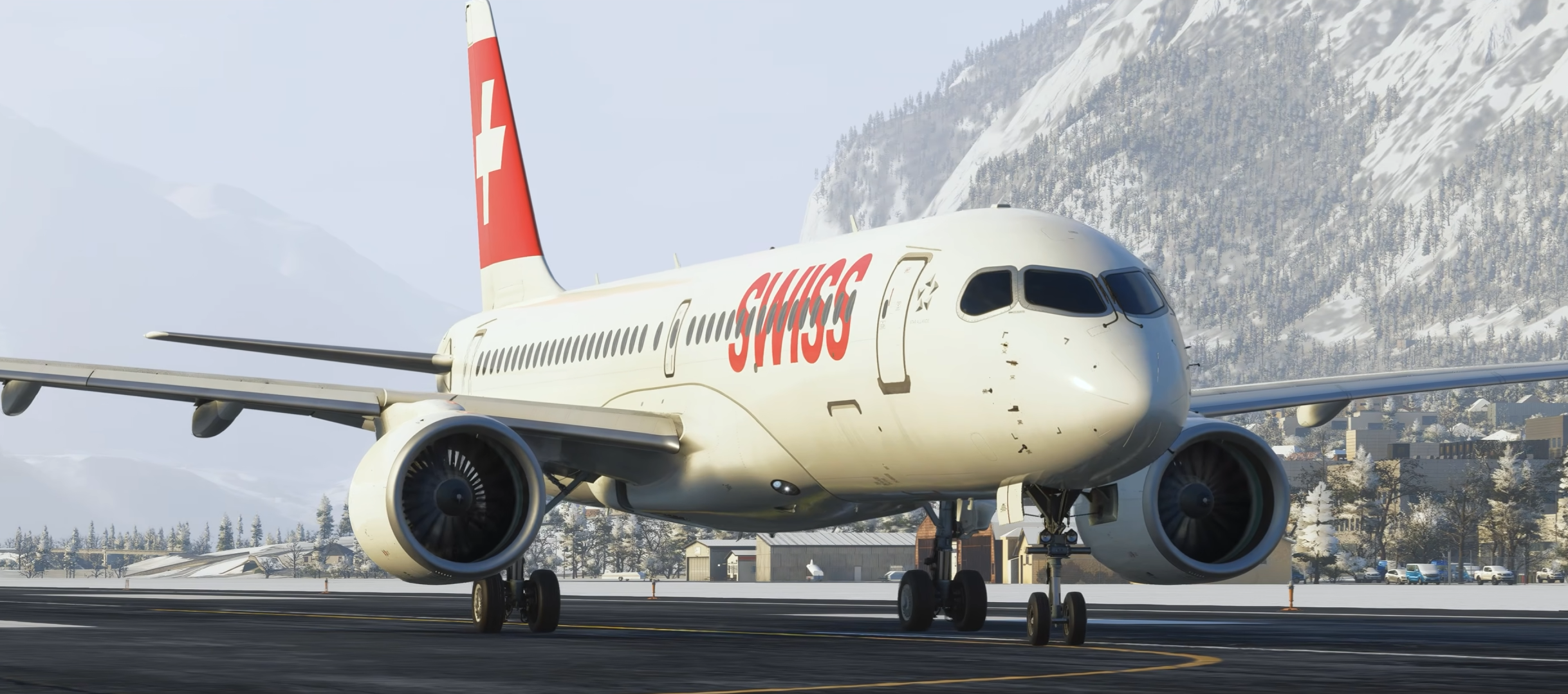
SimBrief, Navigraph and Airport Navigation Features Expanded
Navigation functionality continues to evolve as the project approaches its final development stages.
The Airbus A220 now supports full SimBrief flight plan uplink capability, allowing pilots to import operational flight plans directly into the aircraft’s Flight Management System during pre-flight preparation.
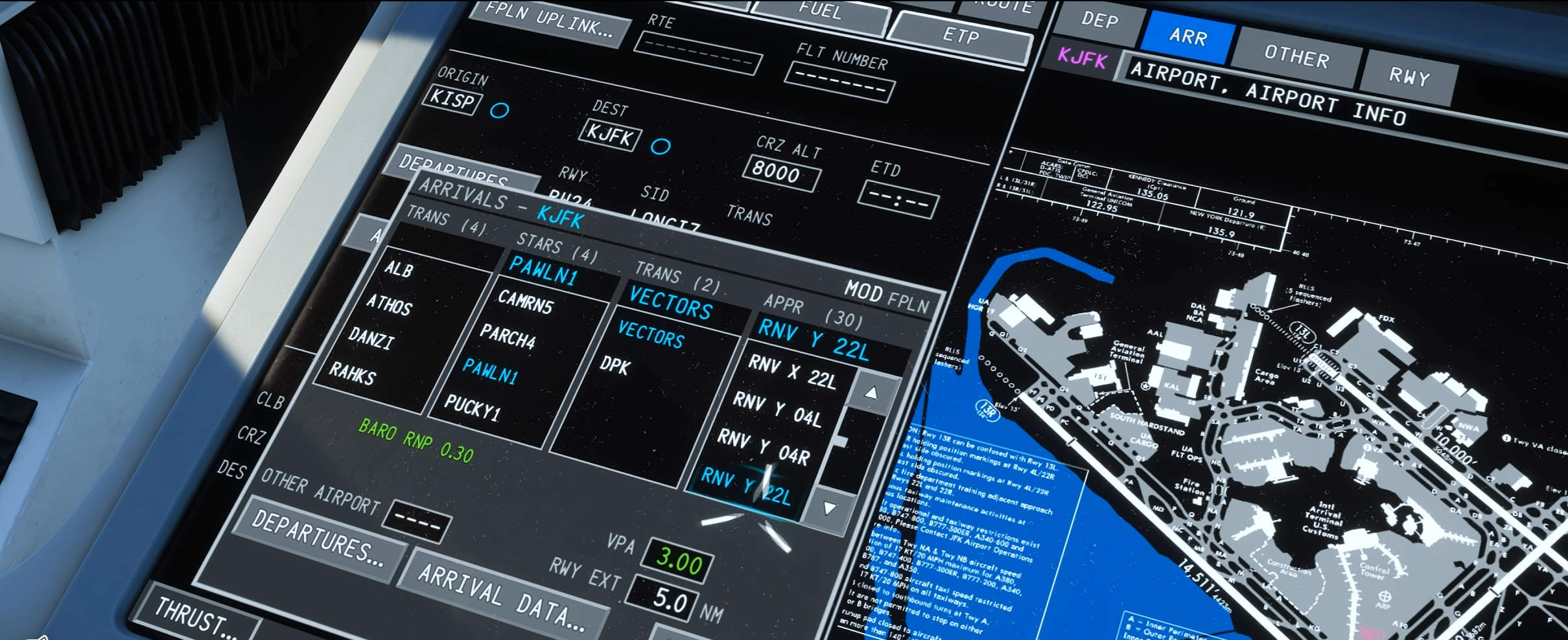
Navigraph integration has also progressed further, enabling charts and airport diagrams to be displayed directly on the aircraft’s display units. This allows pilots to access procedures and airport information without leaving the virtual cockpit environment.
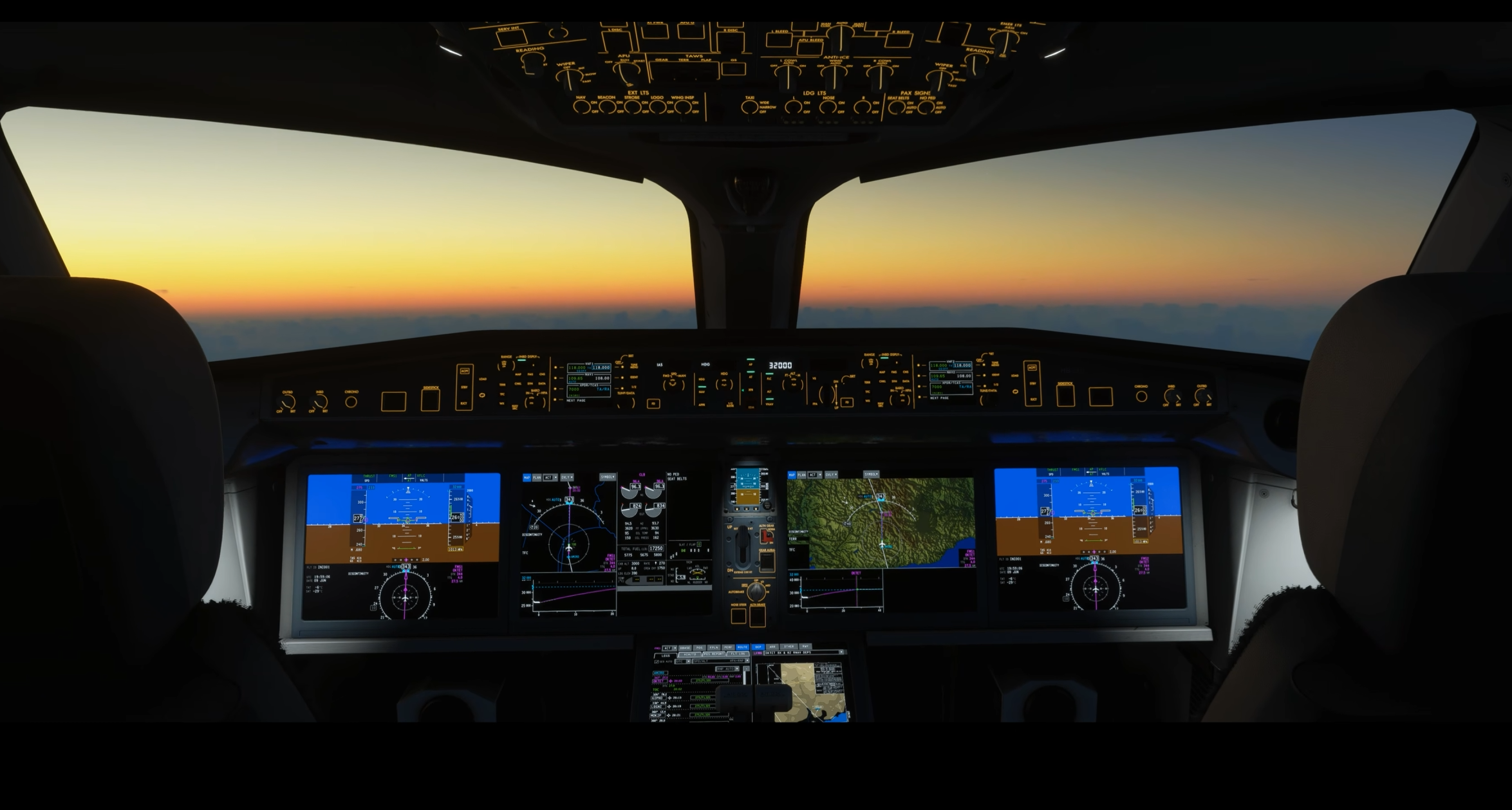
The same navigation database also powers the aircraft’s onboard airport navigation system. As demonstrated during recent previews, the navigation display automatically transitions between airport layouts and terrain mapping depending on range selections and display settings, creating a seamless experience during ground operations.
Flight Controls and Autoflight Development Advances
The electronic flight control system first demonstrated during Synaptic’s June livestream has also received additional refinement.
Recent work has focused on speed trim logic and pitch stability behaviour, areas that play an important role in accurately reproducing the A220’s flight characteristics throughout the flight envelope.
These developments integrate directly with the project’s expanding autoflight suite, including the recently developed autothrottle system. Together, these systems contribute to a more cohesive and realistic flight experience during all phases of flight.
Recent previews have also showcased a growing list of advanced capabilities, including custom fly-by-wire logic, autoland functionality, airport moving maps, terrain radar, LPV procedures, RNP-AR approaches, detailed system synoptics and interactive circuit breaker simulation.
Visual Development Nearing Completion
On the visual side of development, Synaptic appears to be entering the final stages of refinement.
The team reports that recent work has focused heavily on community feedback, internal testing and reviews conducted by pilots, engineers and subject matter experts. Numerous reported issues have been addressed while additional visual enhancements have been implemented throughout both the cockpit and exterior model.
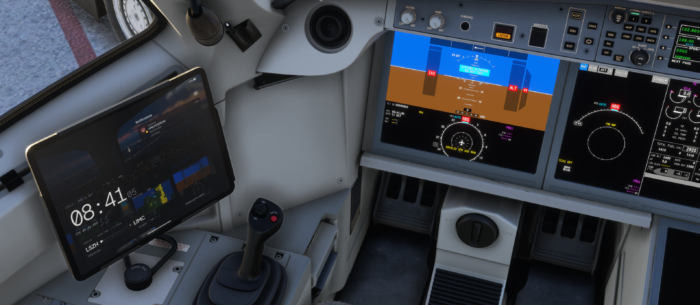
The latest screenshots showcased a highly detailed flight deck featuring advanced system pages, custom navigation displays, terrain mapping, airport moving map functionality and extensive system synoptics.
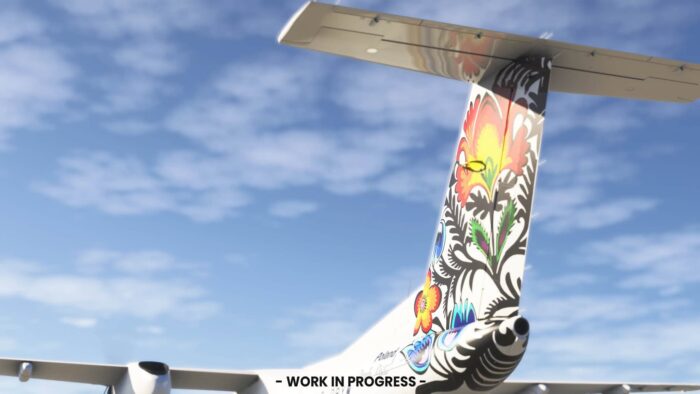
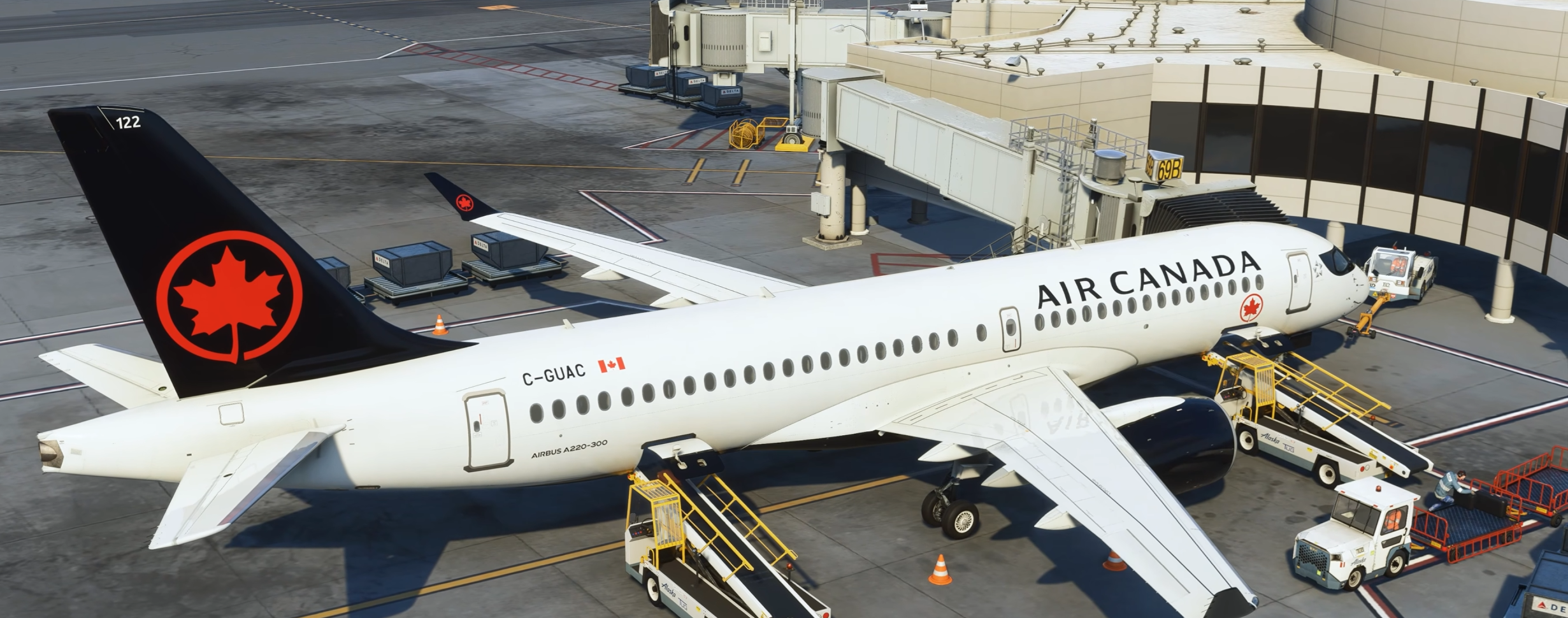
Additional previews highlighted GSX integration support, detailed cabin modelling, custom terrain radar functionality and continued improvements to exterior texturing and visual fidelity.
According to Synaptic, the goal remains to deliver a consistent high-fidelity experience across both Microsoft Flight Simulator 2020 and Microsoft Flight Simulator 2024.
Echo19 Confirmed for Audio Development
Perhaps the most significant announcement included in the update concerns the aircraft’s sound package.
Synaptic has confirmed a partnership with Echo19, a developer widely recognised within the flight simulation community for its work on highly detailed aircraft audio environments.
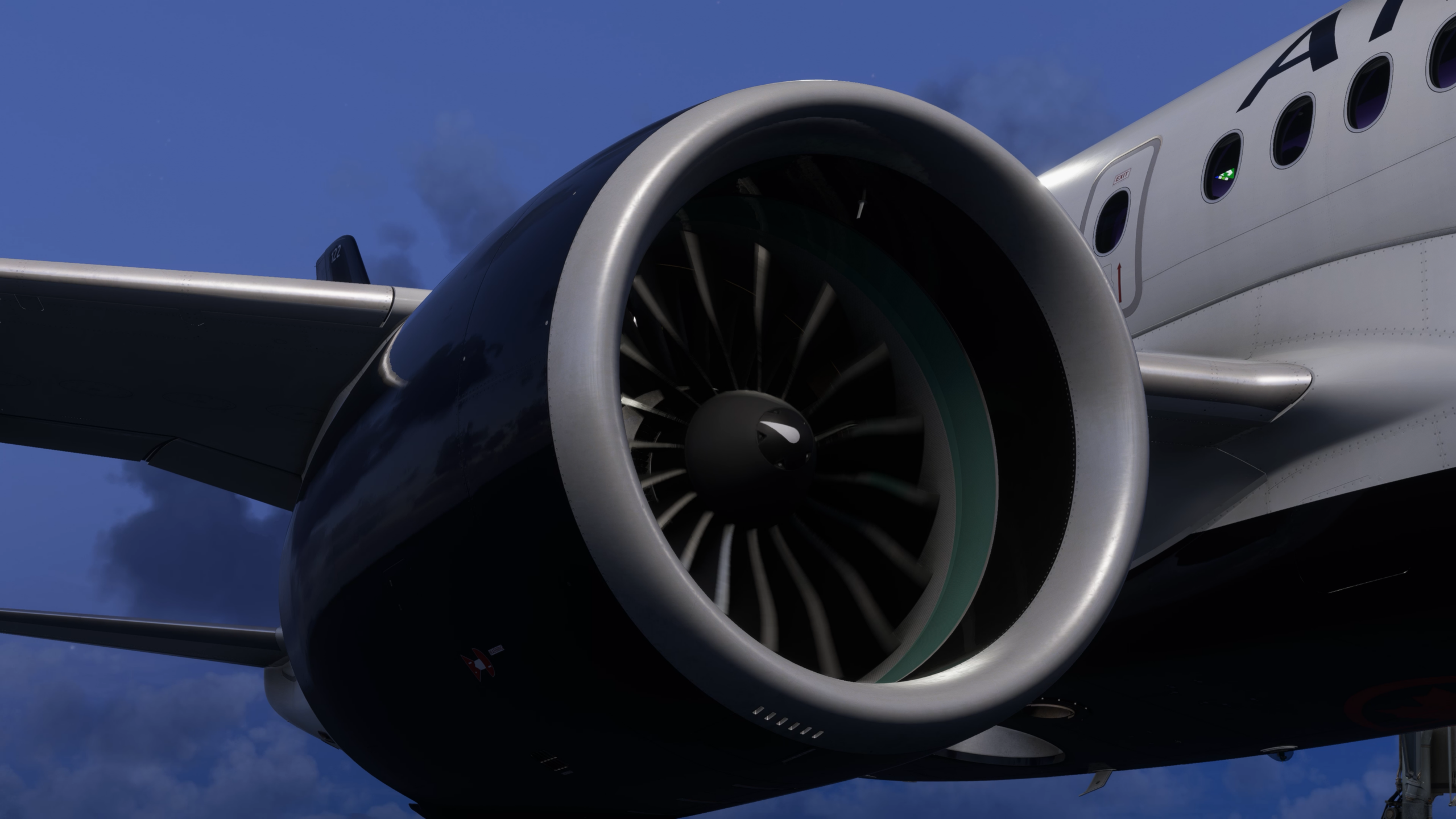
Development is already underway using recordings captured from a real Airbus A220. According to the team, sound implementation will focus on accurately positioning individual audio sources throughout the aircraft, from cockpit switch interactions to the distinctive characteristics of the Pratt & Whitney PW1500G engines.
The objective is to deliver an immersive and spatially accurate sound environment that complements the aircraft’s extensive systems depth and visual fidelity.
Looking Ahead
While Synaptic has yet to announce a release date for the Airbus A220, the latest FSExpo presentation demonstrates continued momentum across all major areas of development.
Systems simulation continues to expand, navigation functionality is becoming increasingly sophisticated, visual development is approaching completion and sound production is now progressing alongside the rest of the project.
With dedicated system-focused updates planned throughout the coming months, the development team appears committed to providing the community with a transparent look at the final stages of the aircraft’s journey toward release.
For attendees visiting FSExpo 2026, the aircraft is available for hands-on demonstrations at the iniBuilds booth, offering the public its closest look yet at one of the most anticipated airliner projects currently in development for Microsoft Flight Simulator.
Feel free to join our Discord server to share your feedback on the article, screenshots from your flights or just chat with the rest of the team and the community. Click here to join the server.