If you were around in the flight simulation community in 2017, you may have heard of Deadstick. REMEX Software first presented it at FlightSim2017, where they announced that it would be a flight simulator with a focus on bush flying, realistic systems, aircraft customization, and engaging missions.
In a time when all we had was Prepar3D and X-Plane, neither of which did a great job of really representing bush flying and all its intricacies, a flight sim dedicated to just bush flying seemed amazing. I personally remember being very excited for it and following its development, which is why I was quite disappointed when REMEX went quiet after 2020. Most of us thought Deadstick was officially dead. In September of 2024, however, it was revealed that Deadstick’s development had been handed off to a new studio called Mythwright, which would continue working on the game along with another studio, Spiral House.
But has Deadstick missed its time to shine? From 2017 until now, it’s no secret that the state of flight simulation has changed massively thanks to the revival of Microsoft Flight Simulator. With MSFS’ excellent terrain modeling, satellite imagery, and exceptional detail, authentic bush flying was now possible and more enjoyable than ever. With MSFS 2024’s addition of a career mode, some are left wondering if Deadstick has anything unique to offer at this point. From May 22 to May 26, nearly seven years after its initial announcement, Deadstick’s first public playtest went live, and I hopped on to see for myself if this is the case.
Gameplay
Deadstick is set in a fictional map in what I can only assume is the early 2000s, in a time when the internet was only accessible from a beige PC with a noisy harddrive and cellphones still had front buttons on them. There are briefing huts at each airport where you can use one such PC to download weather data, do flight lessons, and manage your pilot’s license. Information about jobs and your company is received though messages on your phone.
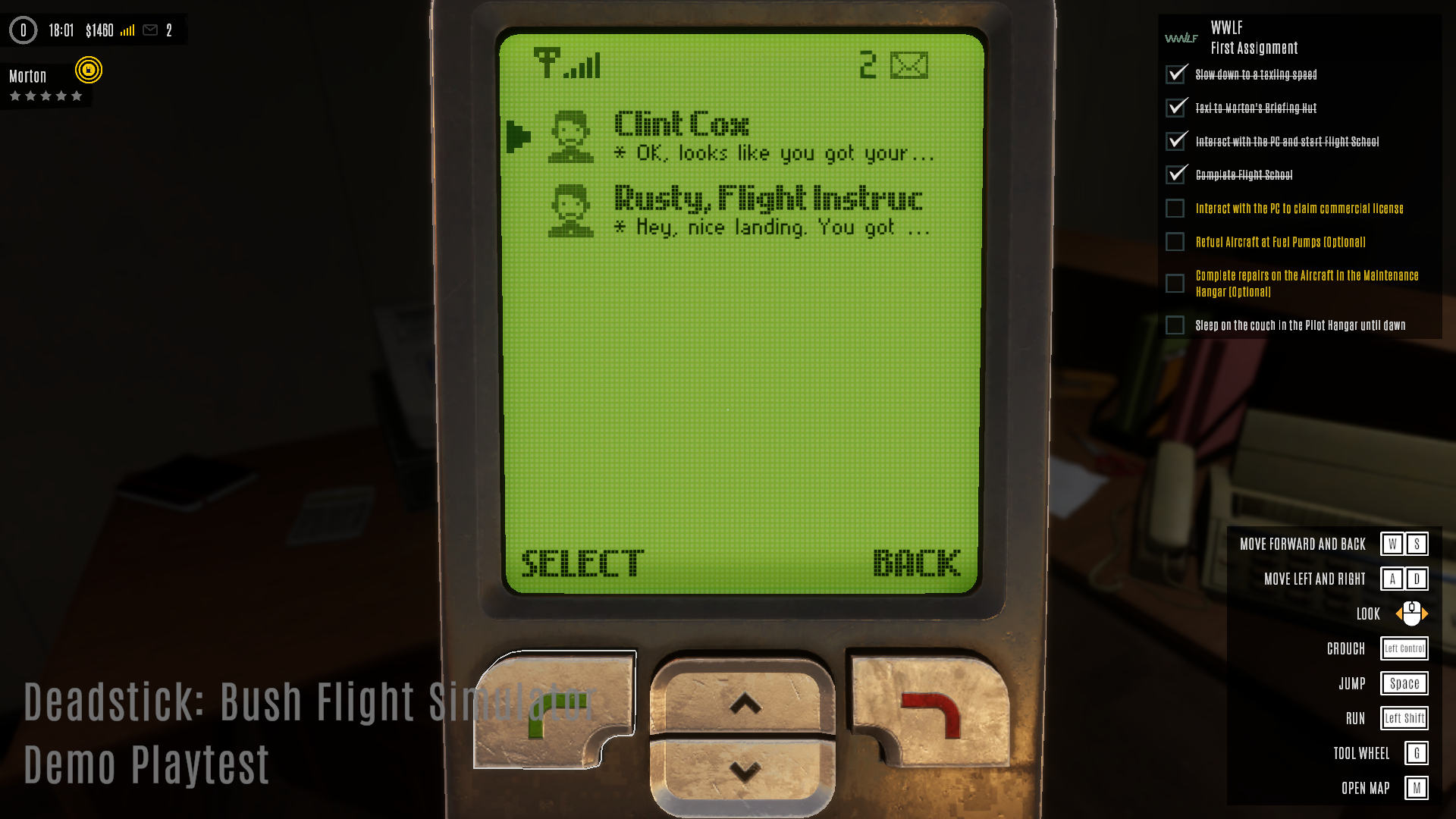
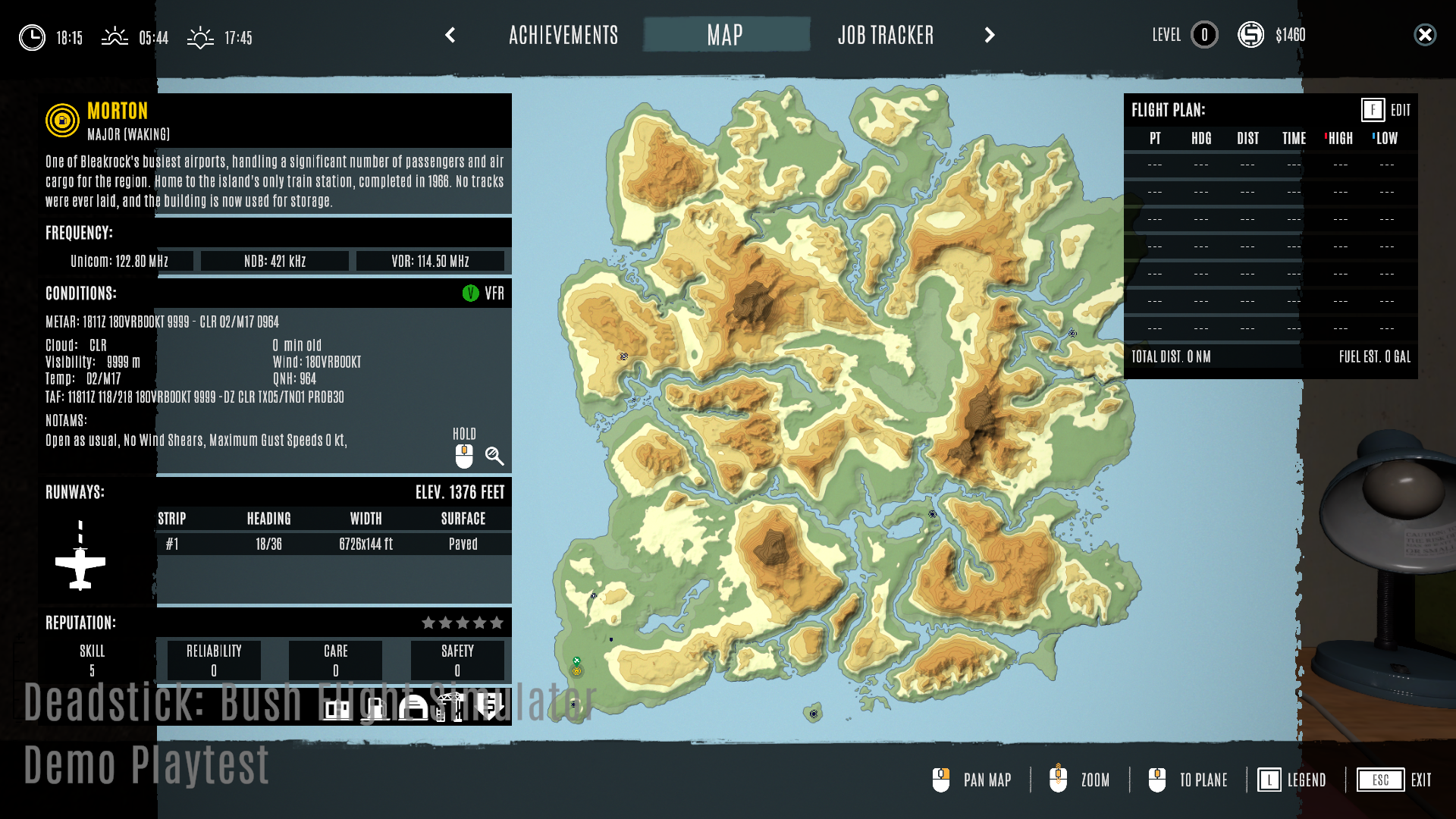
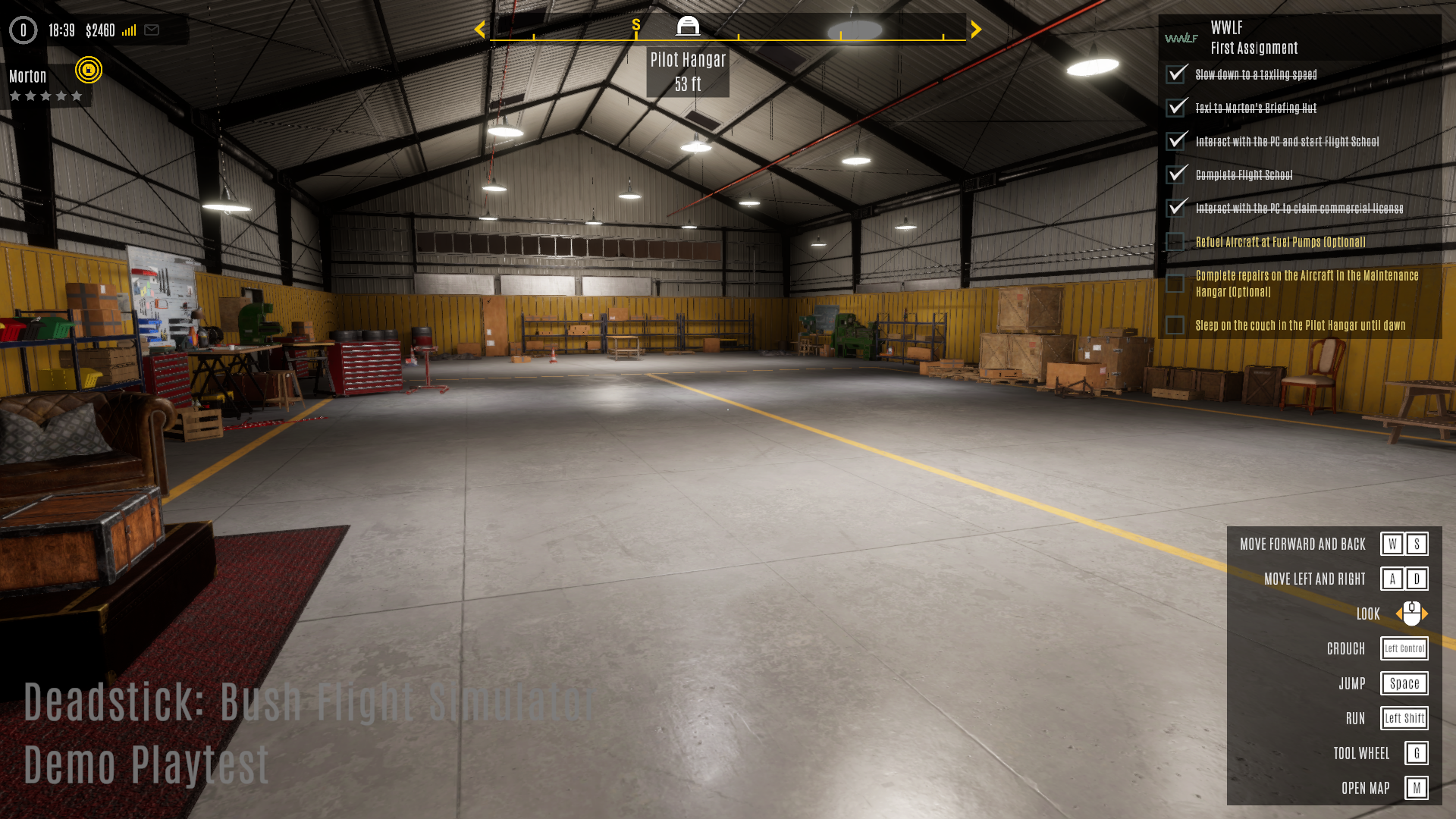
When you first start out, you receive a message from the boss of your new company, who tells you to pick up your insurance from the fax machine in the briefing hut you spawn at. You also get the weather information here and then head outside to the hangar to tow out your plane and prepare to fly. You have a character that you move around to accomplish things. Unlike in other simulators, where you use a menu or EFB to configure your aircraft or get flight information, you have to move your character around and do things yourself here, similarly to MSFS 2024’s walkaround mode.
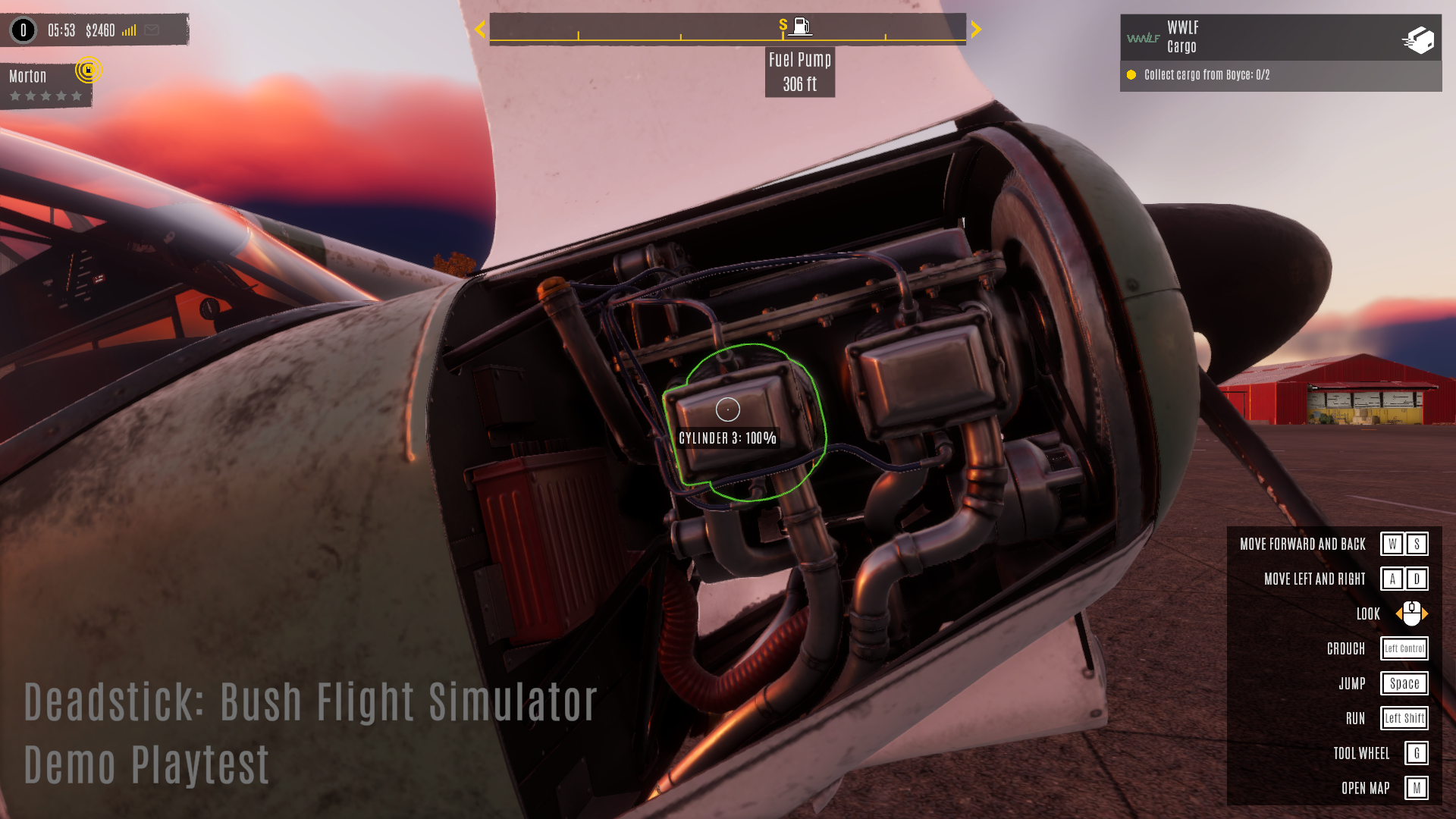
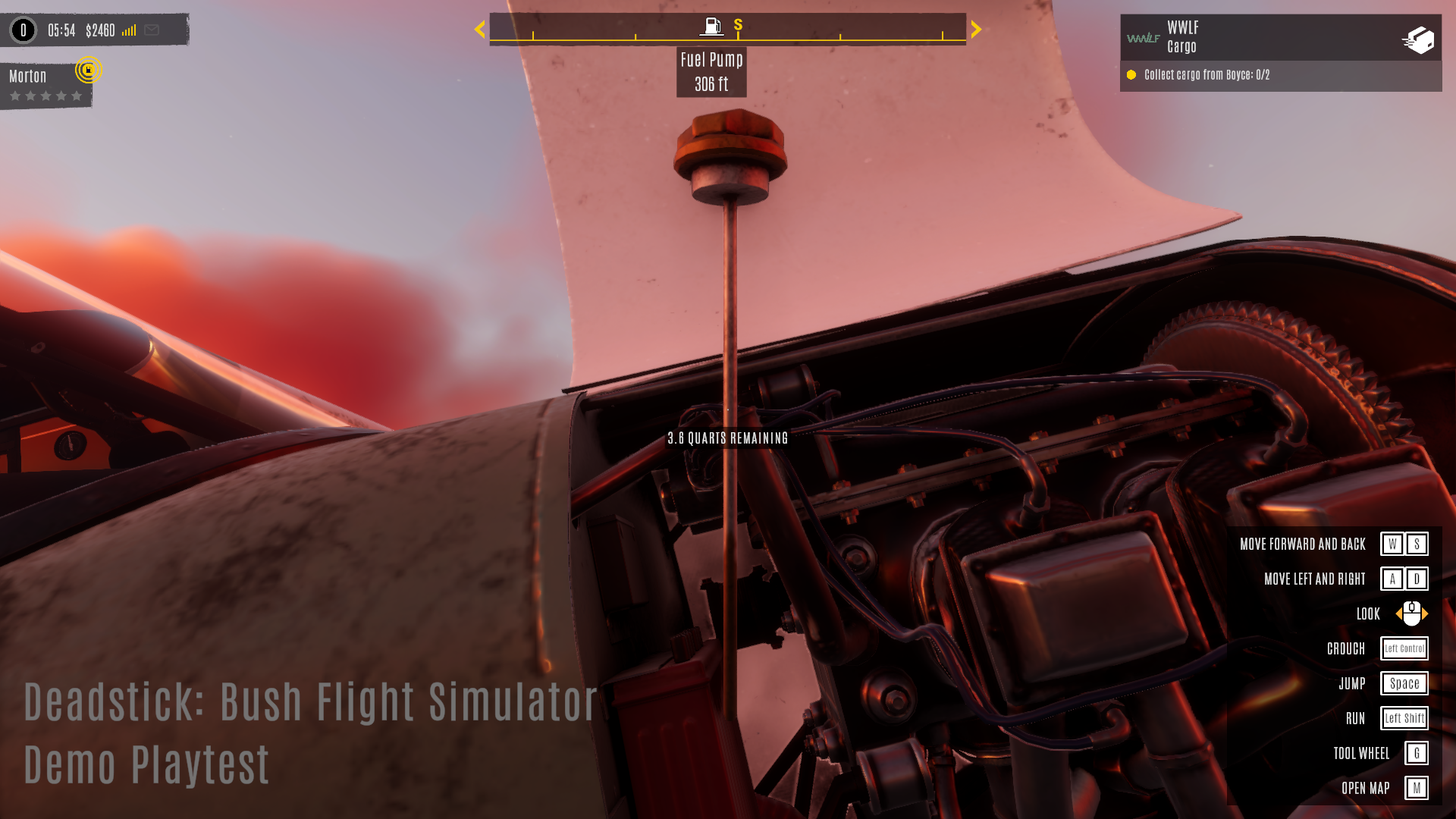
Once you tow the plane out of the hangar, you can proceed to do a preflight inspection. This includes checking the brakes, tires, engine oil, draining the fuel, among other standard preflight procedures. Each part of the plane shows a percentage of wear, and even some individual parts of the engine, such as the spark plugs, cylinders, and air filter, can wear or break.
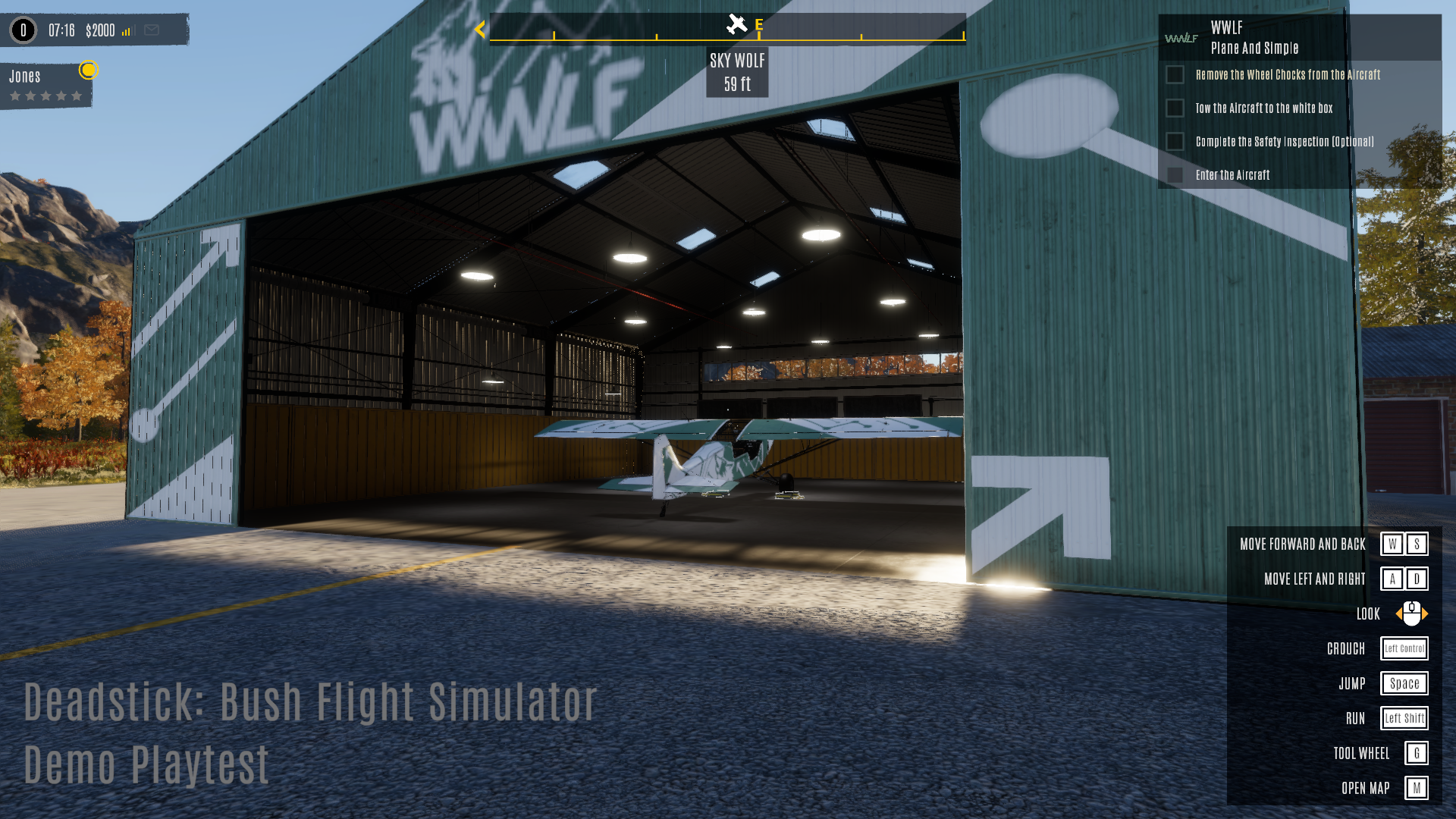
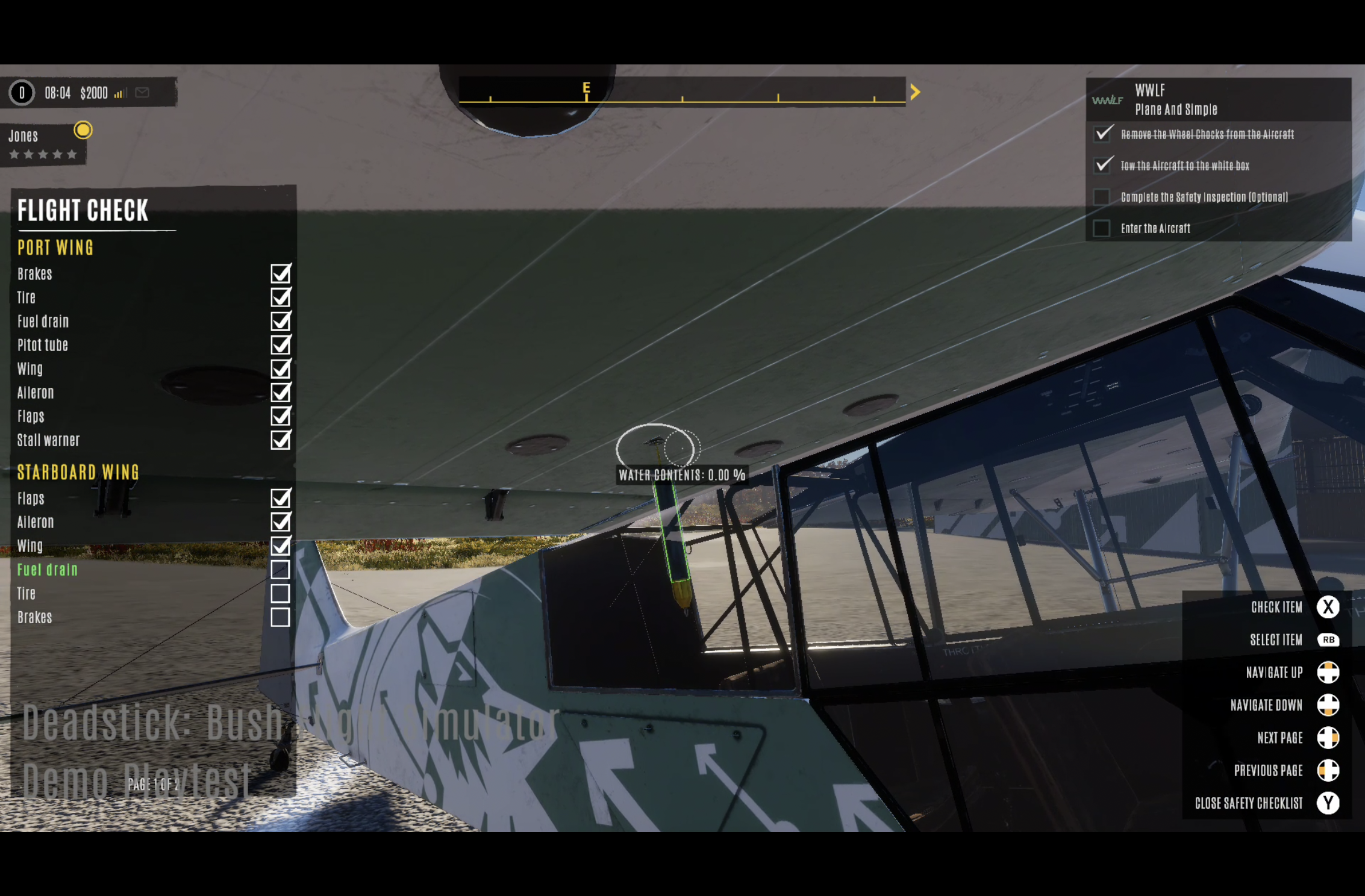
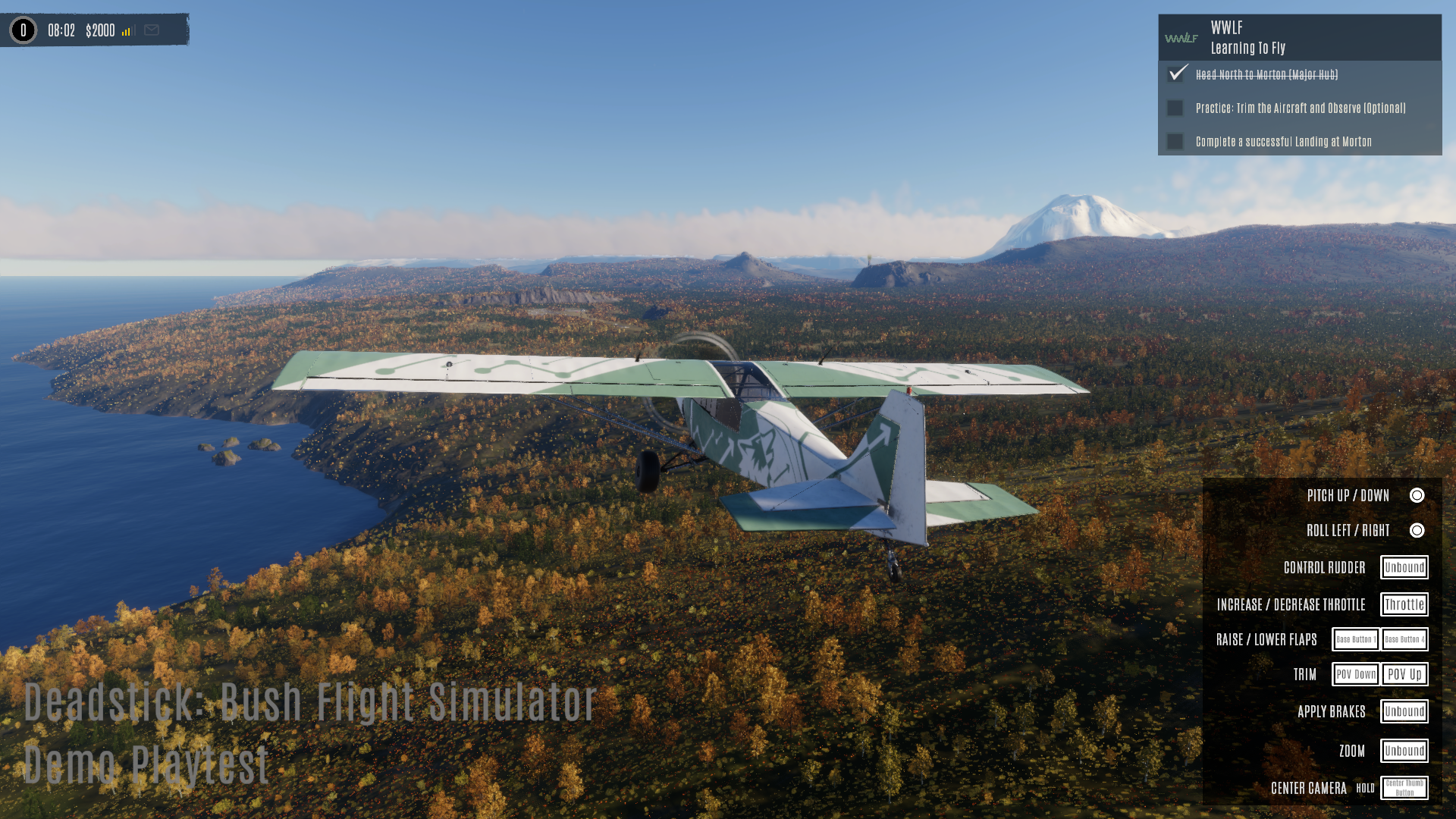
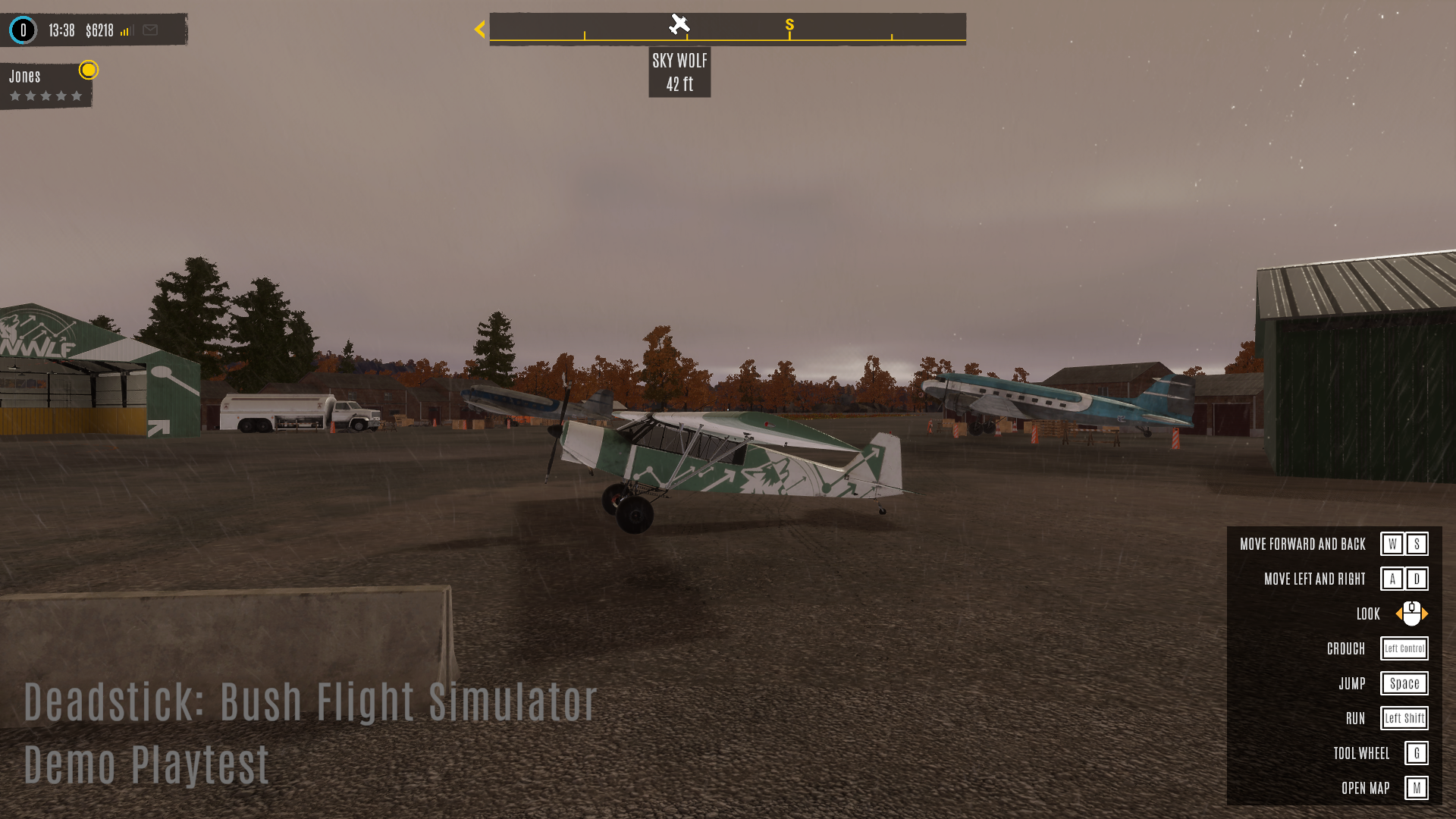
The boss sends you another message telling you to fly to an airport a few miles north, so after the preflight inspection comes taxi and takeoff. The Cub-like aircraft requires some finesse with the rudder on takeoff to counteract the left-turning tendencies induced by the engine and other instability caused by wind.
Once in the air, you are quickly reminded that your plane isn’t equipped with a GPS to guide you to the airport. The map doesn’t show your position either, unless you’re on the ground. VORs, NDBs, visual references, and good old dead reckoning are your primary tools for navigating in Deadstick.
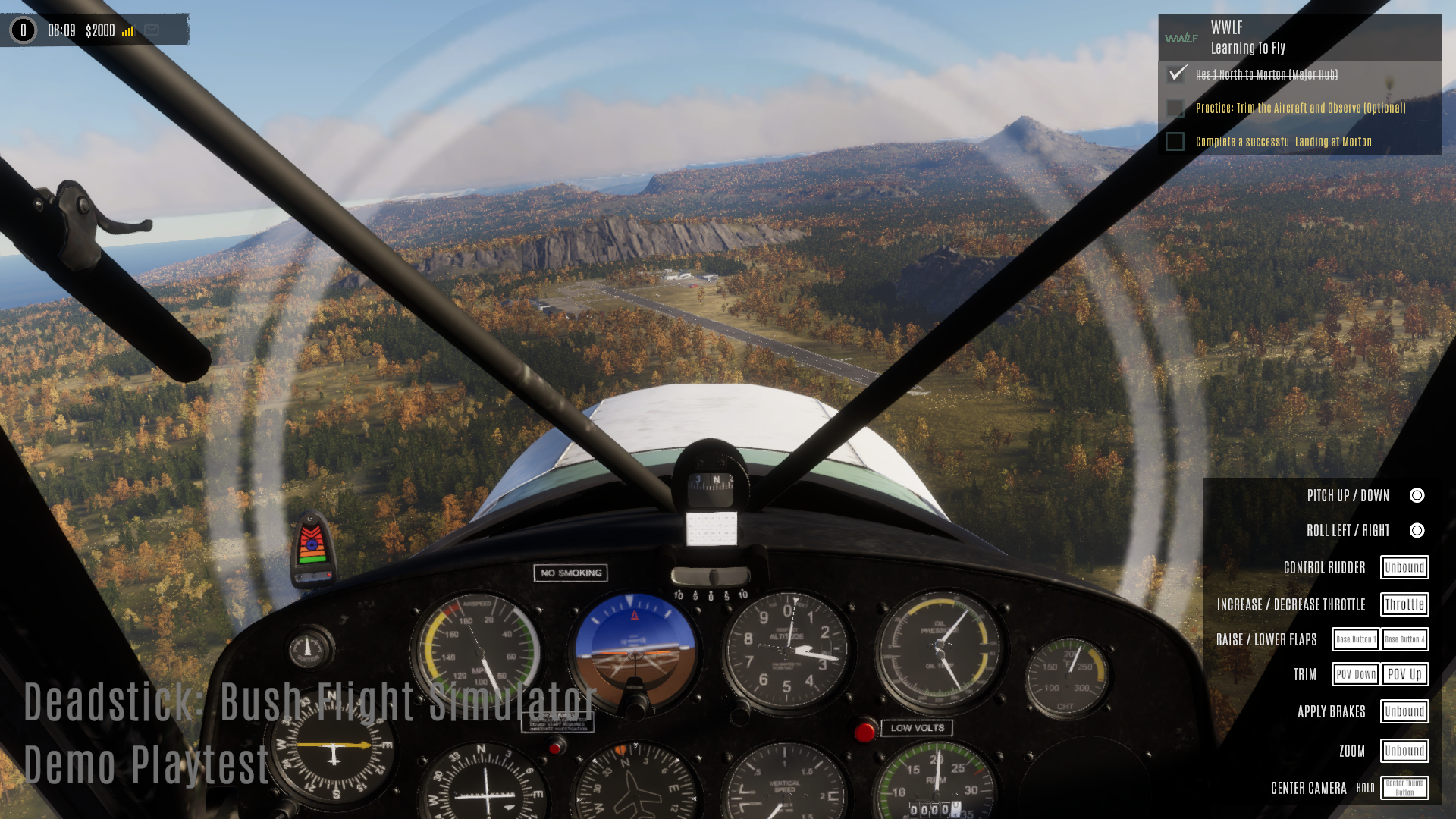
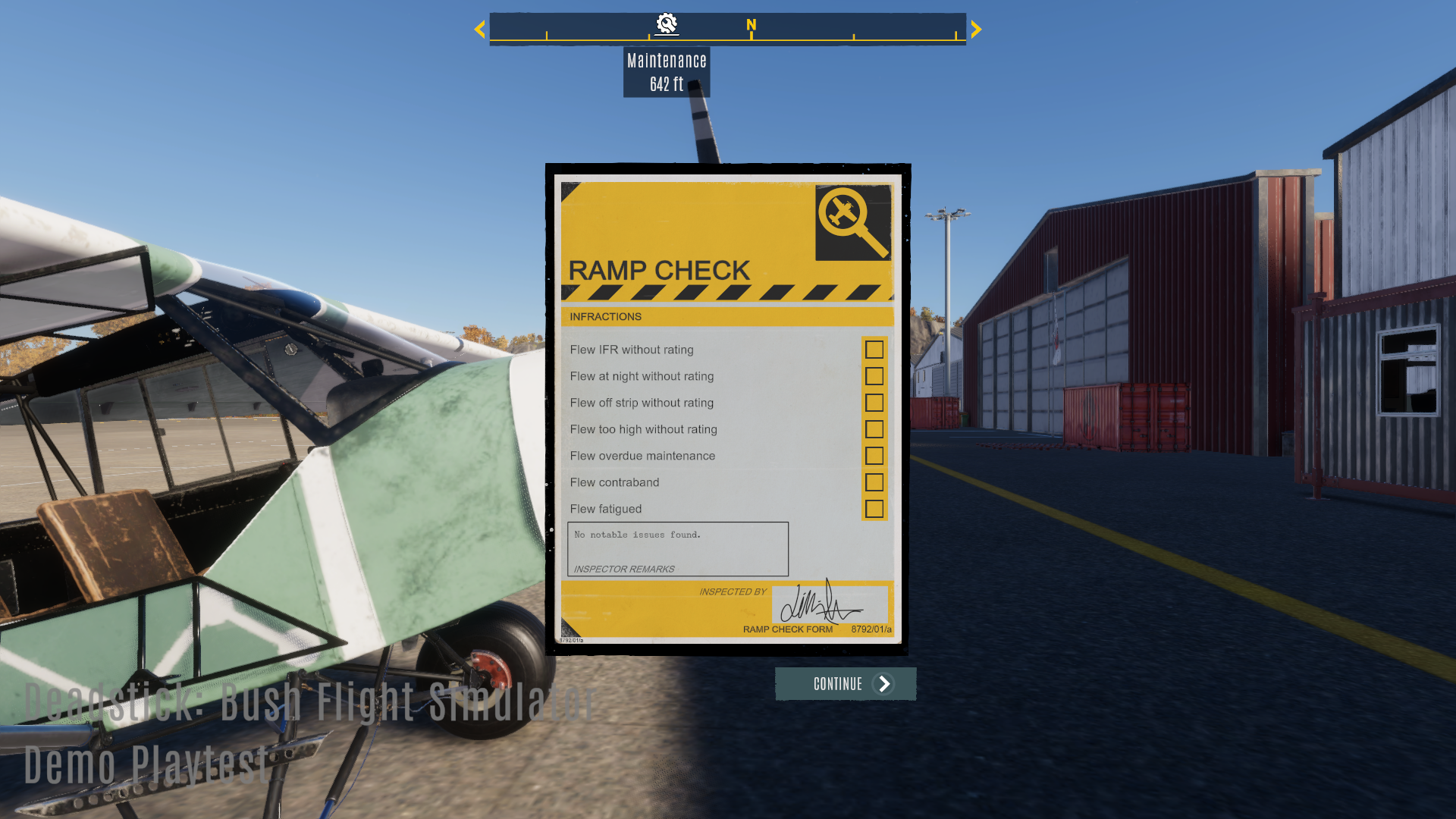
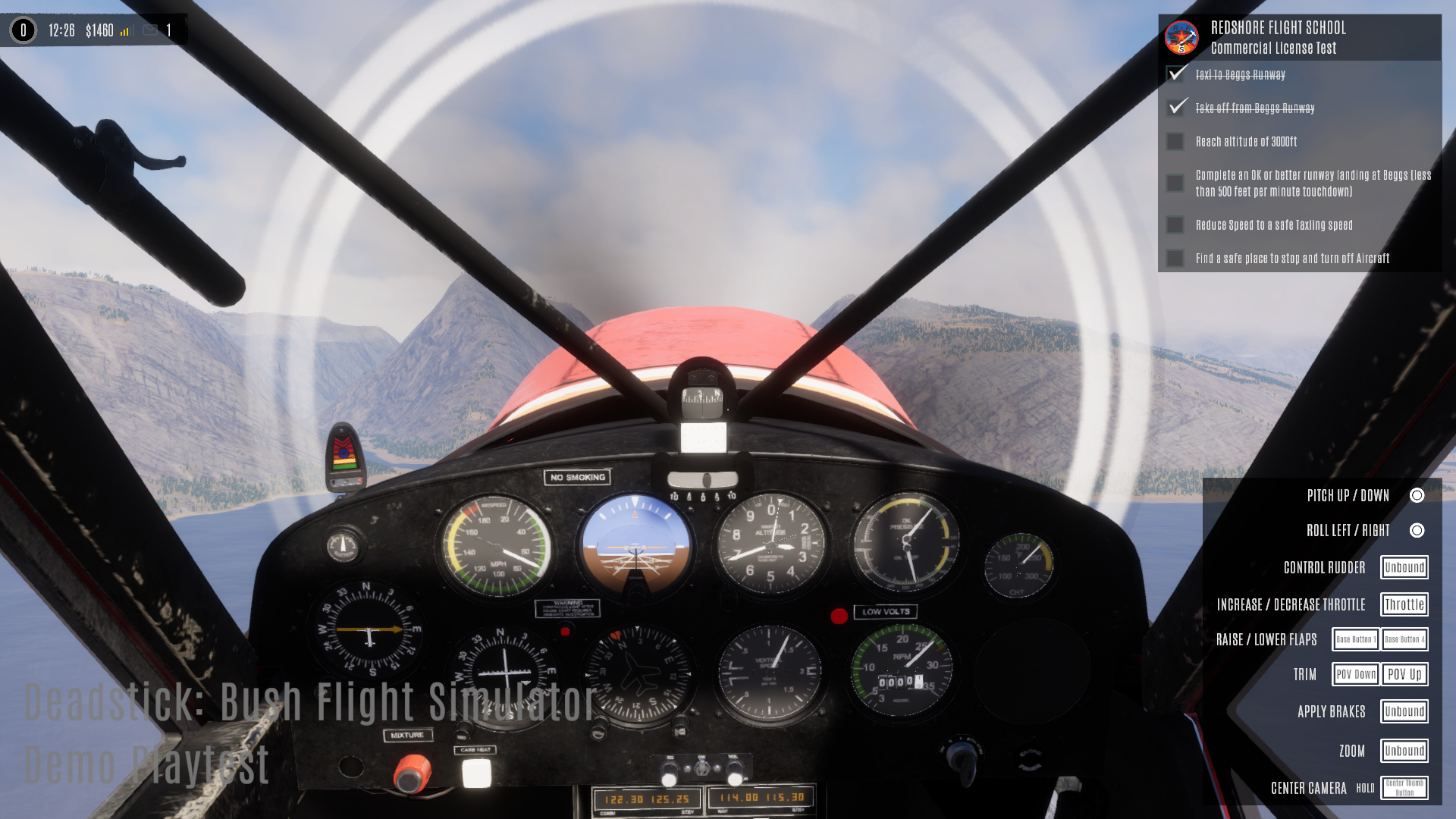
The first flight doesn’t take long, and soon, you’re back on the ground at an airport called Morton. Here, you’re tasked with completing some flight lessons if you need them, or you can skip straight to taking your commercial license checkride. The checkride was nothing more than taxiing, taking off, flying to 3000ft, then coming back and landing with less than 500ft/min descent rate. Of course, this is awfully easy for a CPL checkride, but I suppose the point of it from the game’s standpoint is just to make sure you know the basics before you take on real jobs.
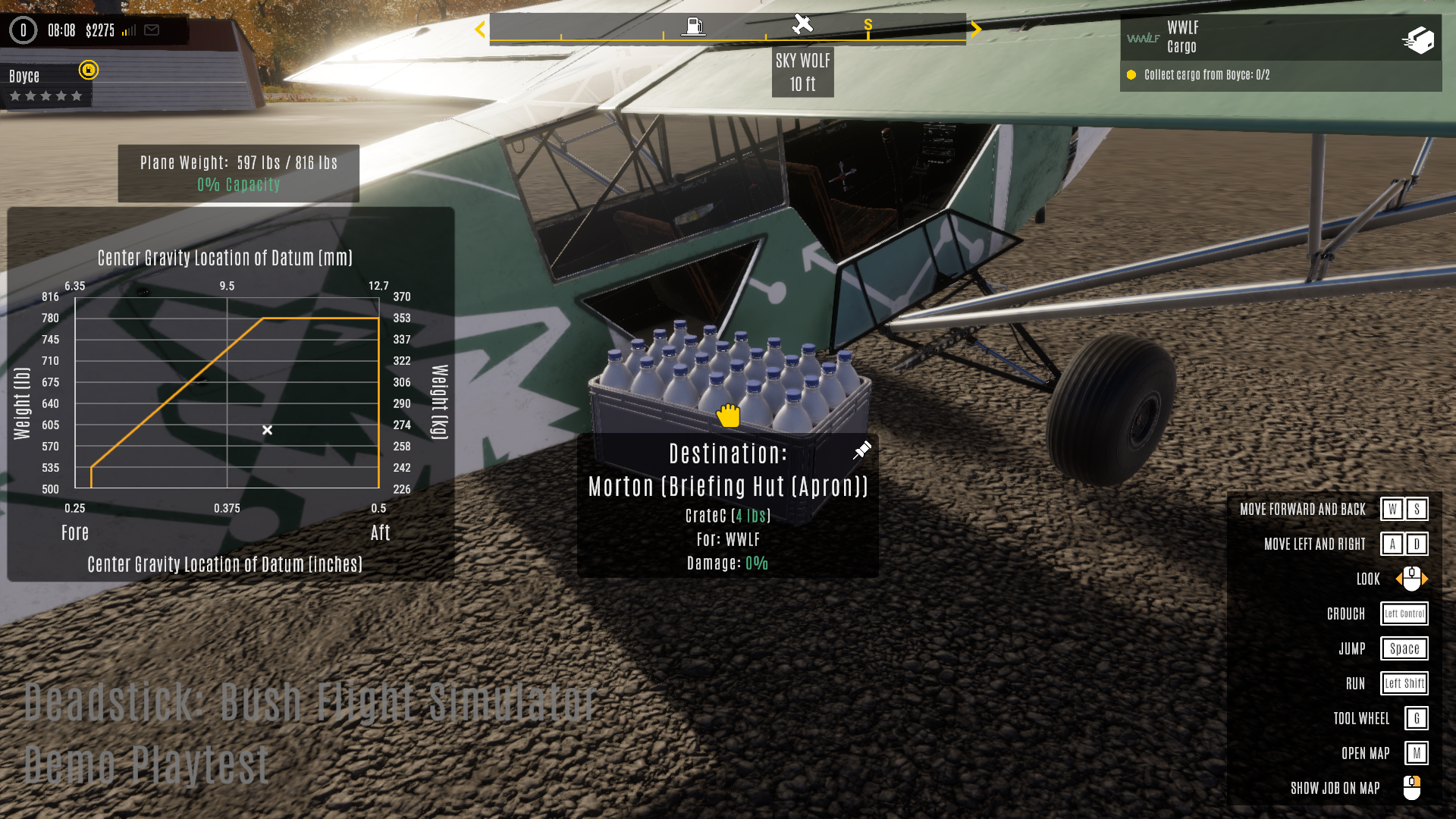
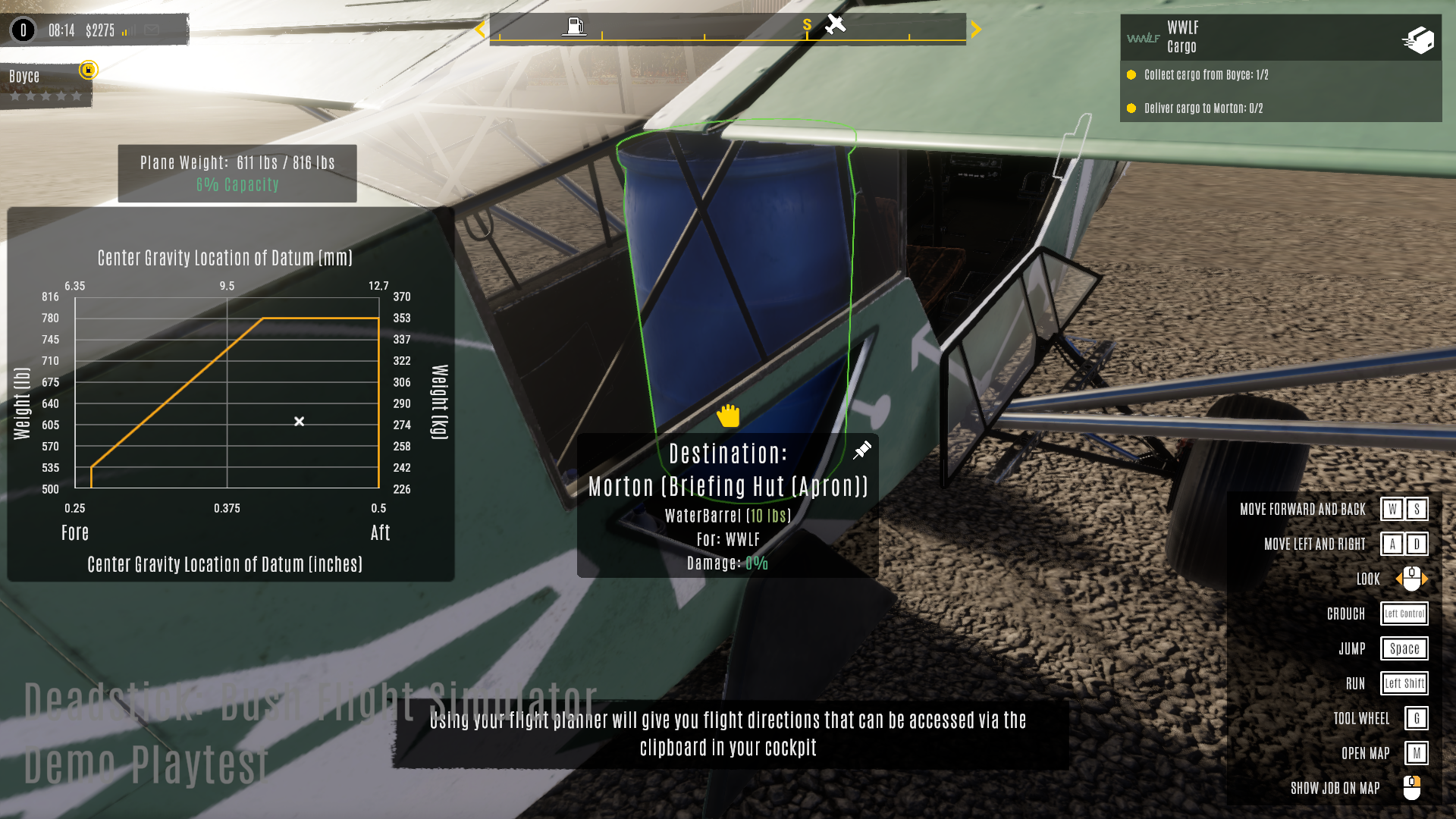
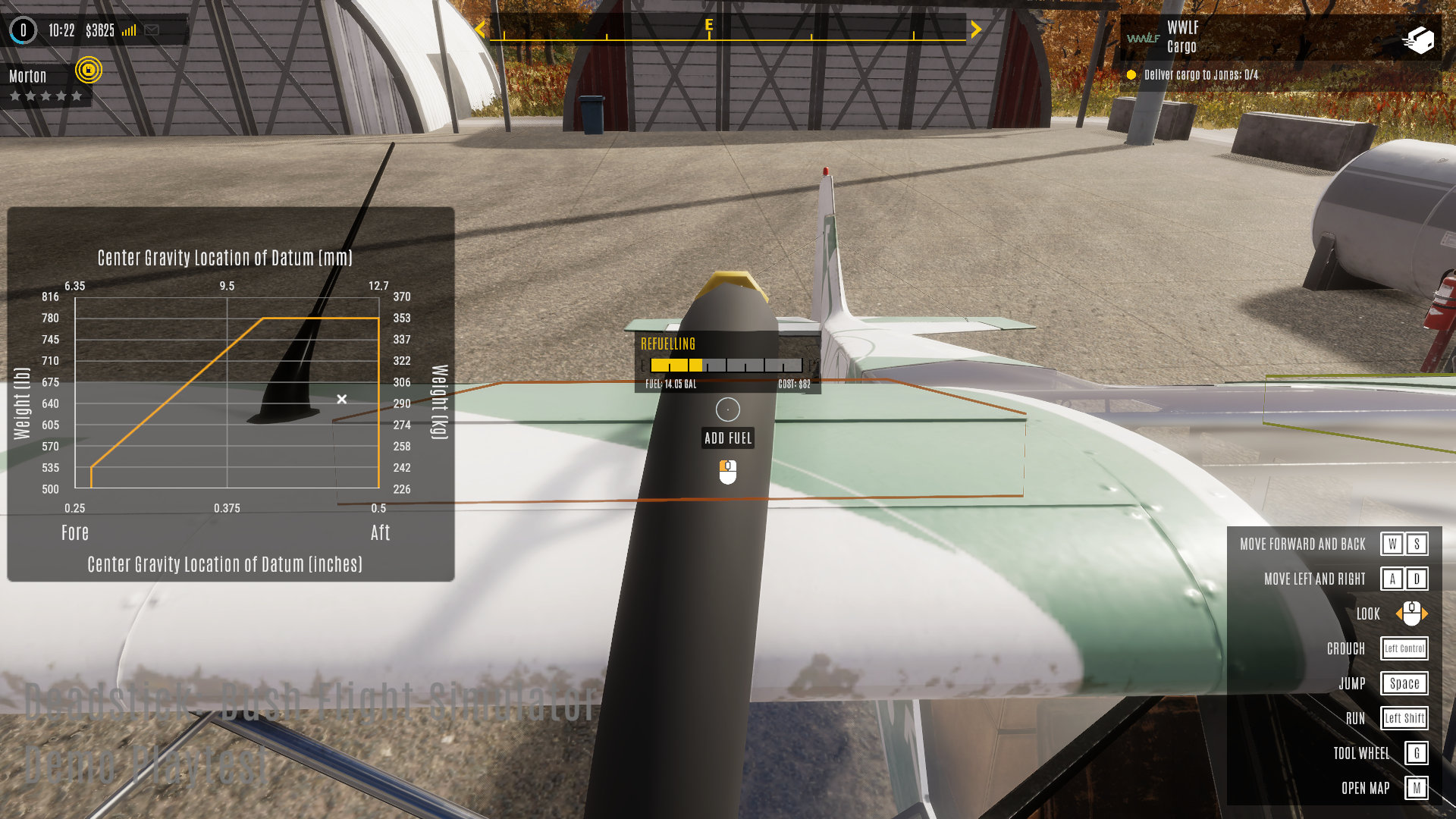
Speaking of real jobs, after getting your CPL, you’re tasked with flying up to a smaller airfield a few miles further north to pick up some cargo. When you get there, you have to walk out and manually load your cargo onto the plane. When loading cargo, you’re shown a weight and balance graph so you can make sure your cargo placement and weight won’t put you out of limits.
Loading fuel, which you will have to do quite frequently, as the plane is one heck of a gas guzzler, is also done manually. You must taxi up to a fuel pump, walk out, grab the fuel nozzle, and load each of the plane’s tanks. You’re also shown the weight and balance graph while loading up with fuel so you can tell how the fuel is affecting your CG as you fill up.
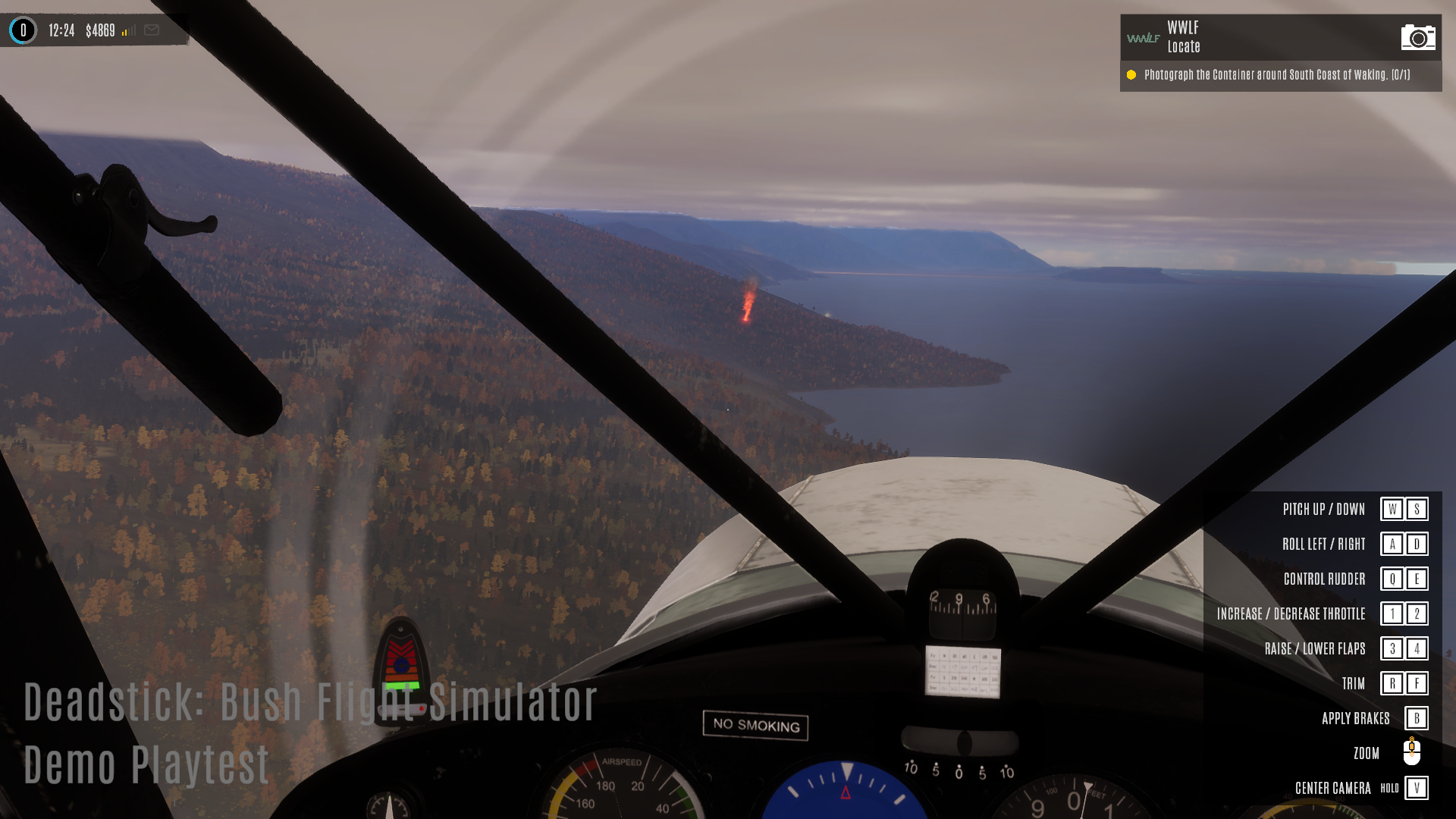
After a couple more jobs hauling cargo, you’re asked to fly around and find a cargo container which somehow went missing in the middle of the forest. You’re given a general area to fly to, but once there, the precise location of the container is made quite obvious by rescue flares that point it out to you. You’re then tasked with taking a picture and faxing it to the boss.
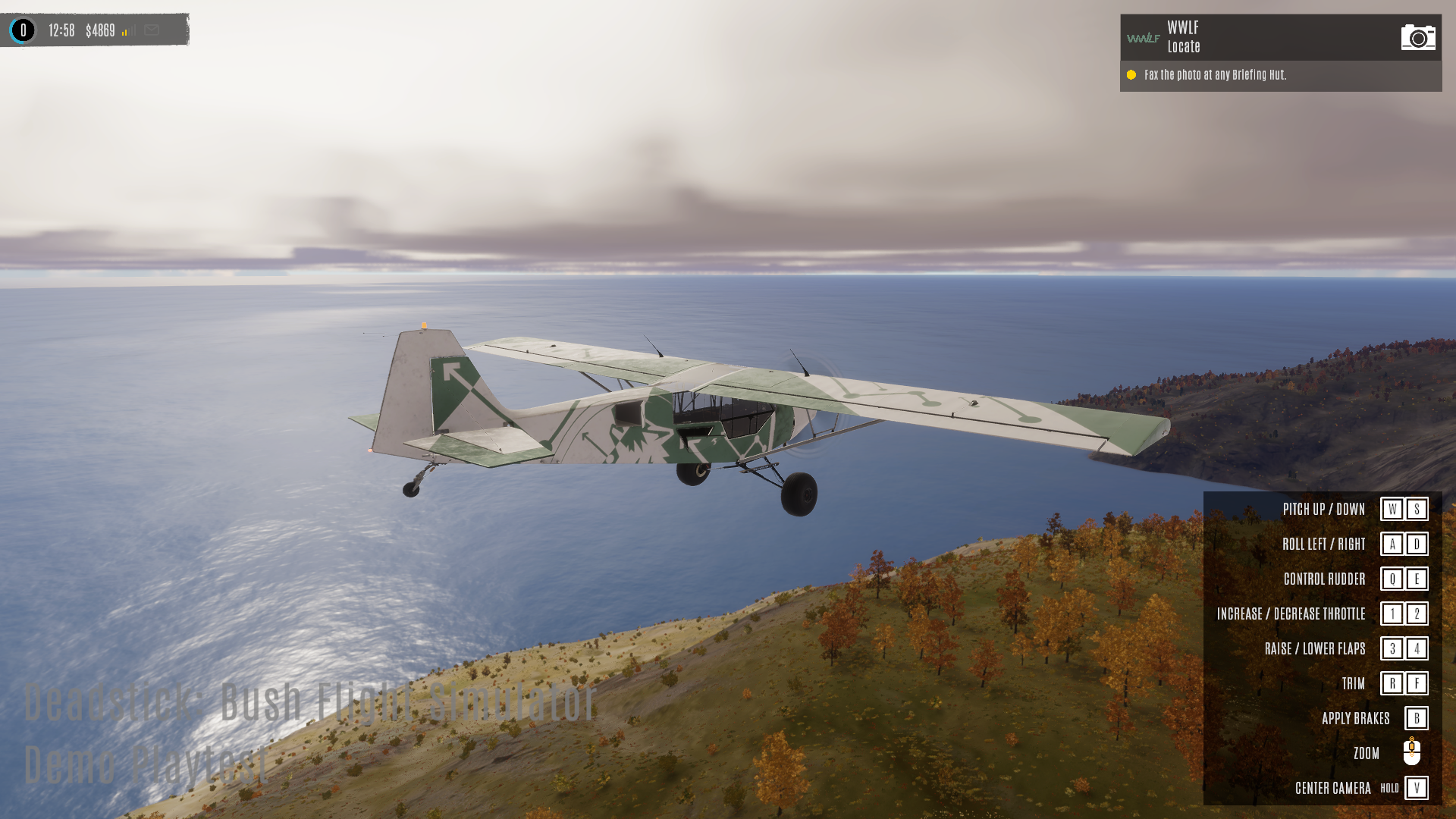
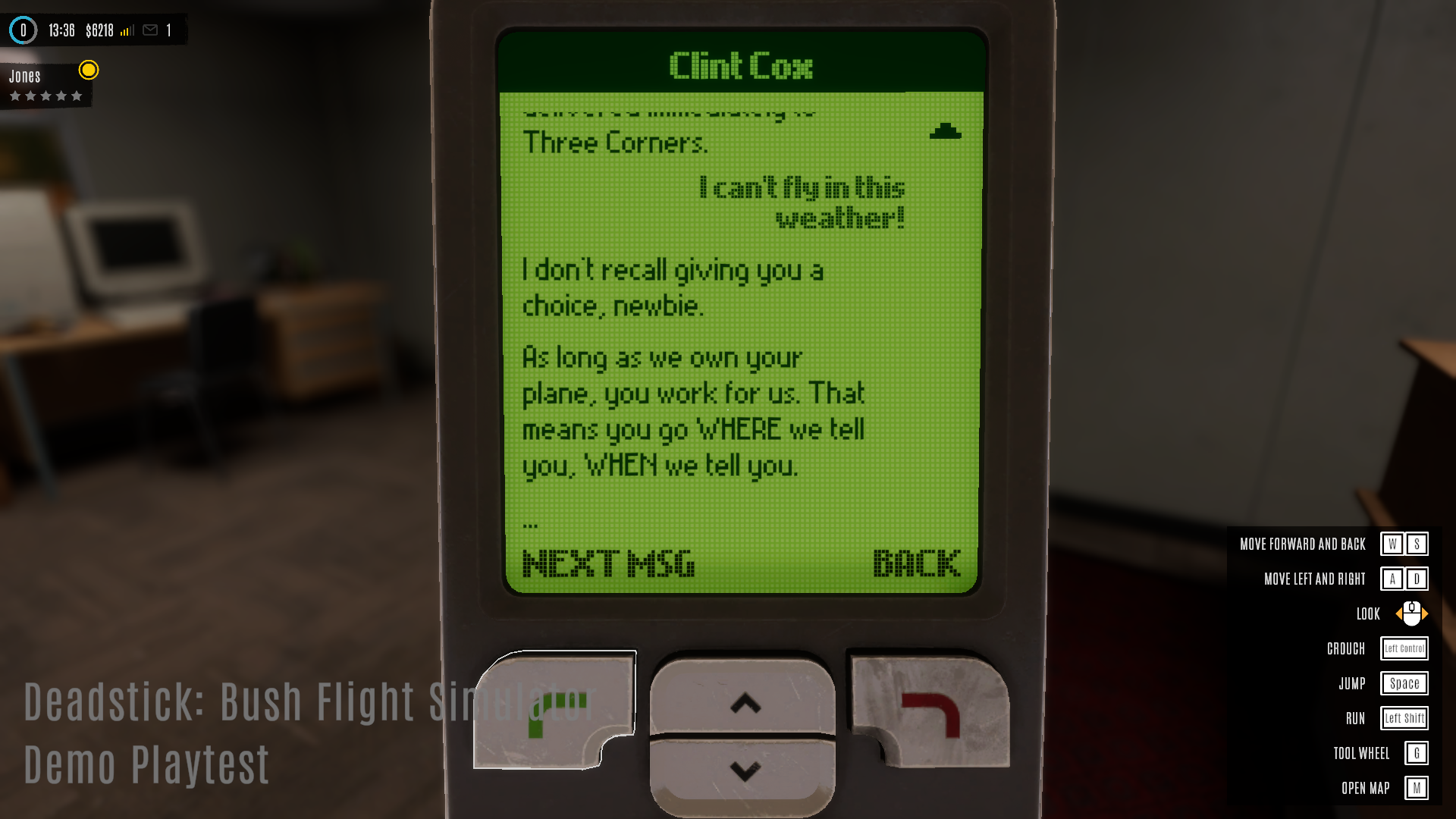
After this mission, a huge thunderstorm rolls in, and your boss orders you to fly to another airport to deliver cargo for a very important client. Even though you can’t really fly in this weather, you have no choice but to accept the job. Once in the air, you’re struck by lightning, the plane’s right wing breaks away, and the screen cuts to black, with text saying “7 weeks later”.
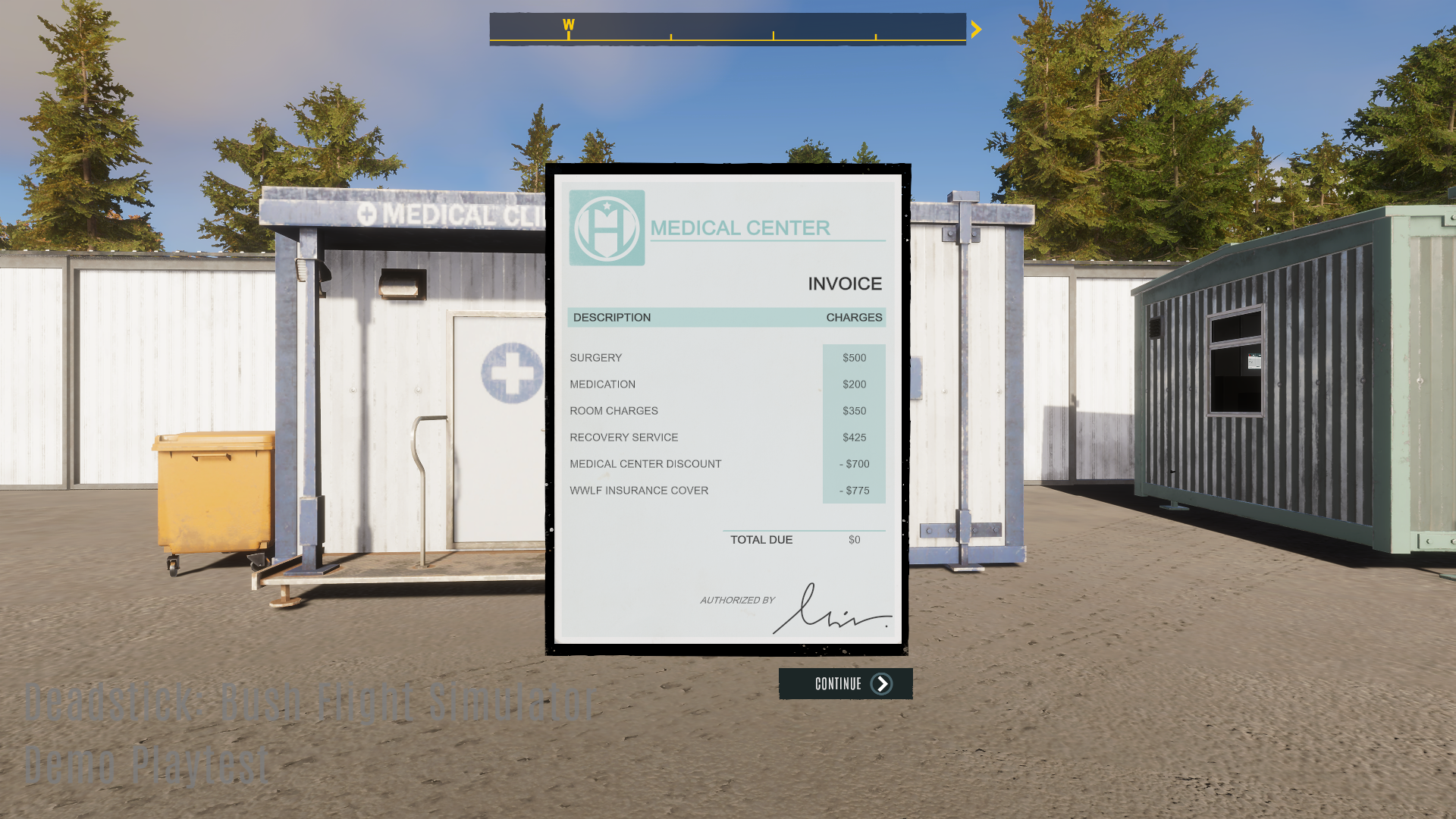
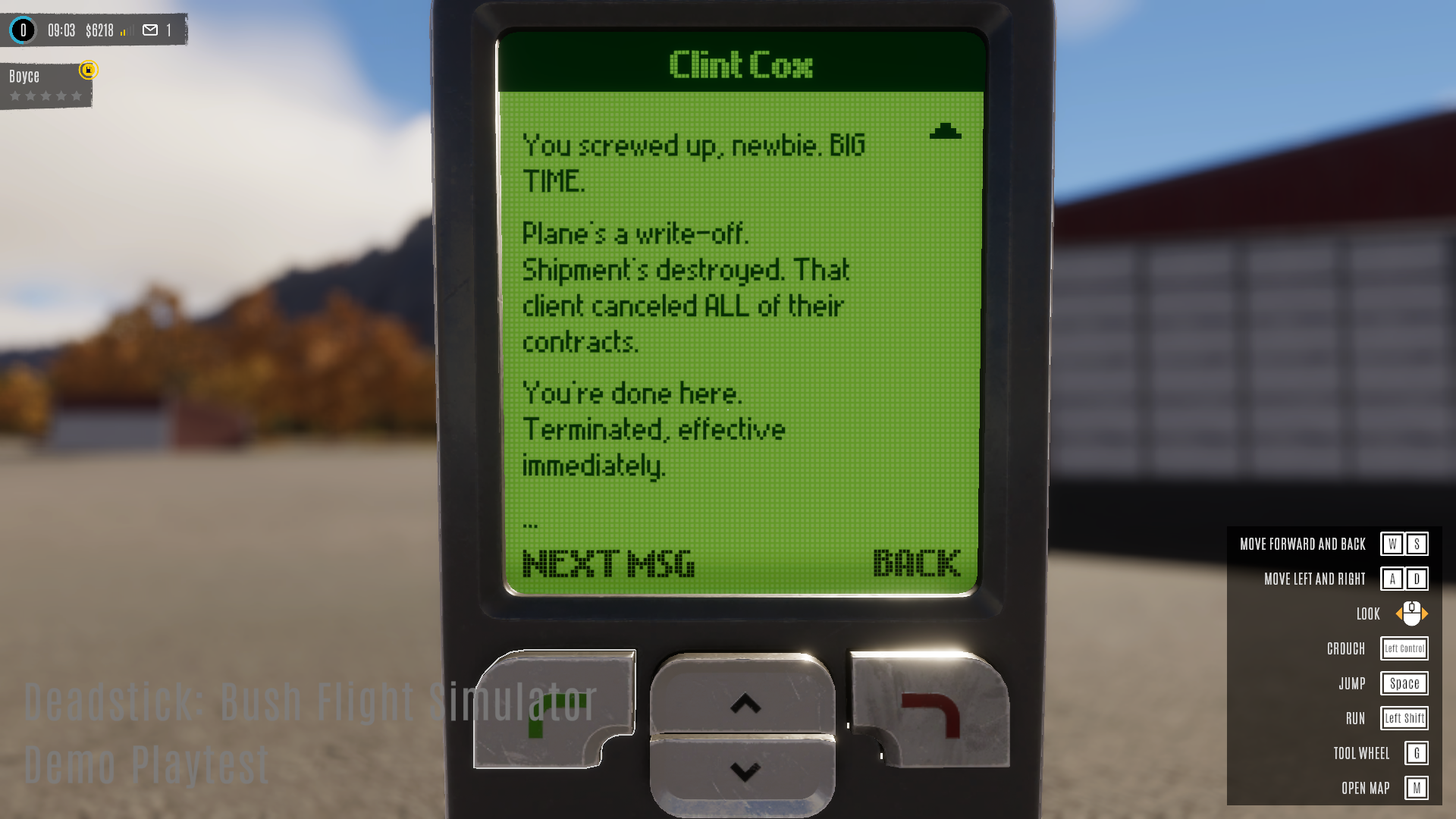
As it turns out, this accident causes your company to lose major contracts, so your boss fires you. The storm also caused a lot of damage in the region, so a mechanic decides to fix up an old plane and give it to you so you can help deliver supplies. This new plane is the same Cub-type plane you were given previously, only with less equipment. The attitude indicator, AoA indicator, CDI, DME, and ADF instruments you had in the previous aircraft are gone, leaving you with no radio navigation or IFR flying capabilities.
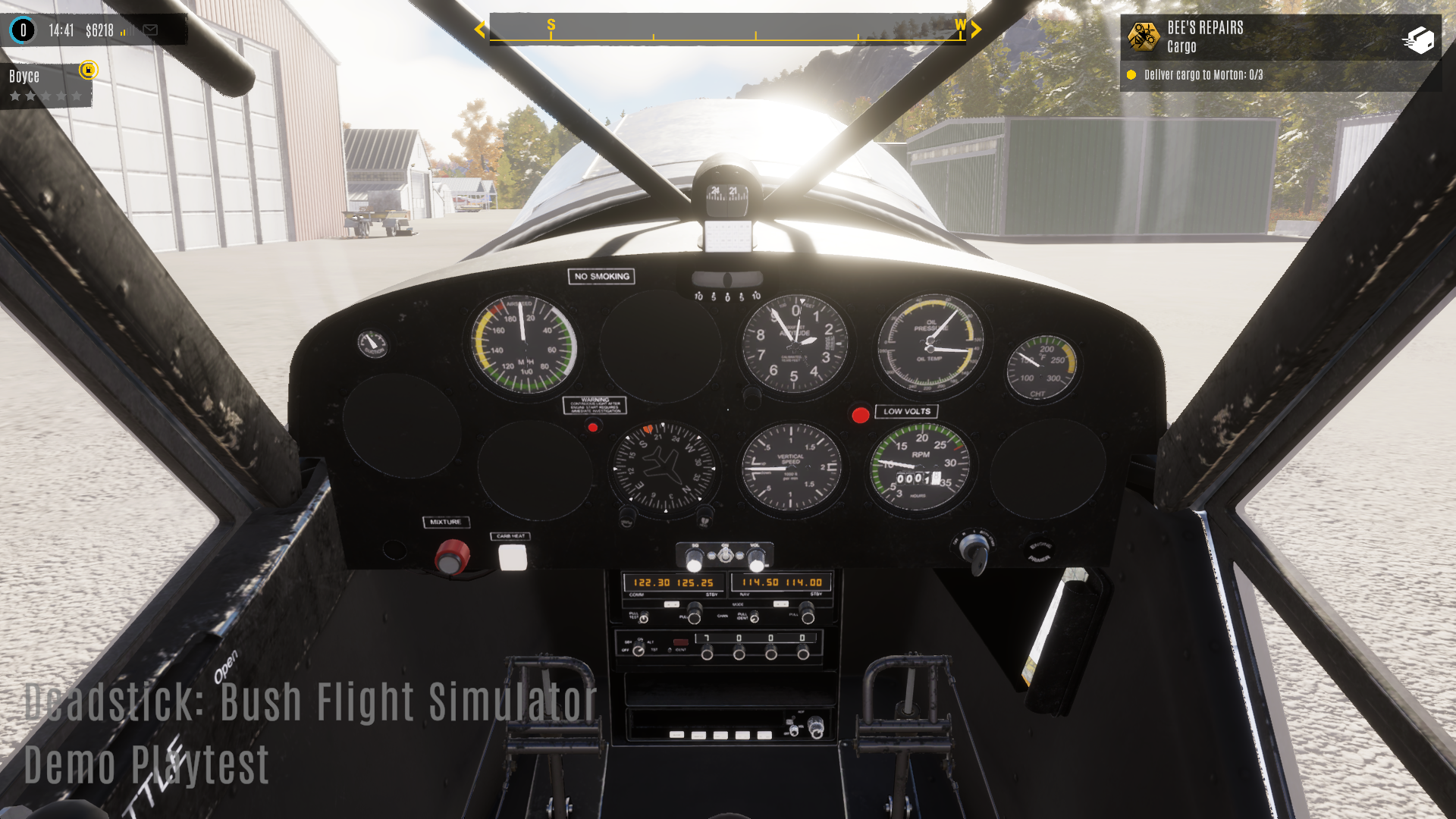
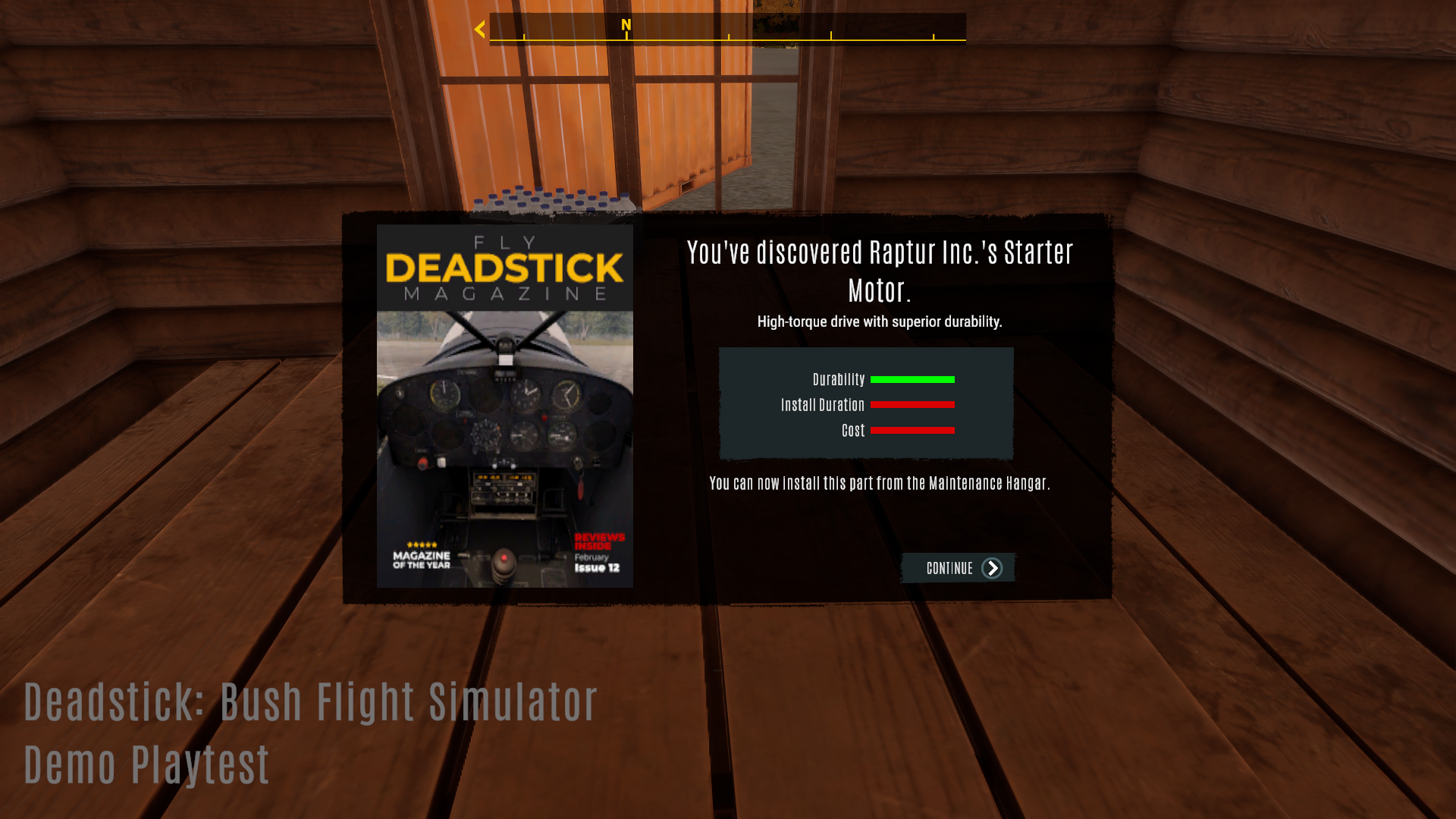
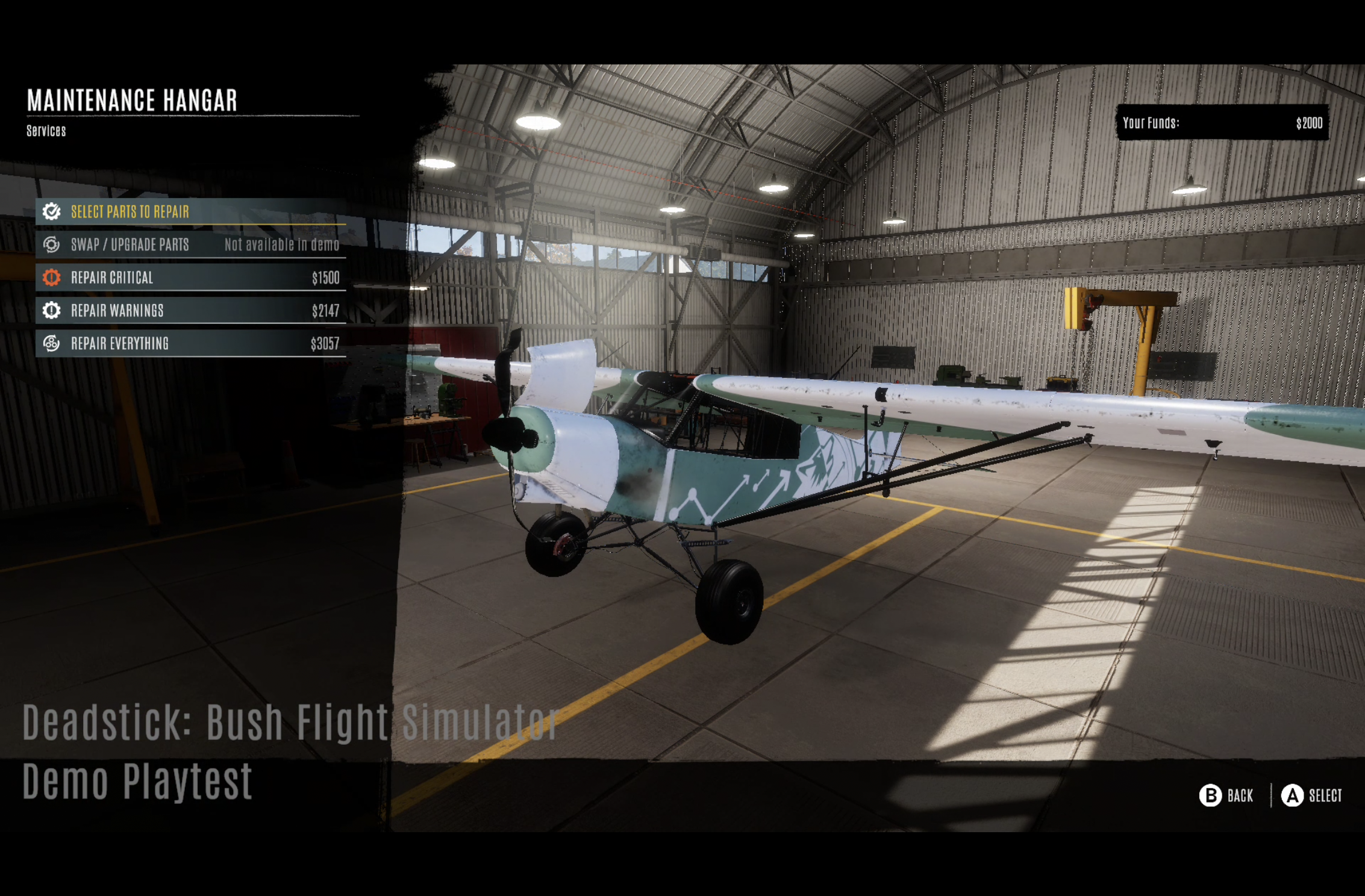
The difference between these two aircraft highlights something that is unique to Deadstick and that I quite like, which is the ability to repair and upgrade your aircraft. There are magazines in certain places, such as airport buildings, that when picked up, unlock new parts. In the maintenance hangar, you can then install these new parts and also fix any broken components. I love the idea of starting out with a basic plane and upgrading it as I progress in the game; it keeps things interesting, encourages exploration to find new upgrades around the world, and makes it so flying the one and only plane type won’t become too boring after a while.
Is it really a sim?
I’m sure the question on many of your minds will be, is this a real simulator or just a game? Perhaps after reading the gameplay section, you will have already made up your mind on this being a game because of all the game aspects it has, like the moving player character, the fictional world, the whole story, among other things.
On the other hand, the flight and systems simulation parts of Deadstick felt great to me. As I mentioned previously, left-turning tendencies and the wind move your plane about on takeoff, and the weight over the tail wheel affects how effective it is at turning the plane on the ground. Adverse yaw is simulated, requiring you to apply rudder on turns to stay coordinated. I tried out a power-on stall and the plane behaved about how I’d expect, even dropping a wing.
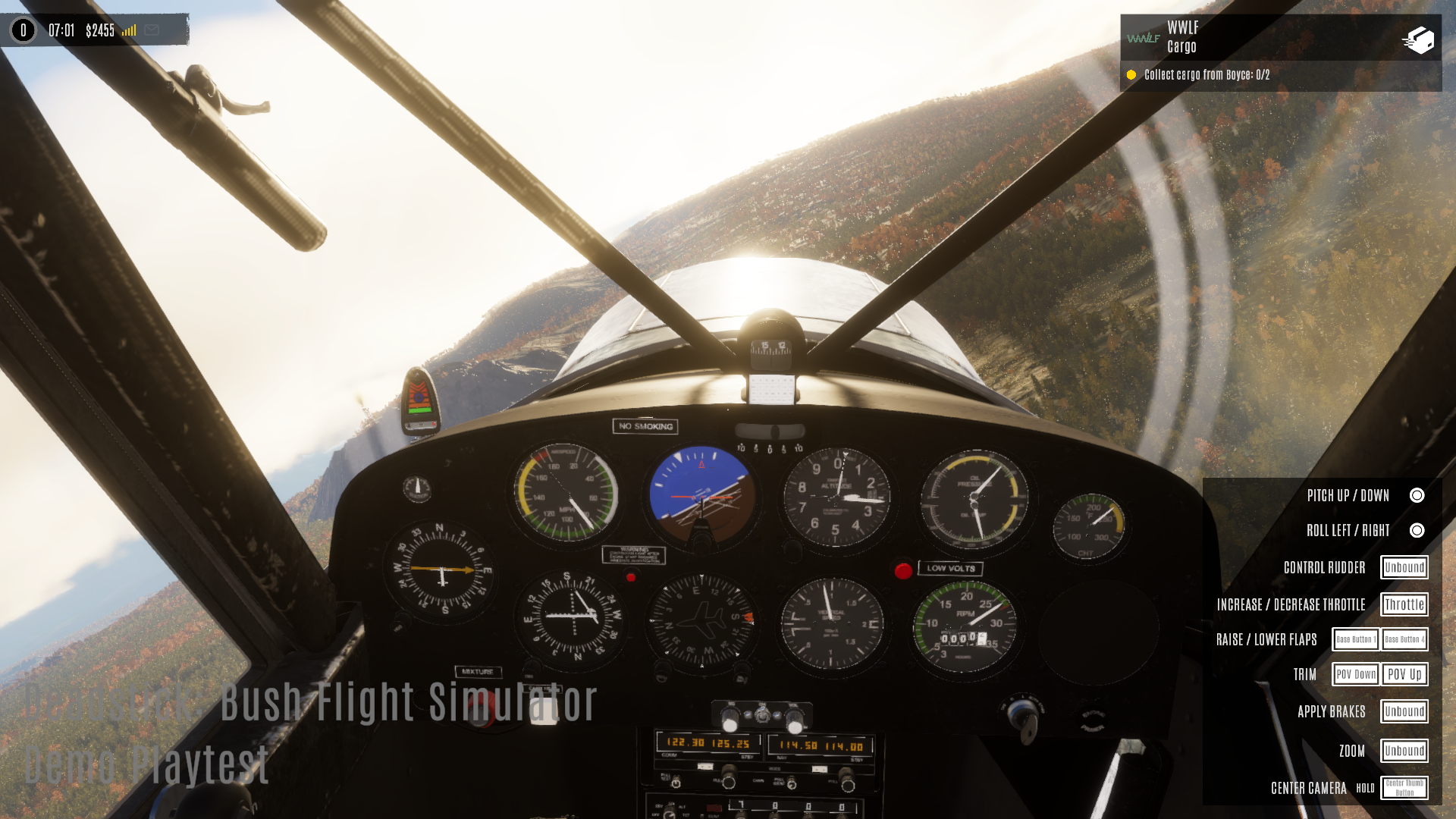
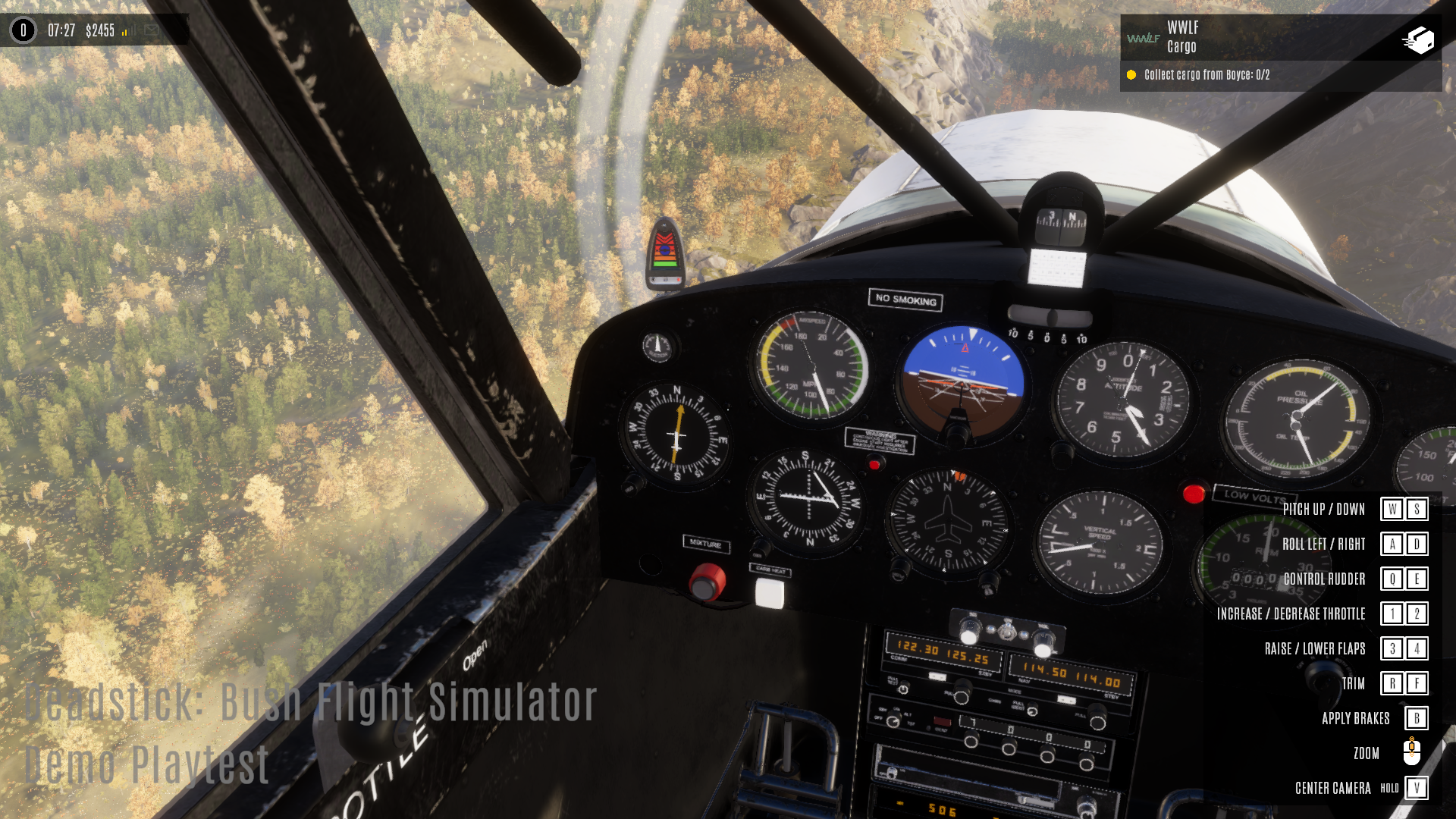
On the systems simulation side, there aren’t exactly many systems to simulate here, but the few there are behave realistically. For starters (ha, get it?), starting up the aircraft requires you to prime the engine, use the mixture, and crack the throttle or else it won’t start. Vacuum suction is simulated; at low RPMs, the low vacuum suction will cause the attitude indicator to wobble around realistically. I briefly tried radio navigation using both VORs and NDBs, and those also behaved as expected.
In my opinion, Deadstick sits somewhere in the middle of the game-sim spectrum. The physics and systems modeling here are enough to keep hardcore simmers happy, while at the same time having enough game aspects that things are kept fun and casual, as well as accessible to non-simmers. This makes Deadstick pretty unique as it is more of a flight simulator with game aspects, a description that I’d have a hard time applying to anything else out there.
Conclusion
After over seven years of development and the near death of the project, it looks like Deadstick is finally close to release. This playtest has finally given us Deadstick followers a proper taste of what’s to come, and I must say that I am excited. The combination of simulation with game aspects makes it a fun experience, but with a flight model and systems that shouldn’t have hardcore simmers constantly frustrated and thinking “that’s not right!”
But with MSFS 2024’s career mode having similar features like persistent wear, damage, and jobs, has Deadstick missed its time to shine? I think Deadstick has enough differentiating it from 2024’s career mode that I wouldn’t consider one to outshine the other. Particularly, Deadstick’s gameplay aspects, aircraft customization, and bush flying focus make it stand out in comparison to 2024’s career mode, which is more fit for realistic operations across all facets of aviation.
In conclusion, despite the vastly different landscape of flight simulation compared to 2017, Deadstick manages to be unique enough that it still has a place among MSFS and X-Plane. Its focus on bush flying and fun gameplay while still keeping the important parts like flight physics and systems realistic make it something in-between a game and a proper flight simulator. If you’re a fan of bush flying, this is looking like a must-have, and I’m excited to see what the future brings for Deadstick.
Feel free to join our Discord server to share your feedback on the article, screenshots from your flights or just chat with the rest of the team and the community. Click here to join the server.